Top 10 penetration testing companies [2026]
![Top 10 penetration testing companies [2026]](/blog/images/top-penetration-testing-companies.webp "Top 10 penetration testing companies [2026]")
Penetration testing has split into two distinct markets. On one side, you have agentic AI platforms and PTaaS solutions built for teams who ship continuously and need testing to keep pace. On the other, you have expert led consultancies handling complex, high stakes environments where human judgment is not optional.
Neither approach is universally better. The right choice depends on what you are trying to test, how often you need to test it, and what your internal team can actually act on.
This guide covers the ten penetration testing companies worth considering in 2026, what each one does well, where it falls short, and who it is actually built for.
Why penetration testing companies matter in 2026
Annual assessments made sense when release cycles were measured in quarters. Most teams now ship weekly or daily, which means the window between a vulnerability being introduced and going to production has shrunk to days. A test result from six months ago does not reflect the application running today.
Regulatory frameworks have moved in a similar direction, though the specifics vary by standard. PCI DSS 4.0 requires penetration testing at least annually and after significant changes, with additional segmentation testing for service providers. SOC 2, HIPAA, and GDPR don’t mandate a specific testing cadence in the same explicit way, but auditors and regulators increasingly expect evidence of regular, validated security testing as part of a broader risk management program. NIS2 pushes EU regulated entities toward more frequent risk assessment and testing obligations. None of these frameworks require continuous testing outright, but the direction of regulatory expectation is consistently toward more frequent, better documented testing rather than a single annual report.
According to IBM’s 2026 Cost of a Data Breach Report, the global average cost of a data breach reached $4.99 million, a record high driven largely by detection, escalation, and business disruption costs. Penetration test costs vary widely by scope: smaller, narrowly scoped engagements can run around $5,000, while complex enterprise assessments commonly reach $50,000 or more, with some large scope engagements exceeding that.
The market has responded with three distinct delivery models: agentic AI platforms that test continuously and autonomously, PTaaS solutions that give on demand access to vetted human testers, and traditional consultancies that handle the depth of assessment automation cannot reach. Most organizations end up combining more than one.
Penetration testing in 2026: What has changed?
The biggest shift this year is how much ground AI assisted testing has covered without displacing human testers. Synack’s Sara, an agentic AI engine that pairs automated testing with validation from its human researcher network, reached general availability in May 2026, following a similar pattern to what Beagle Security has run since earlier. The pitch across the market is consistent: AI handles the volume and speed, human testers handle validation and the judgment calls automation still can’t make reliably.
That split matters when comparing the ten companies below. The agentic AI and PTaaS platforms (Beagle Security, Cobalt.io, Synack, BreachLock) compete on speed, continuous coverage, and how directly results plug into a development or remediation workflow. The consultancies (NetSPI, Bishop Fox, Packetlabs, Raxis, Trustwave) compete on depth: complex environments, custom attack scenarios, and findings that need a human to construct rather than detect through pattern matching. Several providers, including NetSPI and Bishop Fox, now blend AI assisted triage into otherwise human led engagements, which blurs the line further. Neither model has replaced the other. The practical question for buyers is which gap, speed or depth, your current testing program is actually missing.
TL;DR: Quick comparison
| Companies | Category | Best for | Starting price |
|---|---|---|---|
| Beagle Security | Agentic AI penetration testing | DevSecOps teams, continuous testing | $119/month |
| NetSPI | Enterprise manual testing | Large enterprises, compliance heavy | Custom |
| Cobalt.io | PTaaS | Mid sized teams, on demand testing | Credit based |
| Rapid7 | Integrated platform | Enterprises needing unified visibility | $175/month/app |
| Synack | Crowdsourced testing | Diverse coverage, flexible engagements | $4,070 (single Sara AI Pentest) |
| BreachLock | Continuous PTaaS | Compliance driven organizations | Starts at $2,500 |
| Trustwave (a LevelBlue company) | Managed security + pentesting | Enterprises needing full MSSP coverage | Custom pricing |
| Packetlabs | Boutique manual + red team | Organizations prioritizing depth | Custom pricing |
| Raxis | Business oriented boutique pentesting | Mid market, executive ready reporting | Custom pricing |
| Bishop Fox | Elite manual and red team testing | Complex, high stakes environments | Custom pricing |
The top 10 penetration testing companies of 2026
1. Beagle Security
Website: https://beaglesecurity.com/
Category: Agentic AI penetration testing platform
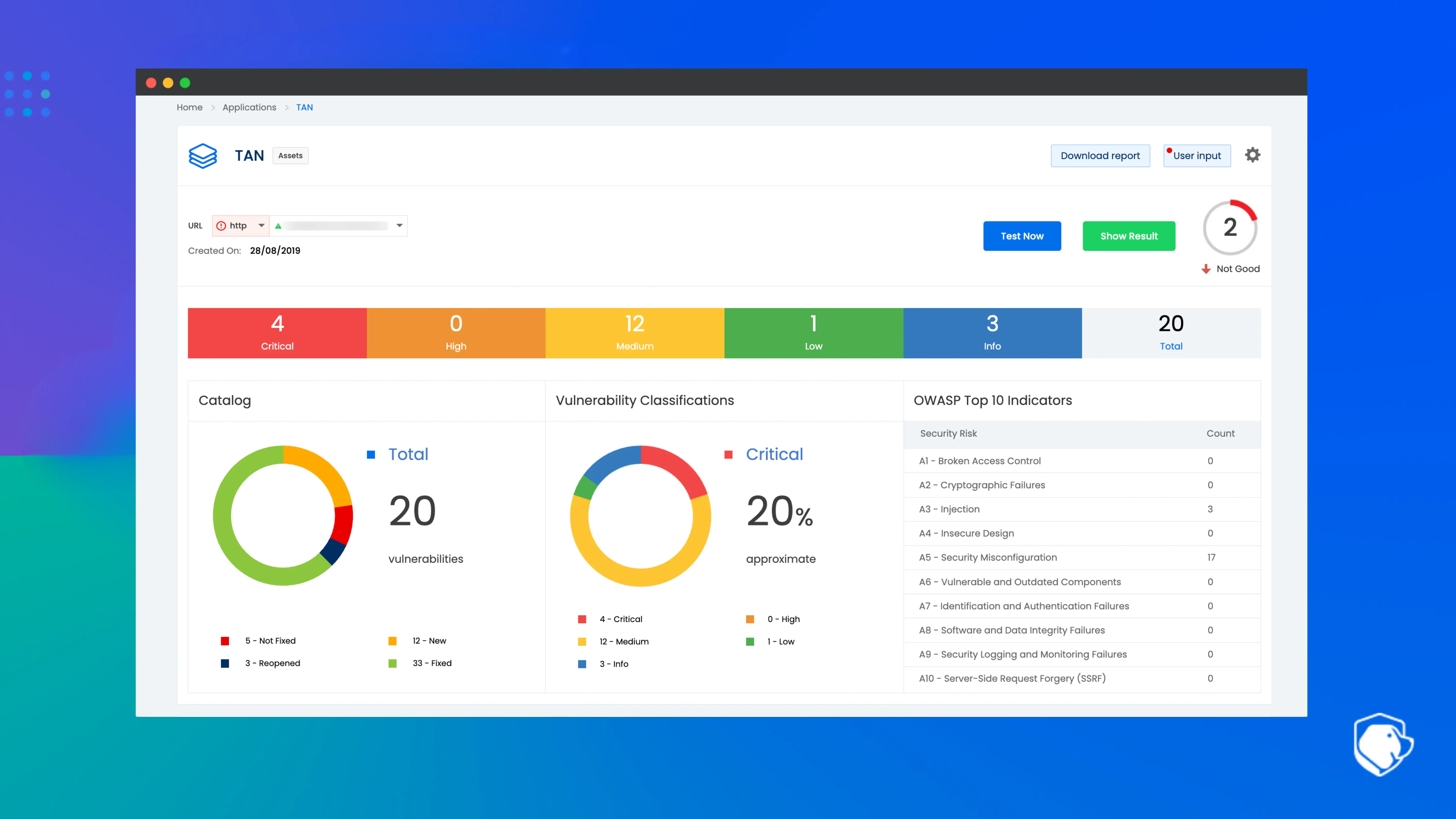
Beagle Security is an agentic AI penetration testing platform that performs autonomous security testing for web applications and APIs. It combines dynamic application testing with AI reasoning to identify, exploit, and validate vulnerabilities, aiming to deliver verified results with a low rate of false positives.
Why use Beagle Security
Beagle Security is ideal for development teams and DevSecOps practitioners who need continuous, autonomous testing that fits directly into their CI/CD workflows. It functions as a standing security testing layer rather than a periodic engagement, improving both speed and frequency of testing.
Pros
Agentic AI performs autonomous testing and vulnerability validation
AI driven exploit confirmation reduces false positives
CI/CD integration with Jenkins, GitHub Actions, and GitLab CI
Continuous testing with unlimited scans for a fixed price
Compliance ready reporting for PCI DSS, HIPAA, and GDPR
Cons
Application and API layer only (does not test network infrastructure)
Newer brand compared to long established consultancies
Complex SSO configurations may need initial manual input
Pricing
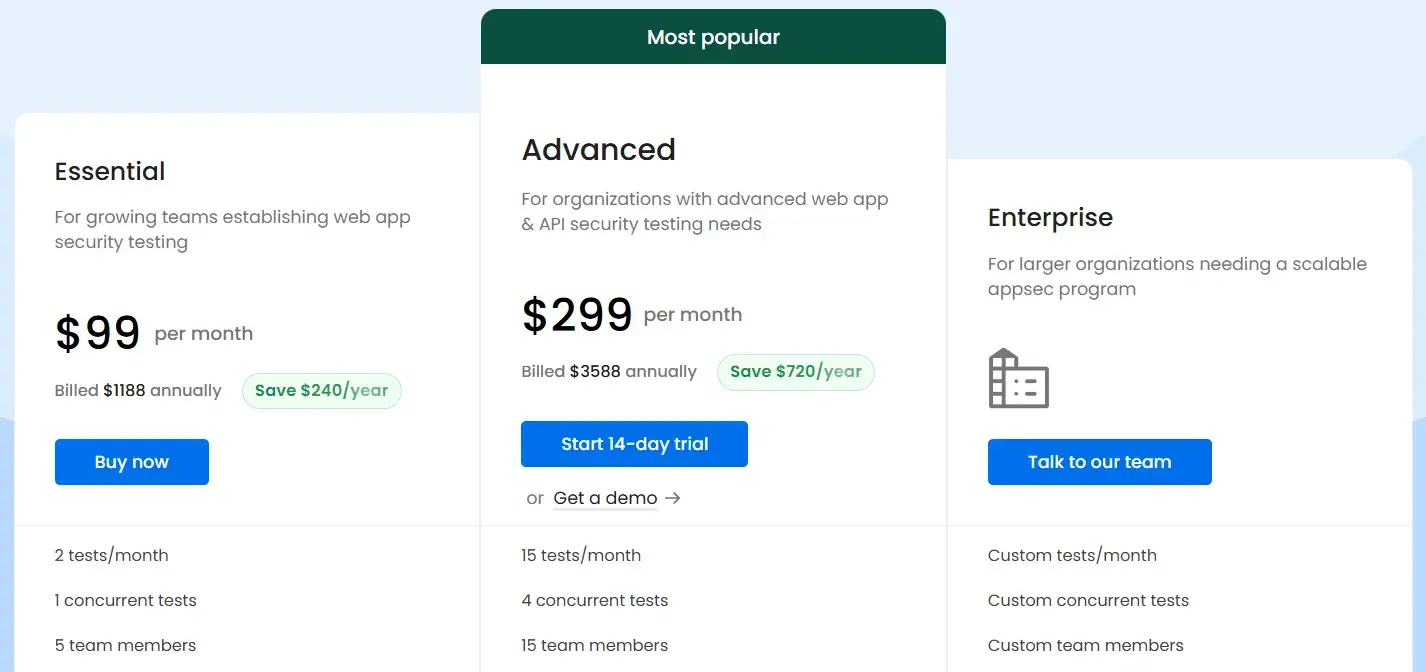
Essential plan: $119/month ($99/month billed $1188 annually)
Advanced plan: $359/month ($299/ month billed $3588 annually)
Enterprise plans: Custom pricing
Ratings and reviews
G2 rating: 4.7/5.
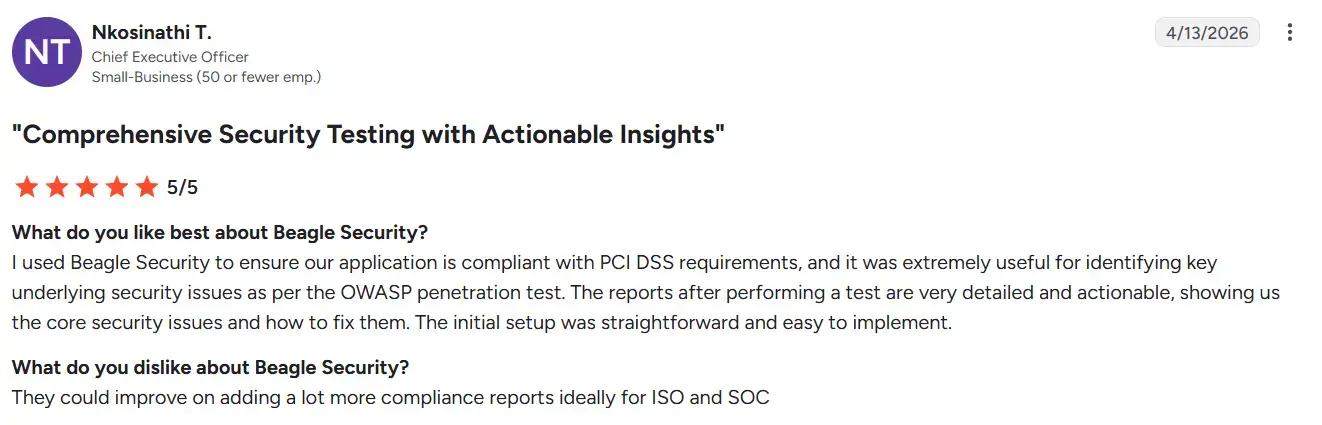
Reviewers commonly point to ease of use and detailed reporting as strengths, describing the interface as approachable and the findings as actionable without heavy onboarding.
2. NetSPI
Category: Enterprise manual penetration testing and attack surface management
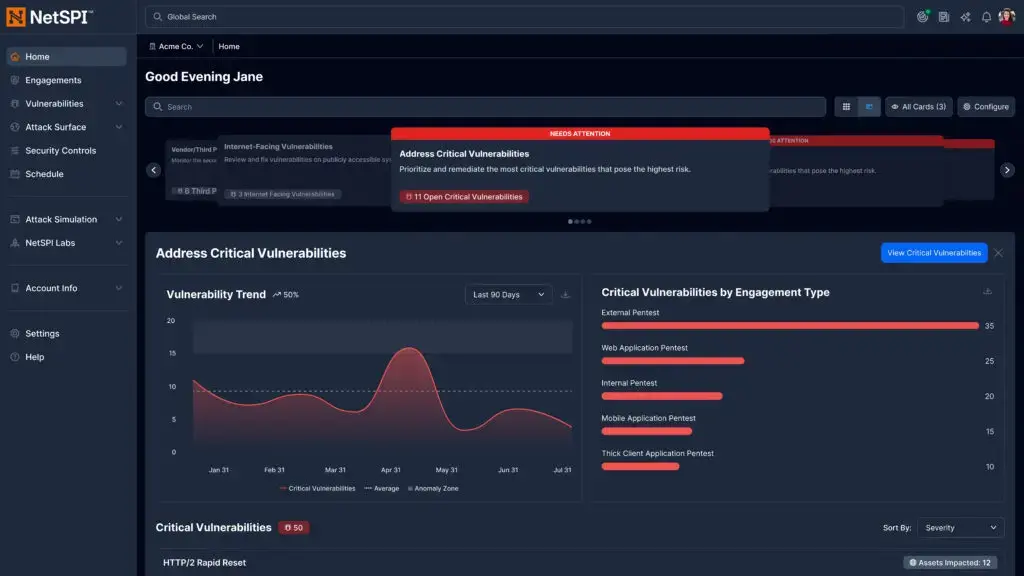
NetSPI operates at the depth that matters for enterprise environments: certified testers who understand complex architectures, testing that covers applications, networks, and cloud in combination, and reporting that satisfies both technical and executive audiences. Its Resolve platform also provides continuous attack surface management between engagements, giving clients visibility into what is exposed without waiting for the next scheduled test.
Why use NetSPI
Large enterprises with complex infrastructure, strict compliance requirements, or a need for high assurance findings that will hold up under regulatory scrutiny. NetSPI also integrates with enterprise operations platforms like ServiceNow and Splunk, which reduces the friction of turning findings into remediation tickets.
Pros
Certified ethical hackers with deep technical knowledge
Comprehensive coverage across applications, networks, and infrastructure
Detailed, compliance ready reports for leadership teams
Integration with enterprise tools like ServiceNow and Splunk
Post assessment support and retesting
Cons
Enterprise scale engagement costs, commonly reaching well into five figures and beyond for complex scopes
Longer delivery cycles due to manual testing
Overly complex for smaller teams
Pricing
NetSPI does not publish transparent pricing, as costs are customized based on your organization’s size, scope, and specific cybersecurity needs. Contact for a pricing quote.
Ratings and reviews
G2 rating: 4.9/5
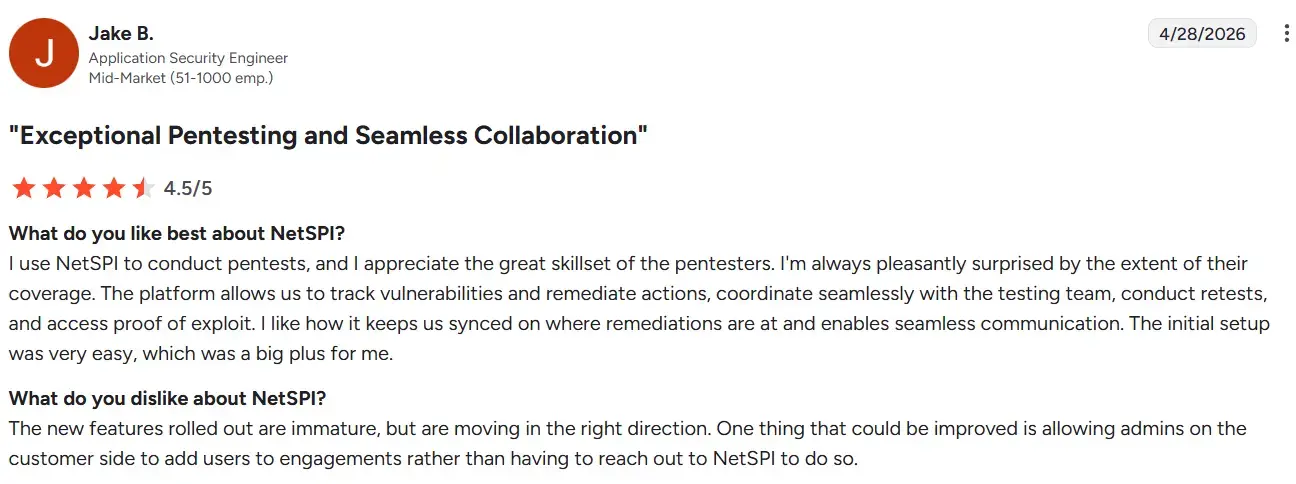
Reviewers highlight the platform’s intuitive interface and effective communication during penetration testing projects, along with real time updates and a centralized dashboard, though some mention a need for improved export options.
3. Cobalt.io
Category: Pentest as a Service (PTaaS)
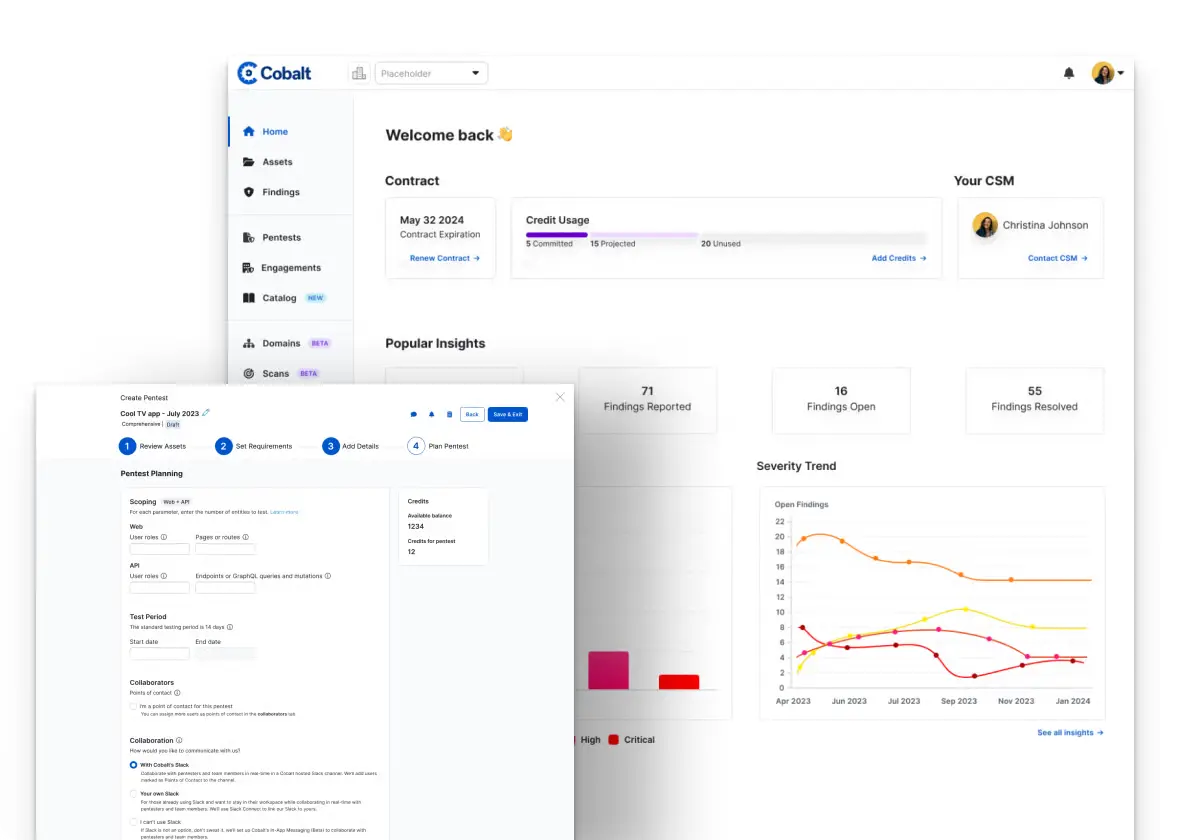
Cobalt.io pioneered the PTaaS model, connecting clients to vetted ethical hackers via its on demand platform. It bridges the gap between manual testing and scalability, making penetration testing faster and more accessible, and is best suited for mid market organizations building a structured, recurring testing program.
Why use Cobalt.io
Best suited for teams that need rapid, flexible testing engagements with transparent collaboration through a unified dashboard.
Pros
On demand access to certified pentesters
Transparent dashboard with real time collaboration
Faster turnaround than traditional consultancies
Standardized methodology ensures consistent quality
Cons
Results depend on assigned testers
Limited depth for highly complex environments
Credit based pricing model that some reviewers find confusing to budget around
Pricing
Cobalt.io operates on an on demand, credit based PTaaS model rather than rigid subscription tiers. Pricing scales based on the scope and complexity of your assets.
Ratings and reviews
G2 rating: 4.5/5.
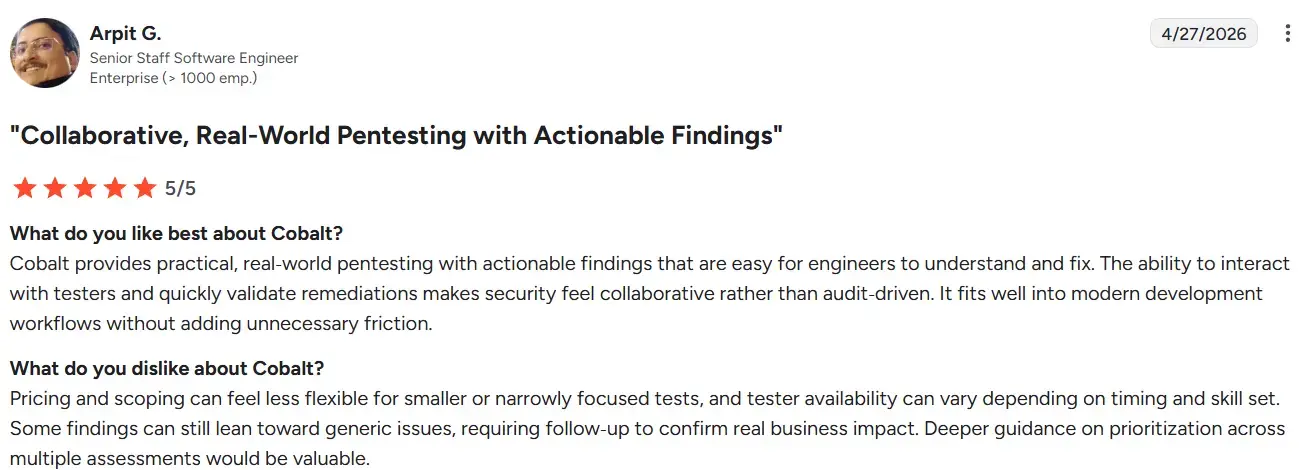
Reviewers point to ease of use and responsive support as strengths, along with an intuitive interface and effective tester communication. Some note that the credit based pricing model takes time to understand.
4. Rapid7
Category: Integrated platform and managed penetration testing
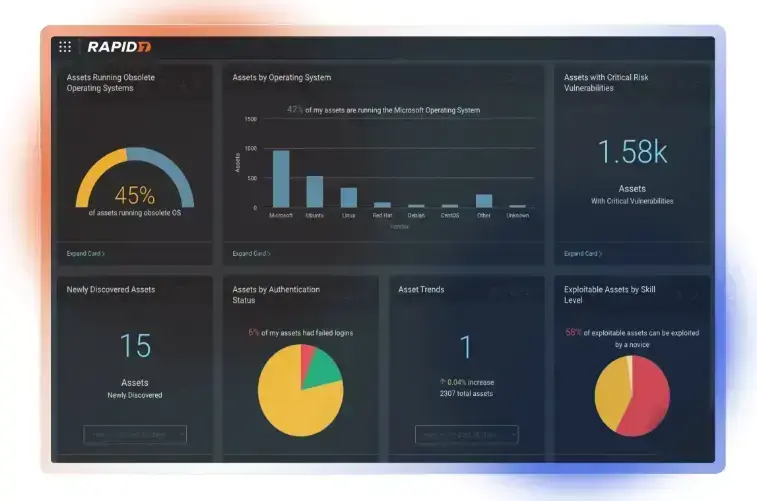
Rapid7’s Insight platform brings vulnerability management, DAST, and incident response under one roof. InsightAppSec handles automated application testing. The consulting arm handles assessments that require manual depth. The value for enterprise buyers is consolidation: fewer vendors, unified data, and a single platform for tracking vulnerabilities from discovery through remediation.
Why use Rapid7
Organizations that want one platform covering automated testing, vulnerability management, and consulting, particularly if they are already running Rapid7 tools elsewhere in their security stack.
Pros
Integrated Insight platform for unified visibility
Strong automation capabilities
Global support and scalability
Detailed compliance reports
Managed detection and response options
Cons
High cost for smaller organizations
Complex platform onboarding
Primarily automated focus for the application testing layer
Pricing
InsightAppSec: $175/month per application
Enterprise packages: Quote based for multi application testing
Ratings and reviews
G2 rating: 4.3/5.
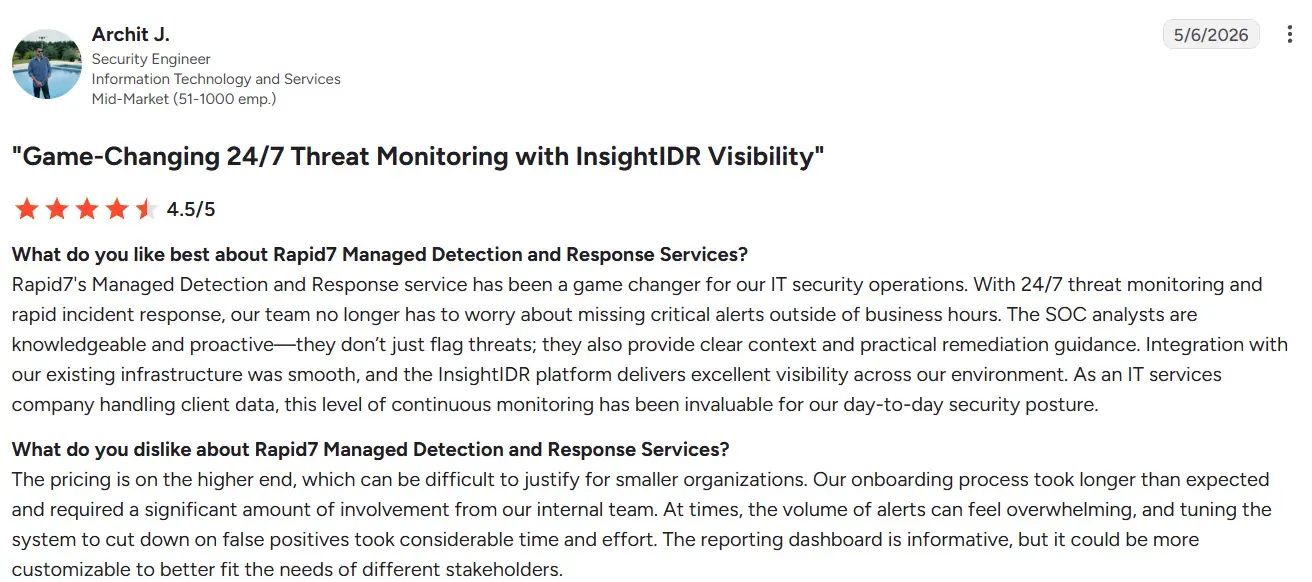
Reviewers describe the platform as easy to use with useful dashboards for prioritizing vulnerabilities, while some note that initial setup can be complex and CI/CD integration can require additional technical support.
5. Synack
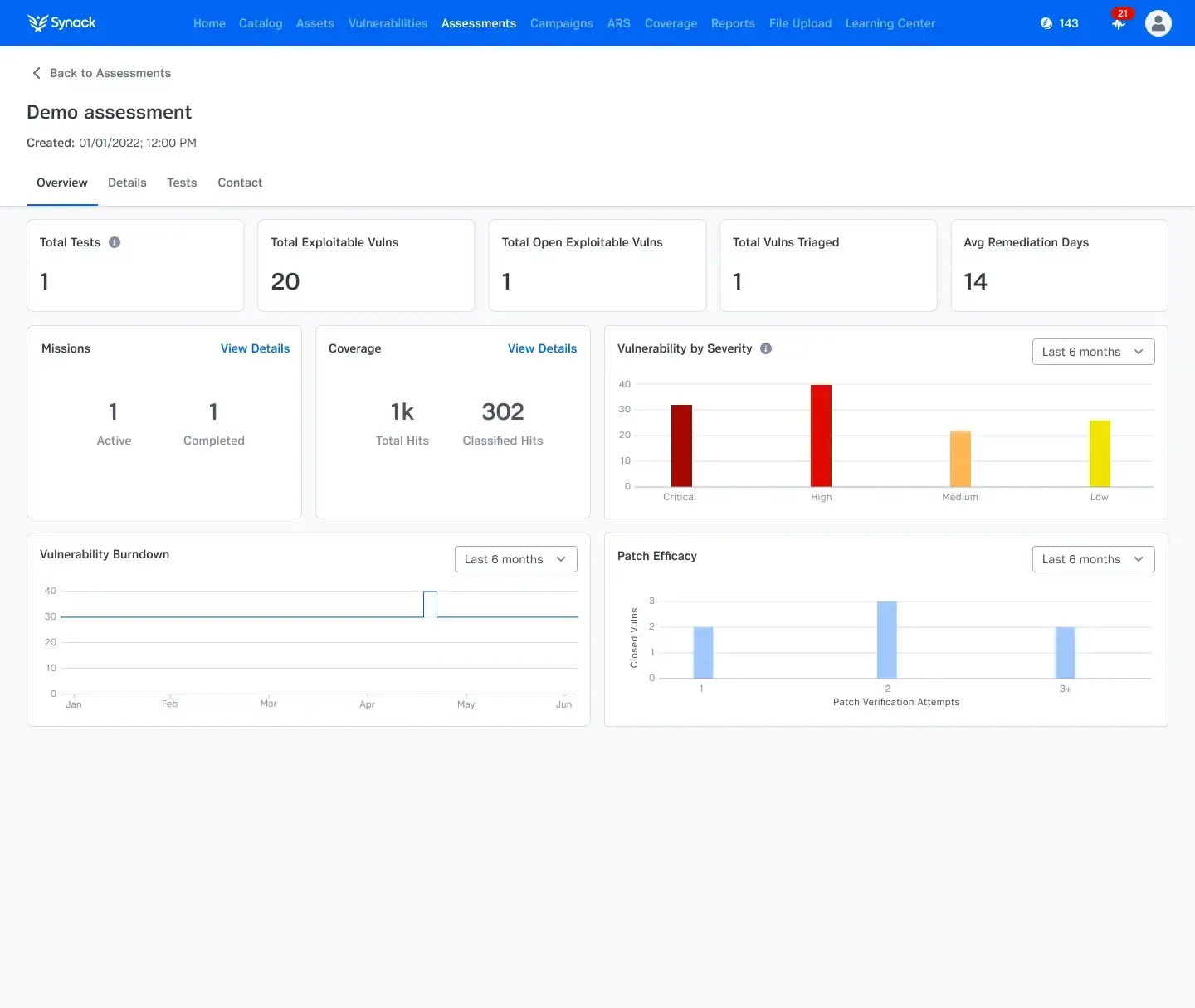
Category: Crowdsourced penetration testing
Synack operates a global community of vetted researchers performing continuous, crowdsourced testing. Its Sara AI engine, which reached general availability in May 2026, pairs automated testing with human validation from the Synack Red Team, aiming to combine speed with confirmed, low noise findings.
Why use Synack
Organizations that want broad, continuous coverage from multiple testing perspectives without the coordination overhead of managing multiple consultancies. The engagement based pricing model works well for teams with variable scope.
Pros
Global researcher community ensures diverse coverage
Sara AI engine paired with human validated findings
Continuous testing capability
FedRAMP Moderate authorization for government and regulated buyers
Strong compliance framework
Cons
Varying researcher experience across engagements
Coordination between multiple testers can add complexity
Premium pricing; larger contracts commonly run well into five figures or more
Pricing
A single Sara AI Pentest starts around $4,070, per Synack’s published pricing
Enterprise: custom pricing
Ratings and reviews
G2 rating: 4.8/5.
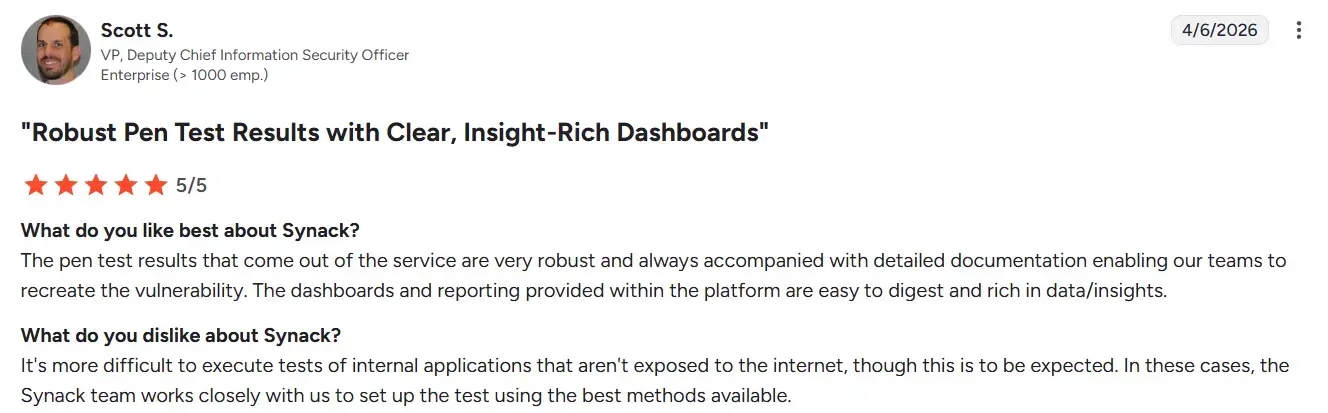
Reviewers describe the value of human validated findings and responsive support, while some note that integrating results into existing security stacks can take extra work.
6. BreachLock
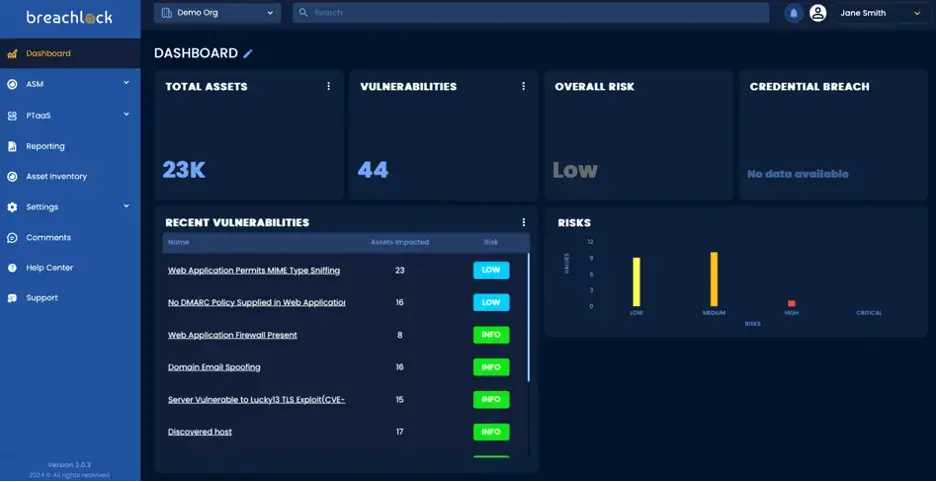
Category: Continuous PTaaS and compliance automation
BreachLock delivers a hybrid automated and manual continuous testing platform with strong compliance features. It combines recurring penetration tests with automated scanning and vulnerability management.
Why use BreachLock
Compliance driven organizations in PCI DSS, SOC 2, or HIPAA environments that need consistent, recurring testing with transparent pricing and built in compliance documentation.
Pros
Continuous testing program
Built in compliance automation for PCI DSS and SOC 2
Blends automation with manual verification
Fixed, transparent pricing tiers
Cons
Platform learning curve for new users
Limited flexibility for ad hoc projects
Pricing
One time security validation: Starts at $2,500
Annual security validation: Starts at $5,000
Continuous security validation: Custom pricing
Ratings and reviews
G2 rating: 4.6/5.
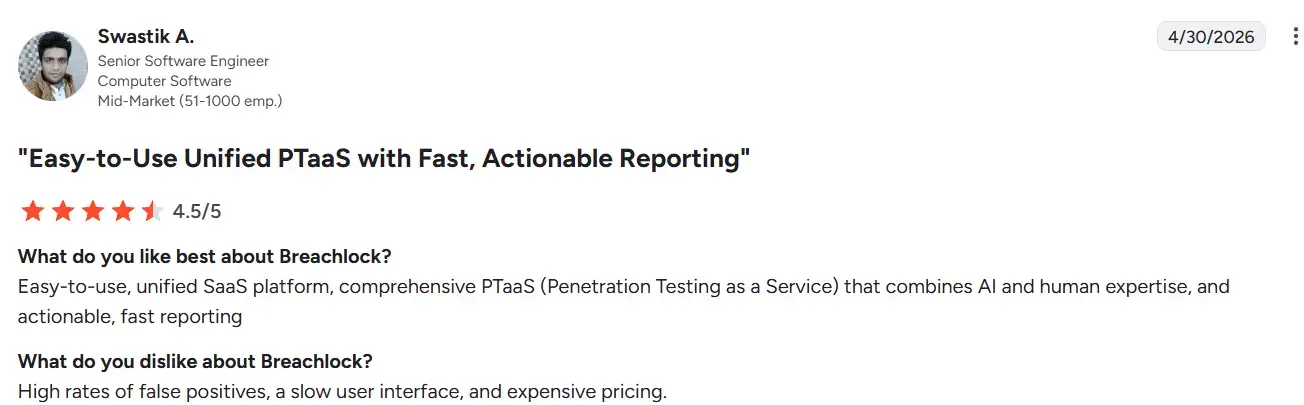
Reviewers highlight ease of use and responsive customer support, along with clear, actionable reports, though some note pricing can run high for smaller organizations.
7. Trustwave, a LevelBlue company
Category: Managed security services and enterprise pentesting
LevelBlue completed its acquisition of Trustwave in August 2025, forming what it describes as the largest pure play managed security services provider. The combined entity brings together LevelBlue’s AI driven managed security platform with Trustwave’s Fusion platform, SpiderLabs threat intelligence, and FedRAMP and StateRAMP authorizations. For enterprise buyers, this means penetration testing sits inside a broader managed security program rather than as a standalone engagement.
Why use Trustwave
Enterprises that need penetration testing as part of a comprehensive managed security program covering detection, response, and compliance. Particularly relevant for organizations with federal requirements given the FedRAMP and StateRAMP certifications.
Pros
24/7 managed security operations
Incident response and forensics services
Scalable for multi region enterprises
Cons
Expensive for small companies
Manual testing requires longer timelines
Pricing
Engagement based pricing; contact for a custom quote.
Ratings and reviews
G2 rating: 4.1/5.
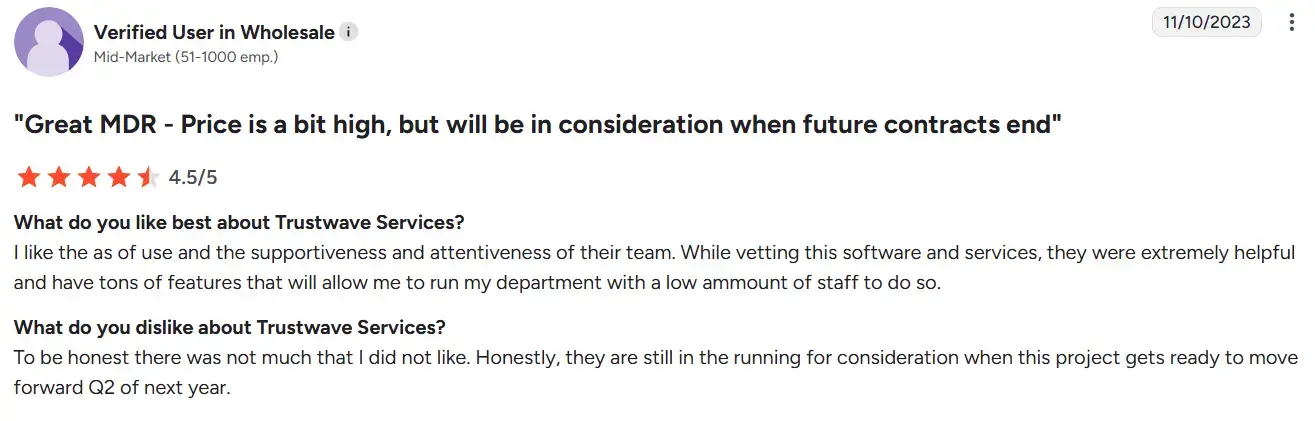
Reviewers value comprehensive coverage and global support.
8. Packetlabs
Category: Boutique manual pentesting and red teaming
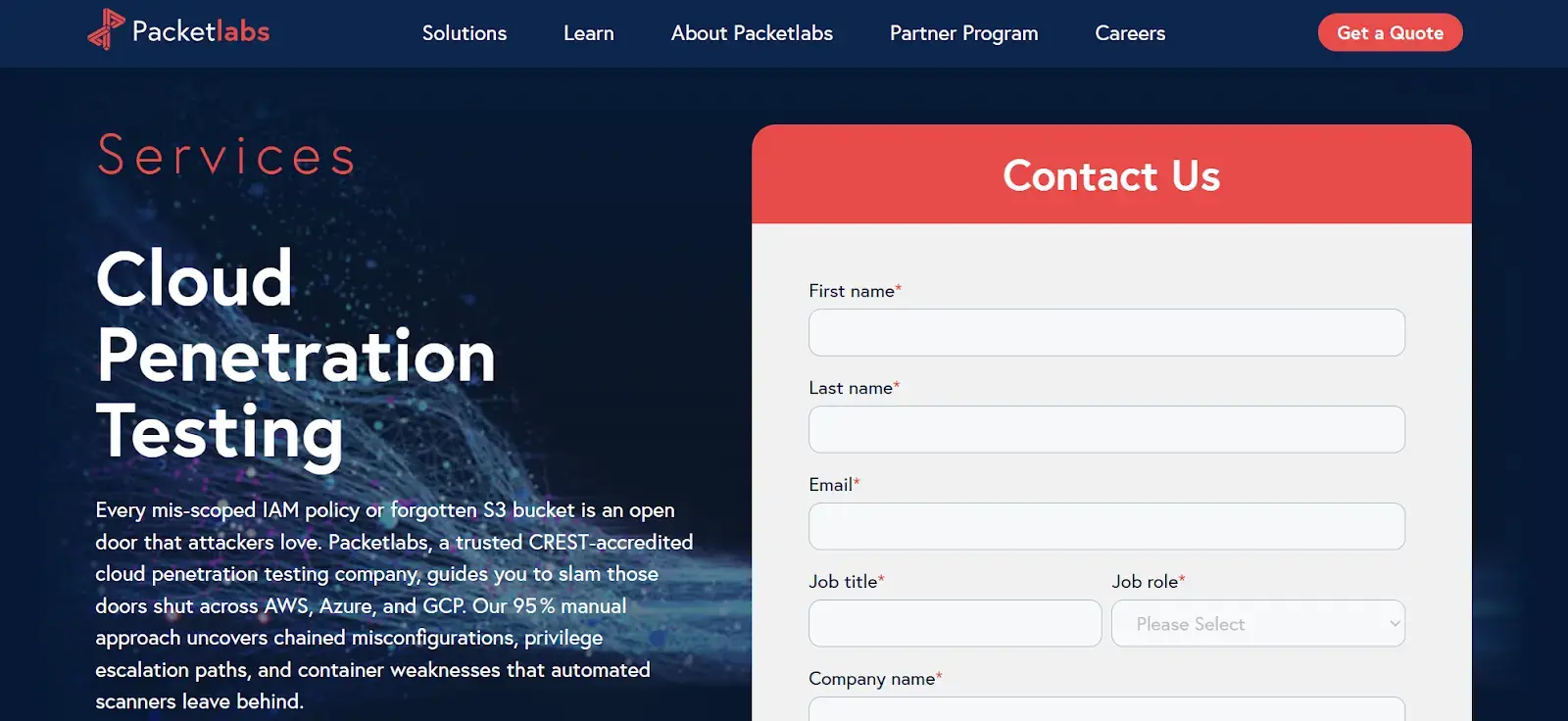
Packetlabs is a boutique firm specializing in deep, hands-on security assessments. Their team of senior professionals focuses on custom testing methodologies and real world attack simulations.
Why use Packetlabs
Organizations that need detailed, tailored assessment over scale. Particularly suited to environments where off the shelf testing approaches would miss architecture specific risks.
Pros
Senior level testers deliver every engagement
Custom testing methodology for each client
Detailed and actionable reports
High technical accuracy
Cons
Not easily scalable
Premium pricing
Pricing
Packetlabs does not offer flat rate pricing. Instead, their penetration testing and adversary simulation services are custom quoted.
Ratings and reviews
G2 rating: 4.9/5.
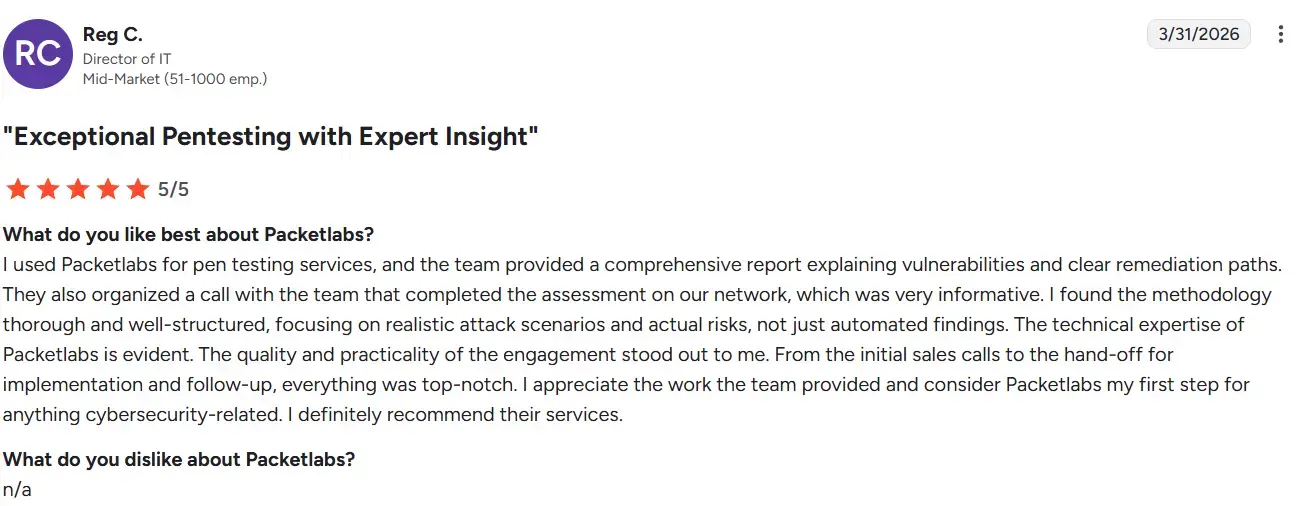
Reviewers describe the team as professional and thorough, with detailed findings.
9. Raxis
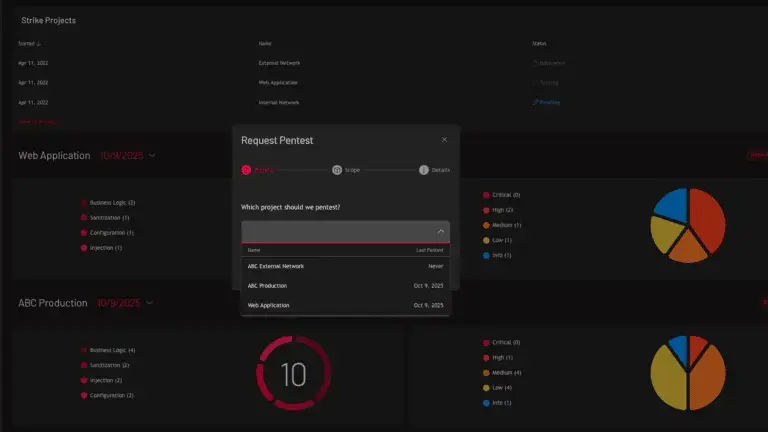
Category: Business oriented boutique pentesting
Raxis provides manual penetration testing with a strong business focus, alongside on demand options for teams that need faster turnaround between full engagements. Their reports emphasize the real world impact of vulnerabilities rather than technical details alone.
Why use Raxis
Mid market organizations that need penetration testing results their leadership team can act on, not just a technical report for the security team. Raxis is also a strong fit for organizations navigating compliance requirements who need findings that map cleanly to control frameworks.
Pros
Focus on business impact over technical noise
Personalized engagement with senior consultants
Strong advisory and compliance experience
Agile delivery model, with on demand testing options alongside traditional engagements
Cons
Smaller scale limits concurrent projects
Primarily US focused
Pricing
Custom per engagement.
Ratings and reviews
Users value Raxis for its clarity, professionalism, and actionable recommendations.
10. Bishop Fox
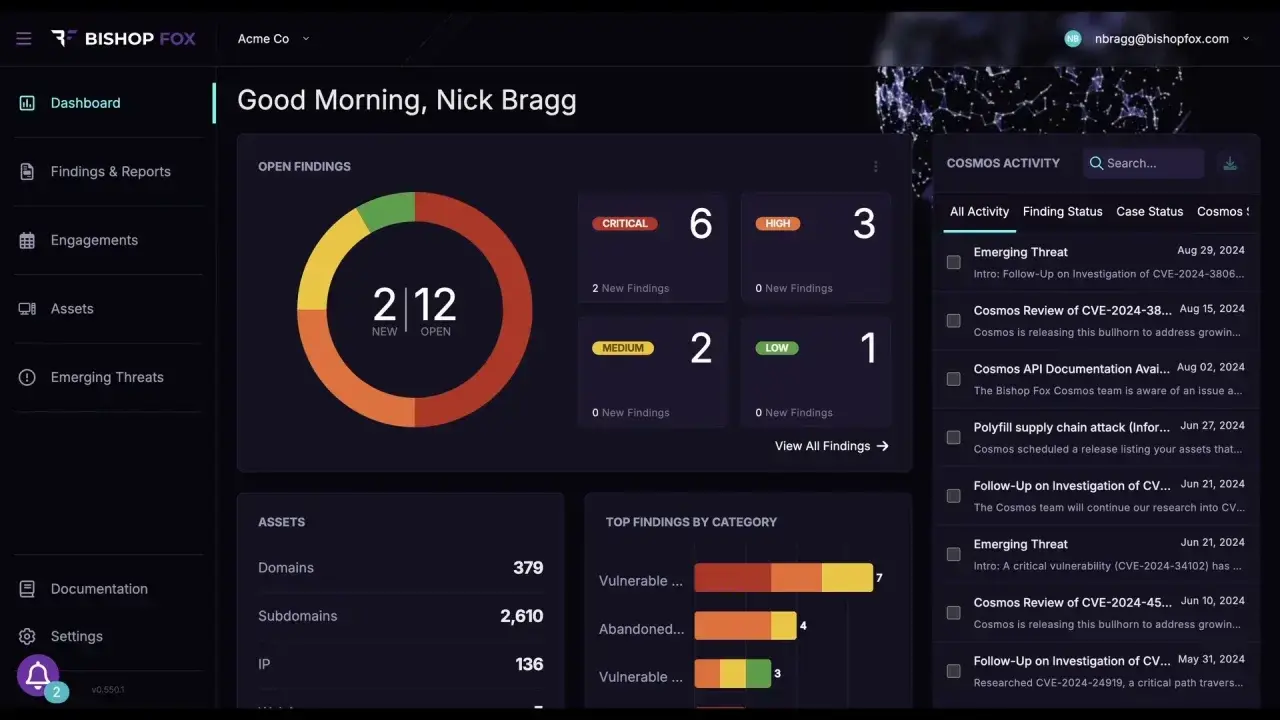
Category: Elite manual and red team testing
Bishop Fox is a globally recognized name in offensive security, specializing in advanced penetration testing and adversary simulations, and is increasingly folding AI assisted triage into its otherwise human led engagements. Known for working with Fortune 500 companies, it has built a strong reputation for depth over speed.
Why use Bishop Fox
Organizations with mature security programs that need to test against sophisticated, realistic attack scenarios rather than known vulnerability classes. Red team engagements, supply chain attack simulations, and assessments of complex cloud or hybrid architectures are where Bishop Fox operates most effectively.
Pros
Deep red team capabilities
Established offensive security research background
Strategic executive reporting
Broad coverage across attack surfaces
Cons
Premium pricing
Long wait times due to high demand
Pricing
Custom pricing; contact for a quote.
Ratings and reviews
Clients commend the firm’s expertise, thoroughness, and real world simulation accuracy.
Key considerations when choosing a penetration testing company
| Factor | What to check |
|---|---|
| Testing methodology | Whether you're buying manual testing, automated scanning, AI assisted testing, or a combination. Each has different coverage characteristics and suits different risk profiles |
| Industry expertise | Whether the provider knows your compliance framework and sector specific threat model. A generalist running the same playbook across every industry produces less relevant findings |
| Scope and coverage | Whether the provider covers the surfaces you actually care about: web applications, APIs, networks, cloud, or some combination. Many providers specialize in one area |
| Reporting quality | Whether findings include a clear reproduction path and remediation guidance. Ask for a sample report before committing; a vague finding creates work rather than reducing it |
| CI/CD integration | Whether the provider can integrate into your build and release workflow. Testing that sits outside the pipeline will lag behind teams that deploy continuously |
| Turnaround time | Actual timelines for your specific scope, not a category default. Manual consulting engagements often take weeks; automated and PTaaS models can often return initial findings in days |
| Certifications | Specific tester credentials (OSCP, CEH, GPEN, CREST), not just a general claim of certification |
| Pricing model | Whether project based, subscription, or credit based pricing actually matches how you'll use the service |
| Post test support | Whether retesting after remediation is included as standard, or treated as a separate, billable step |
The future of penetration testing
The gap between how fast software ships and how fast it gets tested has driven most of the structural changes in this market. Agentic AI platforms like Beagle Security represent one response to that gap: continuous, autonomous testing that runs at development speed. PTaaS platforms like Cobalt.io and BreachLock represent another: on demand human testing that does not require a multi week procurement cycle.
Manual consultancies are not going away. There are classes of vulnerability, particularly in complex, custom, or high security environments, that require human judgment to find and validate. Bishop Fox, Packetlabs, and NetSPI will continue to have a market for that work, and several are already blending AI assisted triage into their human led process rather than treating automation and manual testing as opposing approaches.
What is changing is the baseline expectation. Security testing done once a year is no longer credible as a risk management practice on its own. The organizations that build continuous testing into their normal operations, at whatever tier of depth they can sustain, are the ones that will have useful security data rather than a dated compliance artifact.
Final thoughts
Penetration testing in 2026 is not a one size fits all service. Startups and DevSecOps teams benefit most from agentic AI pentesting platforms like Beagle Security, while mid market companies may prefer the flexibility of PTaaS solutions like Cobalt.io or BreachLock. Enterprises requiring deep manual expertise should look to firms like NetSPI, Trustwave, or Bishop Fox.
Regardless of approach, the right partner helps you identify vulnerabilities faster, meet compliance goals, and protect customer trust. If continuous, autonomous testing fits how your team ships software, explore how Beagle Security’s agentic AI penetration testing platform can test your applications and APIs without slowing development. Start a 14 day free trial or schedule a demo to see how it fits into your existing workflow.
FAQs
What is PTaaS, and how is it different from traditional penetration testing?
PTaaS (Pentest as a Service) gives you ongoing, platform based access to vetted testers, with a dashboard for tracking findings and requesting retests, rather than a single, scheduled engagement. Traditional penetration testing is typically a discrete, project based assessment delivered as a report at the end. PTaaS suits teams that need recurring or continuous coverage; traditional testing still fits well defined, point in time assessments, particularly for complex or highly custom environments.
What is AI penetration testing, and can it replace manual testing?
AI penetration testing uses automated reasoning to identify, exploit, and validate vulnerabilities, often continuously and at a pace manual testing can’t match. It’s well suited to catching common vulnerability classes quickly and repeatedly. It hasn’t replaced manual testing for complex business logic flaws, novel attack chains, or judgment heavy scenarios, which is why several companies in this list, including NetSPI and Bishop Fox, now blend AI assisted triage into human led engagements rather than choosing one approach exclusively.
How much does penetration testing cost in 2026?
Cost depends heavily on scope. Smaller, narrowly scoped engagements can start around $5,000, while complex enterprise assessments commonly run $50,000 or more, with premium consultancy or crowdsourced contracts sometimes exceeding that. Subscription and PTaaS models (like Beagle Security’s or Cobalt.io’s) price differently, often as a fixed monthly or credit based rate rather than a one time project fee.
How often should a company run penetration tests?
PCI DSS 4.0 requires testing at least annually and after significant changes. Other frameworks like SOC 2, HIPAA, and GDPR don’t specify an exact cadence, but auditors increasingly expect evidence of regular, validated testing rather than a single annual report. Teams shipping frequently generally benefit from continuous or more frequent testing regardless of what a specific framework mandates outright.


![Top ZAP alternatives and competitors [October 2026]](/blog/images/top-zap-alternatives-cover.webp "Top ZAP alternatives and competitors [October 2026]")







![Top vendor application security tools [2026]](/blog/images/top-vendor-application-security-testing-tools-2026-cover.webp "Top vendor application security tools [2026]")



![Top Snyk alternatives & competitors [2026]](/blog/images/top-snyk-alternatives-cover.webp "Top Snyk alternatives & competitors [2026]")
![BurpSuite vs Acunetix: Which is the best choice for you? [2026]](/blog/images/burpsuite-vs-acunetix-cover.webp "BurpSuite vs Acunetix: Which is the best choice for you? [2026]")