Vendor applications now sit inside most core enterprise workflows, from identity providers to finance automation to customer facing platforms. That interconnection cuts both ways. A single untested vendor integration can expose sensitive data, API keys, authentication tokens, or a privileged workflow you assumed was locked down. Vendor application security testing has become a standard line item in third party risk programs for exactly that reason.
In 2026, most security teams evaluating vendor AppSec tools are looking for something specific, testing that works without source code access, holds up against API heavy architectures, and slots into an existing DevSecOps pipeline rather than sitting outside it. This guide walks through six tools that get used for exactly that job, and where each one actually fits.
TL;DR: Top vendor application security tools in 2026
None of these six tools solve the same problem the same way. Some need source code or a repository connection, others test a running application from the outside, and a couple do both. That distinction matters more for vendor testing than almost anywhere else in AppSec, since vendor supplied code is the one place you often cannot get repository access even if you wanted it. If a vendor gives you nothing but a login and a URL, your options narrow to DAST and binary analysis. If they share a repository, SCA and SAST tools open up.
| Tool | Testing approach | Source code needed | Starting price | Best suited for |
|---|---|---|---|---|
| Beagle Security | DAST and API testing (black box) | No | Free tier, then from $119/month | Testing vendor web apps and APIs from the outside, including business logic |
| Veracode | SAST, DAST, SCA, binary analysis, manual pentest | Optional (binary analysis works without it) | Quote based, no public list price | Regulated industries needing compliance grade reporting across a large vendor ecosystem |
| Checkmarx One | SAST, SCA, IaC, API, DAST, container and supply chain security | Mostly yes, DAST module is the exception | Quote based, licensed per contributing developer | Enterprises with code or repository level access to vendor built software |
| Fortify (OpenText) | SAST and DAST, on premise or hybrid | Optional, depending on module | Quote based, subscription by application or code volume | Legacy systems and highly regulated environments needing on premise scanning |
| Snyk | SCA and SAST, developer first | Yes, needs repository access | Free tier, paid plans from $25/developer/month | Auditing vendor supplied SDKs, plugins, and open source components |
| Mend.io | SCA focused, with newer SAST and AI security modules | Yes, needs repository access | Mend AppSec up to $1,000/developer/year, add ons priced separately | Tracking open source dependency and license risk inventory software at scale |
Top vendor application security tools in 2026
Beagle Security
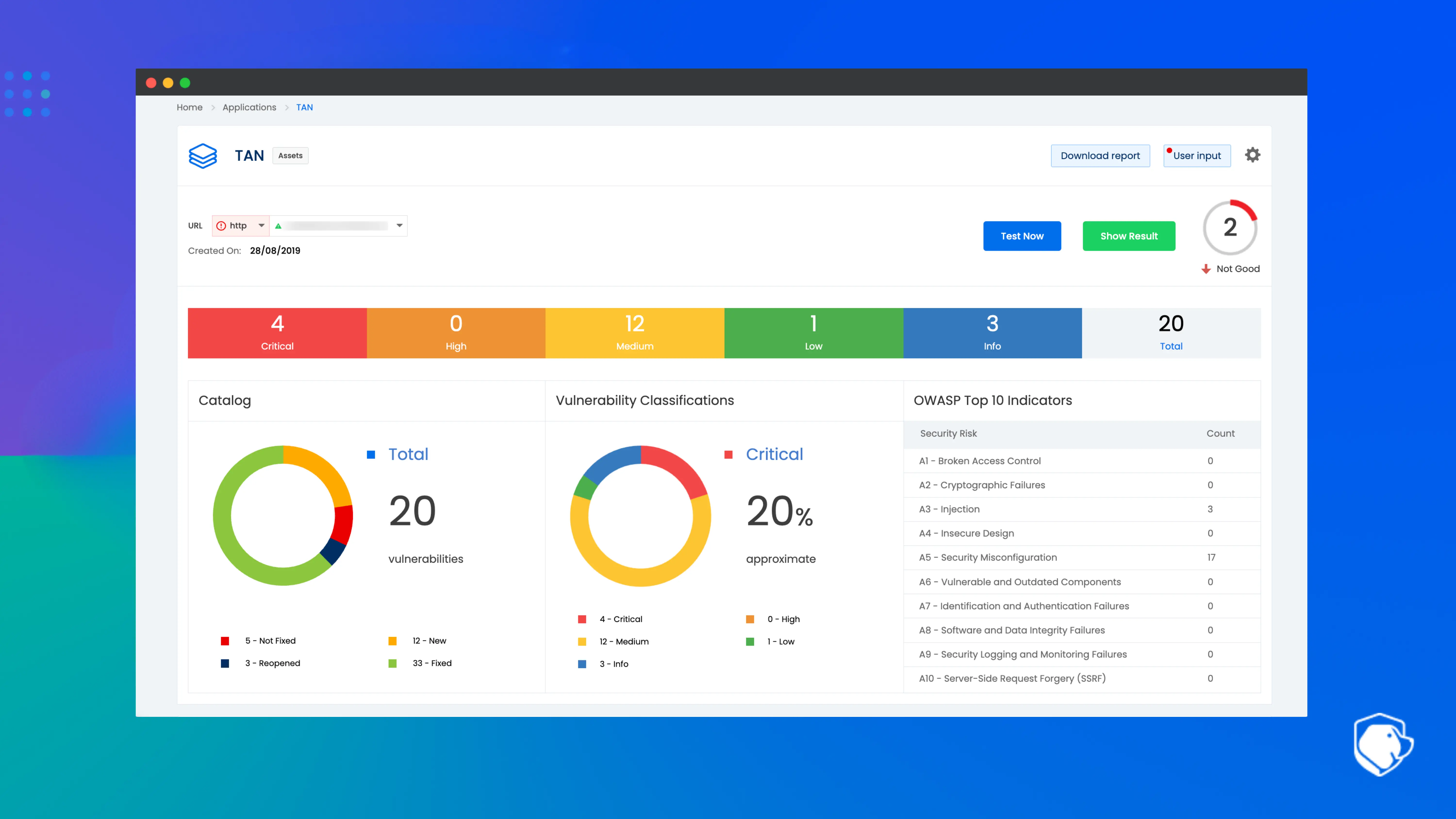
Testing approach: Agentic AI and API testing, black box
Beagle Security is a cloud based application security testing platform built around agentic AI penetration testing. It runs real attack simulations against a live application, which makes it a natural fit for vendor assessments where you have no access to the vendor’s internal codebase. Logic based testing and API discovery help surface business logic flaws and undocumented endpoints that a standard scanner tends to miss. The platform is built for continuous testing, so it keeps working after onboarding, when a vendor pushes an update you were not told about.
Key features
Automated DAST for web and SaaS applications
API security testing for REST and GraphQL
Logic based scenarios for business workflow validation
API discovery for hidden or undocumented endpoints
CI/CD and SCM integration
AI assisted remediation recommendations
Continuous monitoring to catch risk introduced by software updates
Pricing
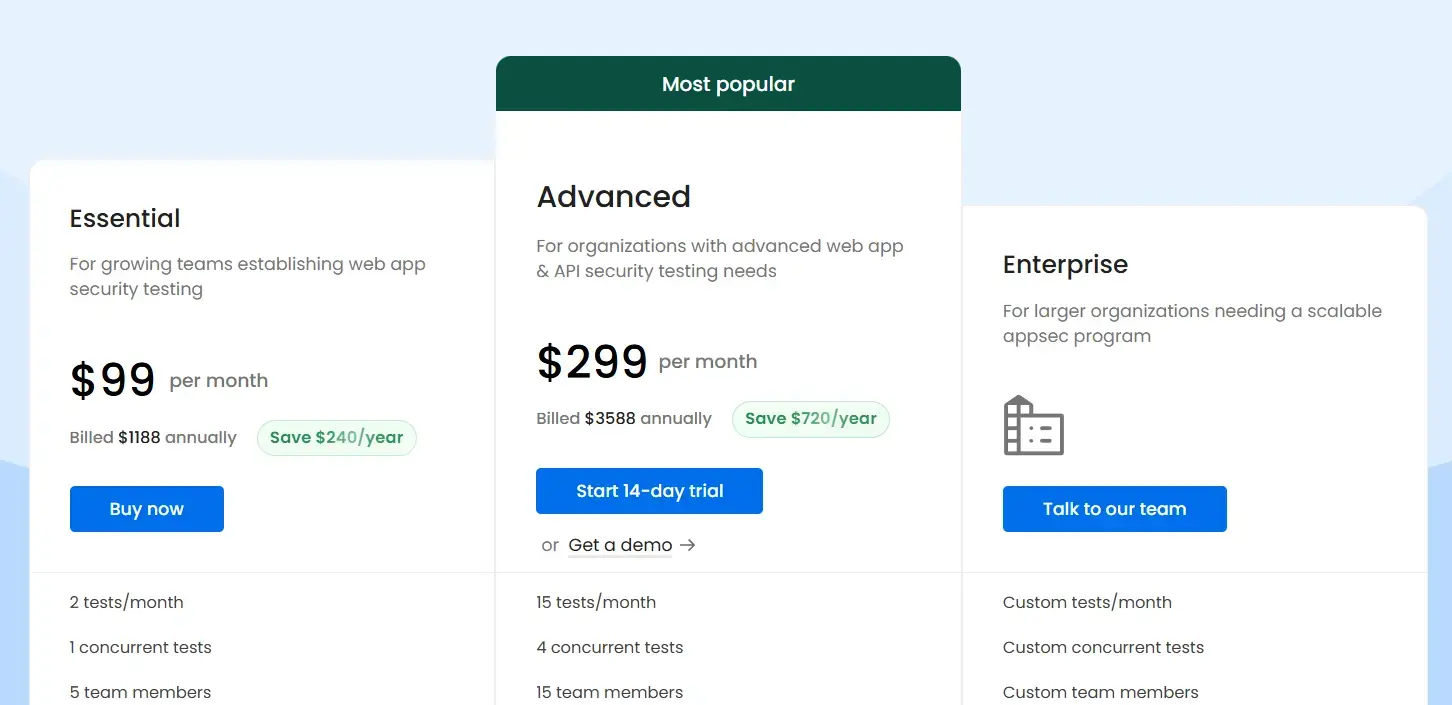
Free tier
Essential: $119/month($99/month, billed annually)
Advanced: $359/month($299/month/billed annually)
Custom enterprise plans available
Ratings & review
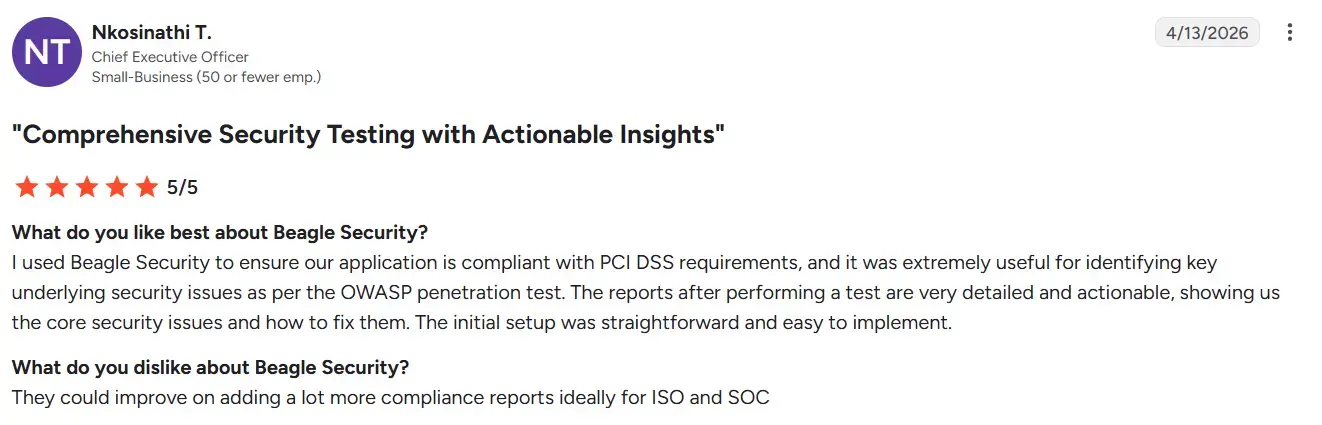
4.7 out of 5 from 87 reviews. Reviewers consistently point to accurate automated scanning, clear dashboards and reporting, and a lower false positive rate compared with other DAST tools they have used. Some smaller customers mention wanting more built in guidance on how to resolve the vulnerabilities the platform finds.
Why consider it
Beagle Security tests a running application from the outside, the same angle an attacker would use. It does not need source code, supports frequent retesting, and its API discovery feature is useful specifically for catching vendor endpoints that never made it into the documentation.
Veracode
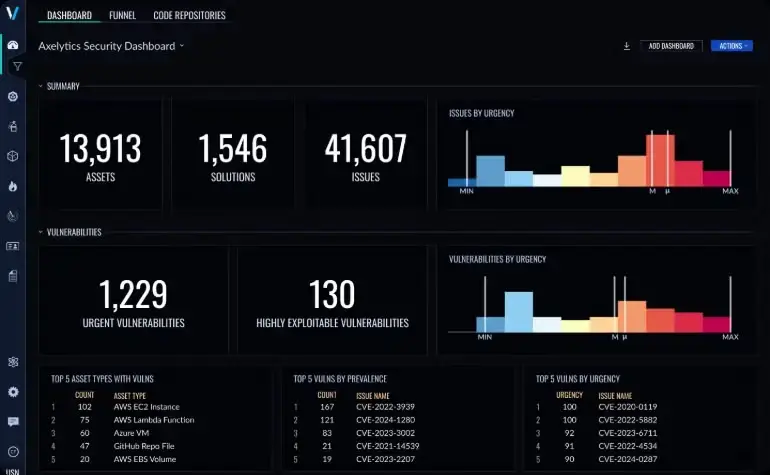
Testing approach: SAST, DAST, SCA, binary analysis, manual pentest
Veracode is an enterprise application security platform covering SAST, DAST, SCA, and manual penetration testing. Its cloud native architecture holds up across large, distributed development ecosystems, and it is deeply embedded in compliance heavy sectors thanks to governance workflows and standardized reporting. Binary analysis is the feature that matters most for vendor testing specifically. It lets Veracode scan compiled code, so you can evaluate a vendor’s application without source level access.
Key features
SAST, DAST, SCA, and manual penetration testing in one platform
Binary and compiled code analysis for vendor applications without source access
Compliance dashboards aligned with SOC 2, PCI DSS, and ISO frameworks
Broad language and framework support across enterprise tech stacks
Governance workflows for managing vendor risk at scale
CI/CD and SDLC integrations
Pricing
Veracode does not publish list pricing. Third party procurement data puts costs starting around $15,000 a year for a single testing module and scaling past $100,000 annually for full enterprise coverage across SAST, DAST, and SCA. Treat these as directional estimates, not quoted figures, and confirm current numbers directly with Veracode.
Ratings & review
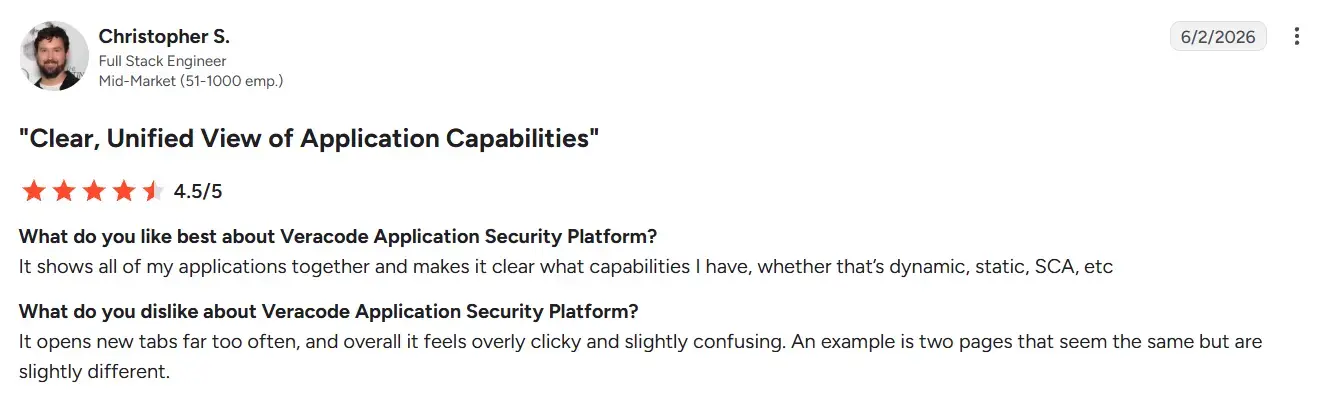
3.8 out of 5 from 25 reviews on G2’s Veracode Application Security Platform listing. Reviewers highlight ease of integration with development tools like Visual Studio and comprehensive security reporting. Recurring complaints include slower scan times on large codebases and an interface that some reviewers describe as dated.
Why consider it
Veracode is a strong fit when you are evaluating vendor provided code or binaries and need compliance focused reporting. It shows up often in BFSI, healthcare, and government vendor assessments for that reason.
Checkmarx One
Testing approach: SAST, SCA, IaC, API, DAST, container and supply chain security
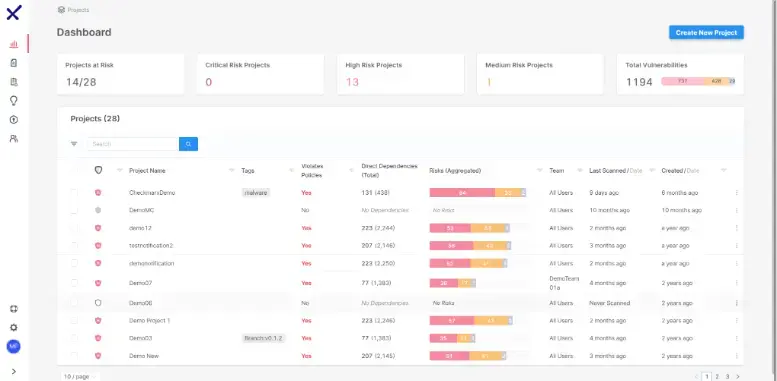
Checkmarx One is a unified application security platform spanning SAST, SCA, infrastructure as code scanning, API security, DAST, container security, and software supply chain security, correlated through its ASPM layer. It has been named a Leader in the 2025 Gartner Magic Quadrant for Application Security Testing, its seventh consecutive year in that position, and a Leader in Gartner’s newer 2026 Magic Quadrant for Software Supply Chain Security. The platform also includes Checkmarx One Assist, a family of AI agents that handle triage and remediation on top of Checkmarx’s own scan findings.
Key features
Customizable SAST rules with broad language and framework support
SCA for open source dependency insights and licensing risk
API security testing across OpenAPI based and nonstandard specifications
DAST for testing running applications, including AI generated code paths
CI/CD, SCM, and IDE integrations
Risk correlation across scanners to reduce alert noise
Unified dashboard for all application security testing activity
Pricing
Licensed per contributing developer on a subscription basis, with cost varying by module. Checkmarx does not publish list pricing, so confirm current numbers directly with the vendor.
Ratings & review
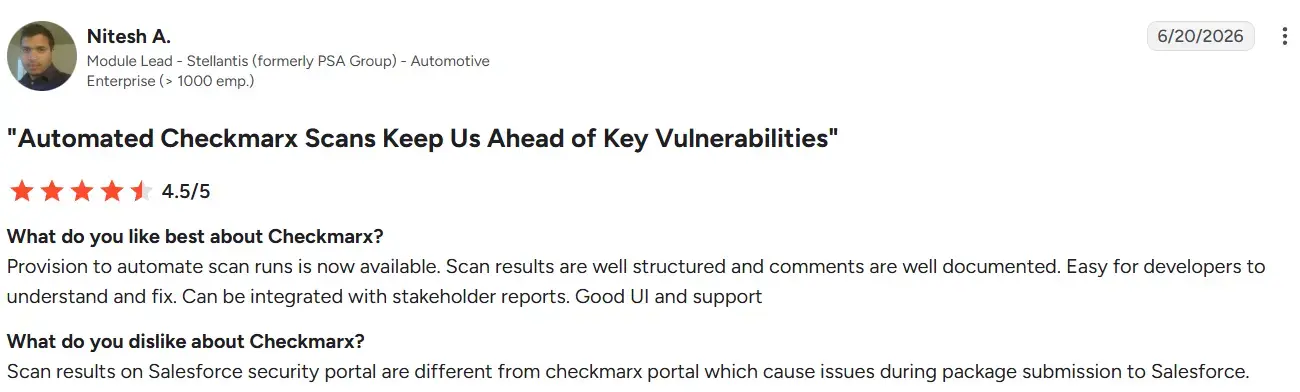
4.3 out of 5 from 73 reviews. Reviewers frequently praise the SAST engine’s thoroughness and its ability to trace how a vulnerability flows through the code, along with strong CI/CD integration. The most common criticism is false positive volume, which some teams say requires dedicated triage time, along with licensing that can get expensive as more modules are added.
Why consider it
Checkmarx One is strongest when a vendor shares source code or you are managing outsourced development directly. Its DAST module extends coverage to vendor applications you can only test from the outside, but most of the platform’s depth assumes some level of code or repository access.
Fortify (OpenText)

Testing approach: SAST and DAST, on premise or hybrid
Fortify is one of the longest standing names in application security testing, now sold under OpenText as OpenText Static Application Security Testing (Fortify), previously known as Fortify Static Code Analyzer, and OpenText Dynamic Application Security Testing (Fortify), previously Fortify WebInspect. OpenText has also begun folding these under a broader “Application Security Aviator” branding for its AI driven capabilities. The platform is known for policy driven workflows, strong legacy language support, and the ability to run fully on premise, which still matters for vendors in regulated or air gapped environments.
Key features
SAST with extensive language coverage, including legacy languages
DAST for dynamic testing of running applications
On premise, cloud, and hybrid deployment support
Custom rulepacks and policy enforcement
Detailed reporting and audit trail management
Pricing
Quote based, structured around the number of applications, users, or volume of code scanned. OpenText does not publish a public price list, so confirm current numbers directly with the vendor.
Ratings & review
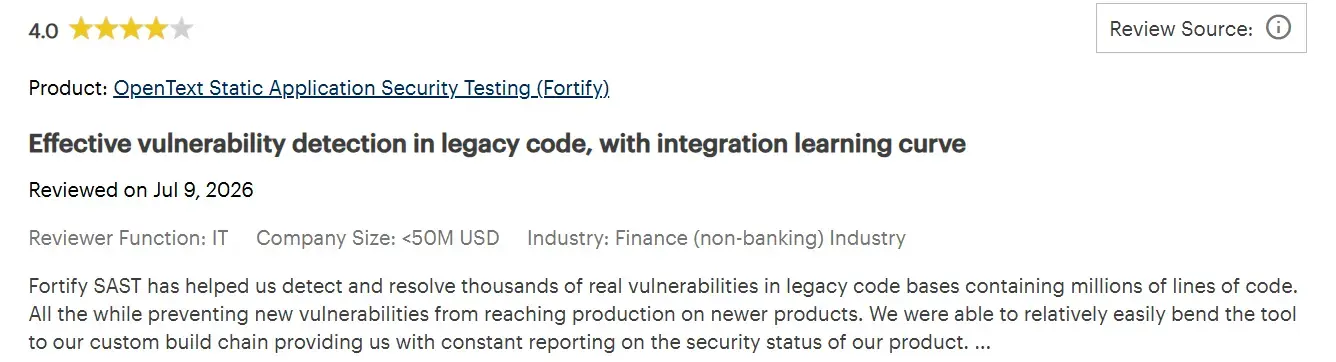
OpenText’s Fortify products have consistently scored in the mid 4 out of 5 range on Gartner Peer Insights, most recently earning a Gartner Peer Insights Customers’ Choice distinction with a 4.6 out of 5 average across the prior 12 months. The exact figure varies slightly depending on which specific product listing you check, SAST, DAST, or the unified Aviator listing.
Why consider it
Fortify fits organizations with legacy applications or strict regulatory requirements, particularly where on premise scanning of vendor delivered software is a hard requirement rather than a preference.
Snyk
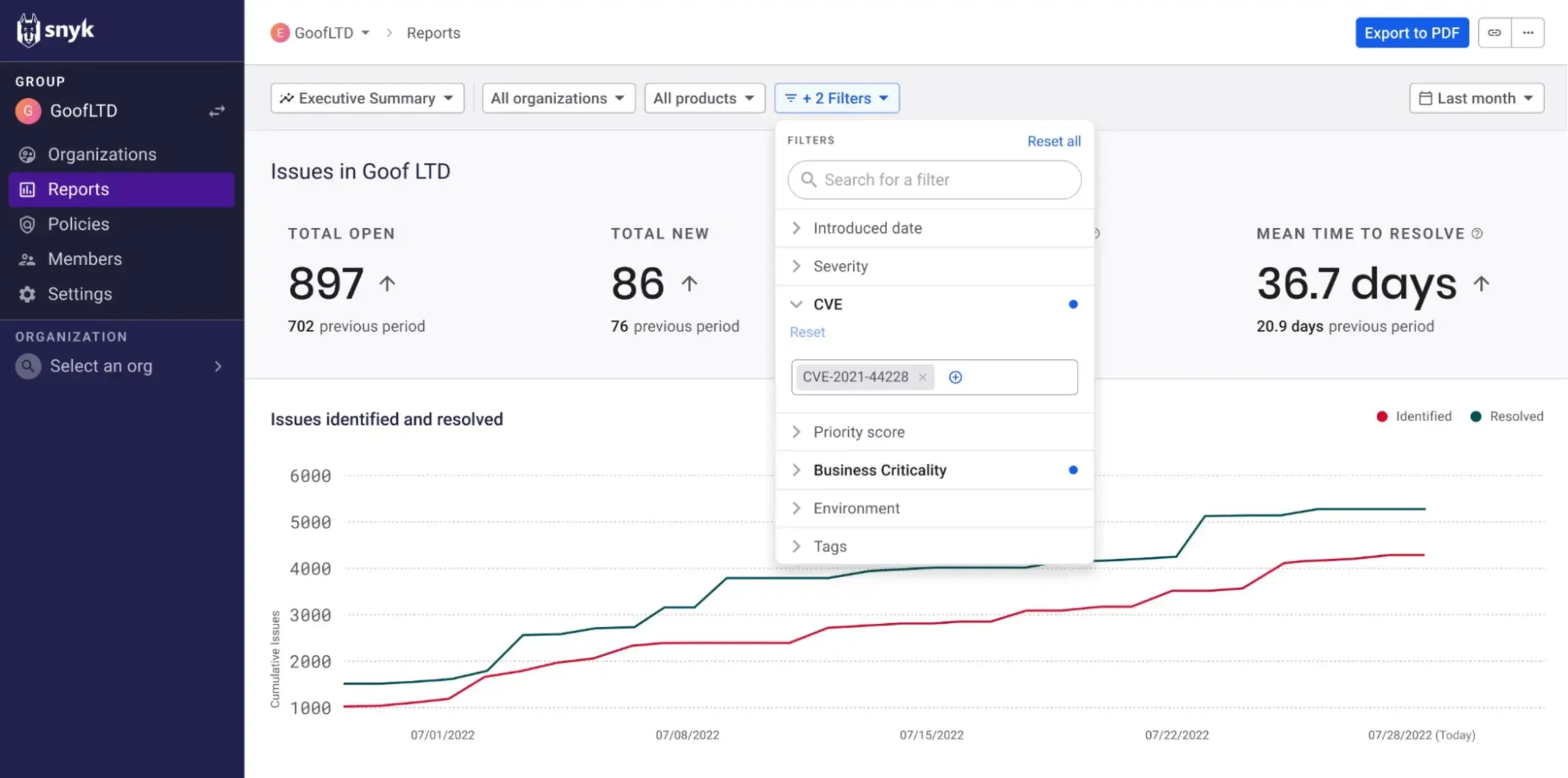
Testing approach: SCA and SAST, developer first
Snyk is a developer focused security platform built around SCA and SAST, with the latter powered by its Snyk Code engine (formerly branded DeepCode AI). It integrates directly into Git repositories, IDEs, and CI/CD pipelines, which makes it convenient for engineering teams fixing issues during development rather than after the fact. Dependency scanning and license analysis are particularly strong, which matters when auditing vendor software that bundles third party packages.
Key features
Deep SCA with license compliance checks
Fast SAST with AI generated fix suggestions
Direct integration into GitHub, GitLab, Bitbucket, and major IDEs
Policy and compliance controls
Strong ecosystem coverage for open source software
Pricing
Free tier available
Team: from $25/developer/month
Enterprise: custom quote
Ratings & review
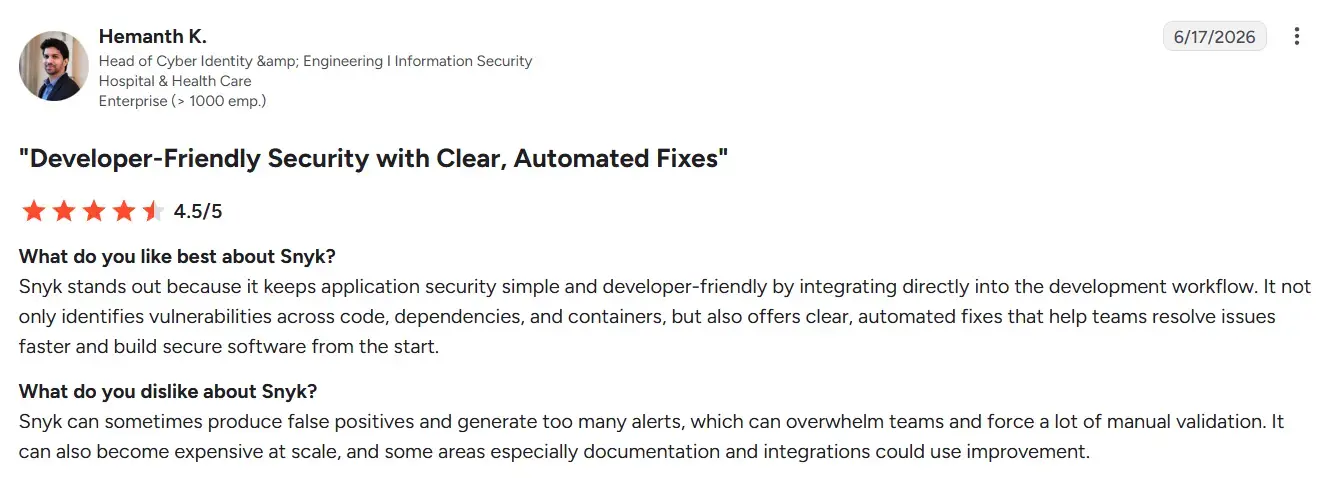
4.5 out of 5 from roughly 130 reviews. Reviewers consistently praise the developer experience: IDE and CI/CD integration, fast scans, and fix suggestions that come with a pull request already drafted. The recurring criticism is false positive noise in SAST results, plus enterprise pricing that some reviewers describe as steep for teams scanning many repositories.
Why consider it
Snyk works best when you have repository access to a vendor’s supplied code components, SDKs, plugins, or integration libraries, and want dependency risk caught early rather than found later in a DAST scan.
Mend.io
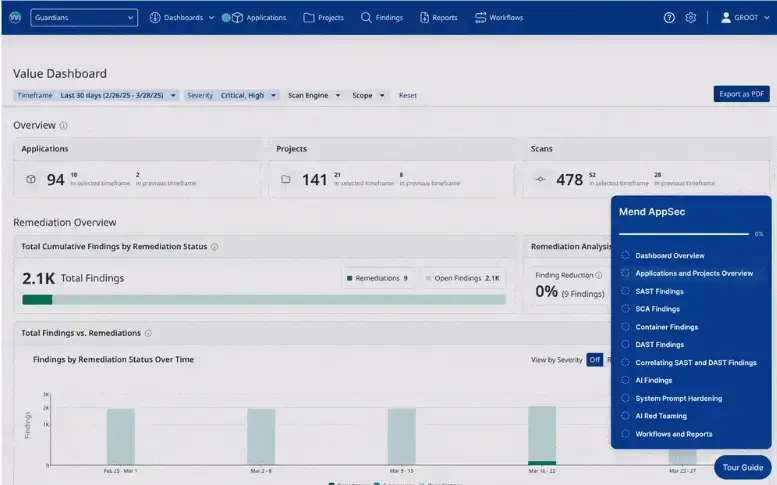
Testing approach: SCA focused, with newer SAST and AI security modules
Mend.io, formerly WhiteSource, built its reputation on software composition analysis and open source risk management. It has since broadened into what it calls an AI native AppSec platform, adding SAST alongside its core SCA engine, plus a separate Mend AI product line covering AI component discovery, red teaming, and runtime guardrails. For vendor testing specifically, its core strength remains dependency visibility: seeing what open source and third party libraries a vendor’s software actually depends on, and whether any of them carry known risk.
Key features
SCA with vulnerability and dependency tracking
SAST as part of the newer Mend AppSec platform
Policy based enforcement for licensing and versioning
Continuous monitoring of open source components
Git based workflow and CI/CD integration
License analysis for compliance and governance
Pricing
Priced per contributing developer, not per scan or project.
Mend AppSec (AI native AppSec platform): up to $1,000/developer/year
Mend AI Premium add on: up to $300/developer/year
Mend Renovate Enterprise (dependency management): up to $250/developer/year
Ratings & review
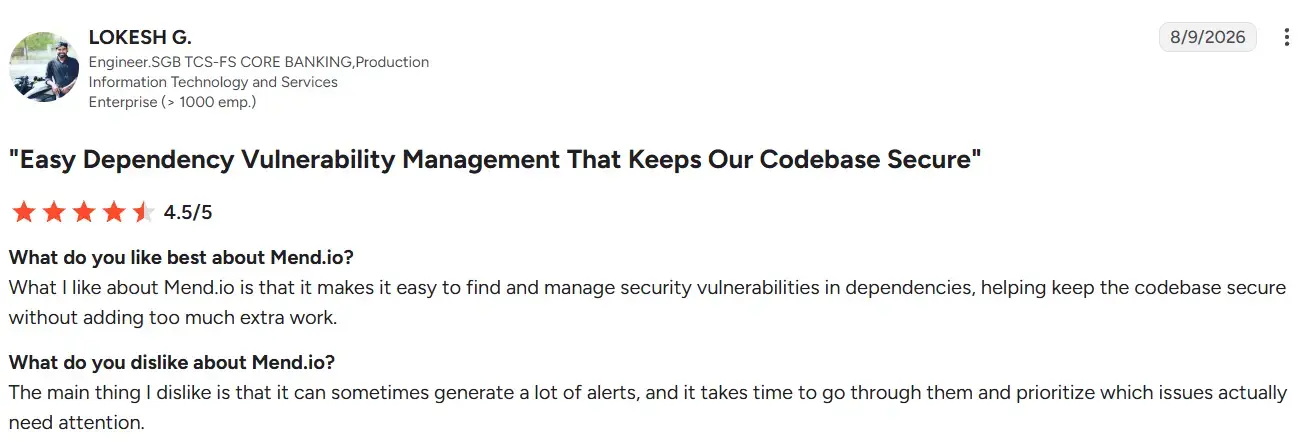
Mend.io is a strong pick when the vendor risk question is really an open source dependency question: whether a vendor is shipping outdated libraries or components with known vulnerabilities buried a few layers deep.
Why consider it
Mend.io is a strong pick when the vendor risk question is really an open source dependency question: whether a vendor is shipping outdated libraries or components with known vulnerabilities buried a few layers deep.
What makes a good vendor application security tool
Across the six tools above, a handful of criteria keep separating the tools that hold up in a vendor testing program from the ones that only work well on code you own outright.
| Criterion | Why it matters |
|---|---|
| Works with the access you'll actually get | Most vendors will not hand over a repository. A tool that only does SAST or SCA is dead on arrival for that relationship, no matter how good its scanning engine is |
| Covers the API surface, not just the login page | Vendor products today are largely API driven under the hood. A tool that stops at the visible web application misses most of the real attack surface |
| Supports retesting without a new procurement cycle | Vendor risk is not a one time checkbox. A tool that makes continuous or scheduled retesting easy catches the silent changes that a point in time review will always miss |
| Reporting maps to what your compliance program needs | SOC 2, PCI DSS, and ISO 27001 auditors want evidence, not raw scan output. Reporting that already speaks that language saves real time at audit |
| Fits into the pipeline you already run | A tool that requires a separate workflow outside CI/CD tends to get skipped under deadline pressure, which defeats the point of testing at all |
Final thoughts
Vendor applications sit close to the center of most enterprise operations now, which is why vendor application security testing has moved from a nice to have into a standard part of third party risk management. As integrations deepen and supply chains stretch further, the blast radius of one insecure vendor component keeps growing.
A working testing strategy catches issues early, validates vendor security claims against actual evidence instead of a questionnaire, and supports the continuous oversight that frameworks like SOC 2 and ISO 27001 already expect from third party risk programs.
If you are building out a vendor testing workflow and do not have source code access to lean on, Beagle Security covers the DAST and API layer directly, with continuous monitoring and logic based testing that catches issues a standard scanner tends to miss. You can try it through the 14 day advanced trial or the interactive demo to see how it fits into an existing AppSec or third party risk process.
FAQs
How often should vendor applications be tested?
Vendor applications should be tested continuously or after every major update, as new vulnerabilities can be introduced silently during software changes.
What role does continuous testing play in vendor security?
Continuous testing helps organizations detect new vulnerabilities introduced through updates, integrations, or configuration changes in vendor applications.
Are automated security testing tools enough for compliance?
No, most standards like SOC 2 and PCI DSS require a combination of automated tools and manual testing for comprehensive security validation.
Why is vendor application security testing important?
Vendor application security testing is crucial because third-party software can introduce hidden vulnerabilities that expose sensitive data, disrupt operations, and create compliance risks if left unchecked.