Best API security tool for developers [2026]
![Best API security tool for developers [2026]](/blog/images/blog-banner-five.webp "Best API security tool for developers [2026]")
API security has become one of the most critical parts of modern software development. As teams shift toward microservices, distributed systems, cloud-native architectures, and AI-powered integrations, the number of exposed API endpoints has grown dramatically. Every new service, mobile app, internal workflow, or third-party integration adds more APIs and with them, new attack surfaces.
At the same time, attackers have become increasingly sophisticated. Instead of targeting traditional web vulnerabilities, they now focus on API-specific threats like BOLA (Broken Object Level Authorization), mass assignment, IDOR, business-logic abuse, credential misuse, and shadow/zombie APIs that teams don’t even know exist. These vulnerabilities often slip through basic scanners because they depend on context, user roles, and multi-step flows.
In this 2026 guide, we compare the best API security tools for developers, from shift-left contract analysis to automated DAST, fuzzing, logic testing, and runtime threat detection. Whether you’re securing a handful of internal services or managing thousands of APIs across a large enterprise, this guide will help you choose the right solution for design-time validation, CI/CD automation, or full-lifecycle API protection.
Comparison table
| Tool | Pricing (verified / most accurate public info) | What it does | Best for |
|---|---|---|---|
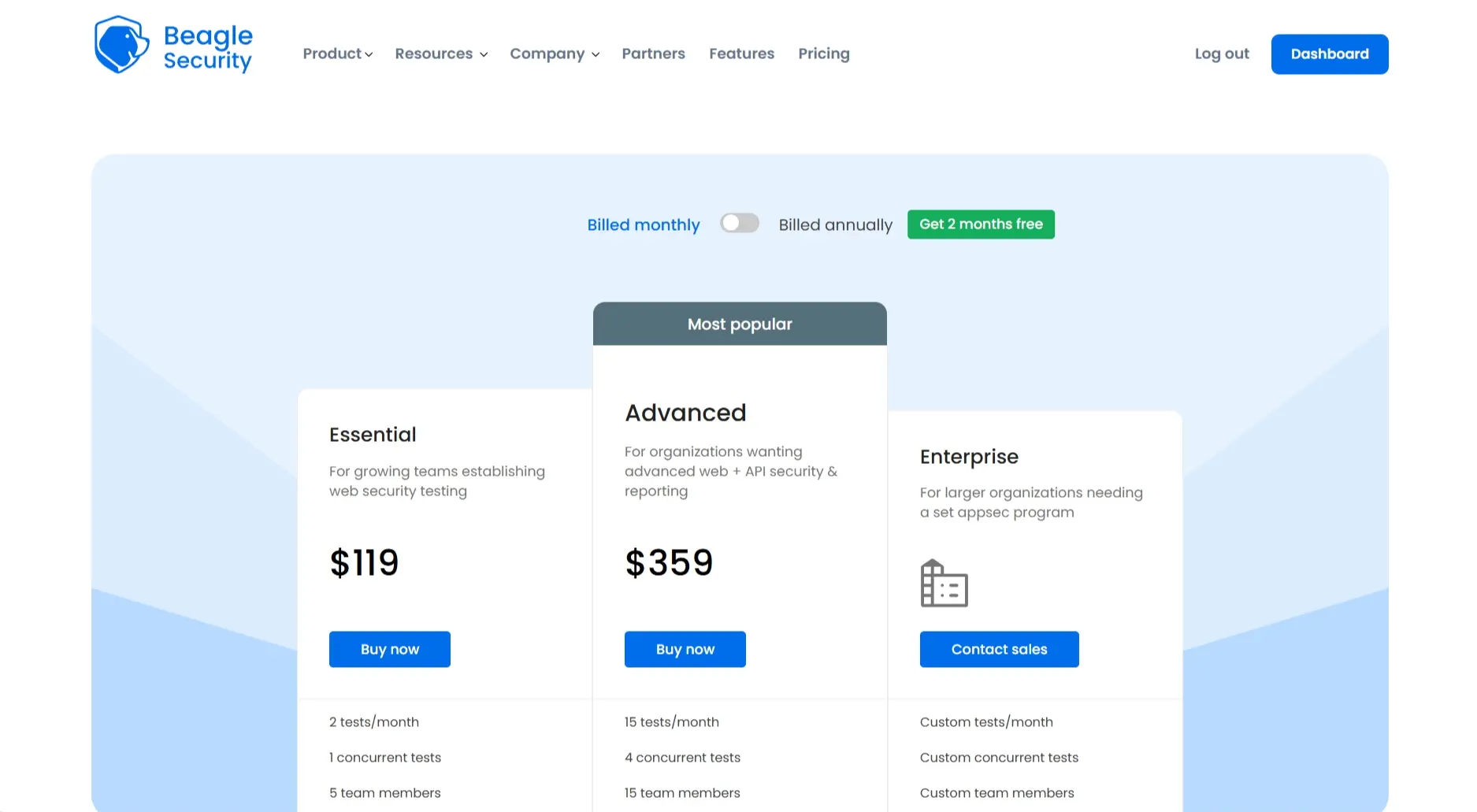
| Beagle Security | $119/mo (Essential plan) | Automated API & web-app DAST | Small/medium teams needing simple automated scans |
| StackHawk | From $39 per code contributor per month | Developer-friendly API DAST | CI/CD-integrated API scanning for engineering teams |
| APIsec | From $650/mo (Standard plan, per 100 endpoints) | Automated business-logic API testing | Pre-production logic abuse & authorization flaw detection |
| Akto.io | Custom / contact sales (usage-based) | API discovery, security testing & runtime protection | Teams needing full-lifecycle API security |
| Traceable AI | Custom / enterprise-based pricing | API discovery, runtime monitoring & threat detection | Large organizations with complex microservices |
| 42Crunch | Free tier + paid plans starting $15/mo (individual), teams from $375/mo | API contract security (OpenAPI analysis) | Shift-left design-time API security |
| Escape | Custom / not publicly listed | API security scanning for GraphQL & REST | GraphQL-heavy development teams |
| Equixly | Custom / not publicly listed | AI-powered API security testing | Automated fuzzing & anomaly-based detection |
| Levo | Custom / not publicly listed | API discovery, documentation, security testing & runtime protection | Teams needing integration + security testing and API observability |
| ZeroThreat | Custom / not publicly listed | API attack simulation & AI-based pentesting | Red-team-style automated API testing |
Beagle Security
What it does: Automated API & web-app DAST and vulnerability scanning for APIs.
Beagle Security is a SaaS-based platform that helps you test APIs (and web apps) for security vulnerabilities before going to production. It performs automated penetration-testing procedures and provides detailed reports with steps to remediate vulnerabilities. It’s designed to integrate with DevOps pipelines, making it easier for small or midsize teams to adopt a DevSecOps workflow without a steep learning curve. Many users appreciate Beagle for its relatively simple setup and accurate detection of common API security issues.
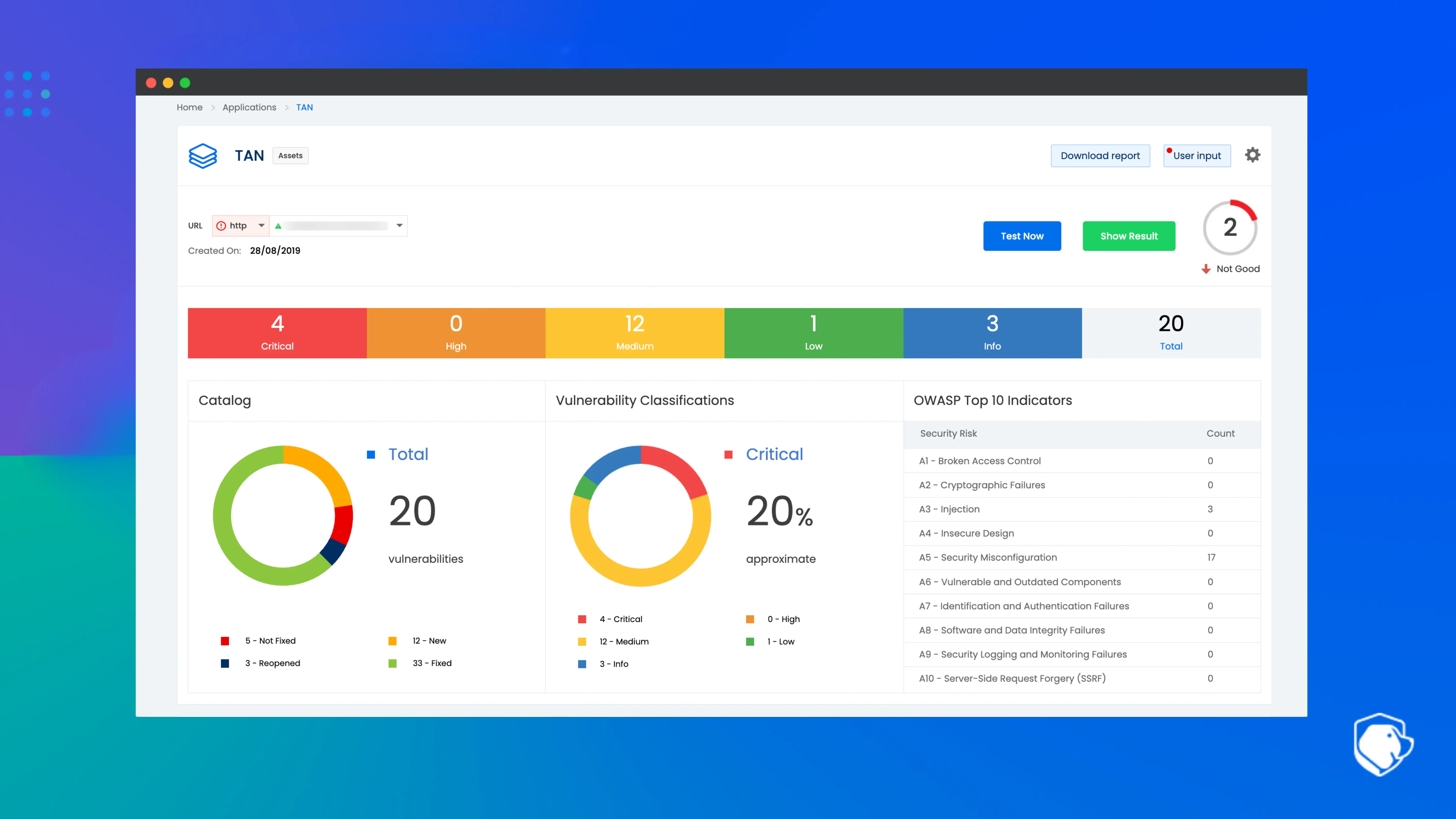
Key features:
Automated API scanning
Support for REST, GraphQL, and web apps
Simple reporting with actionable fixes
CI/CD integrations
Pricing:
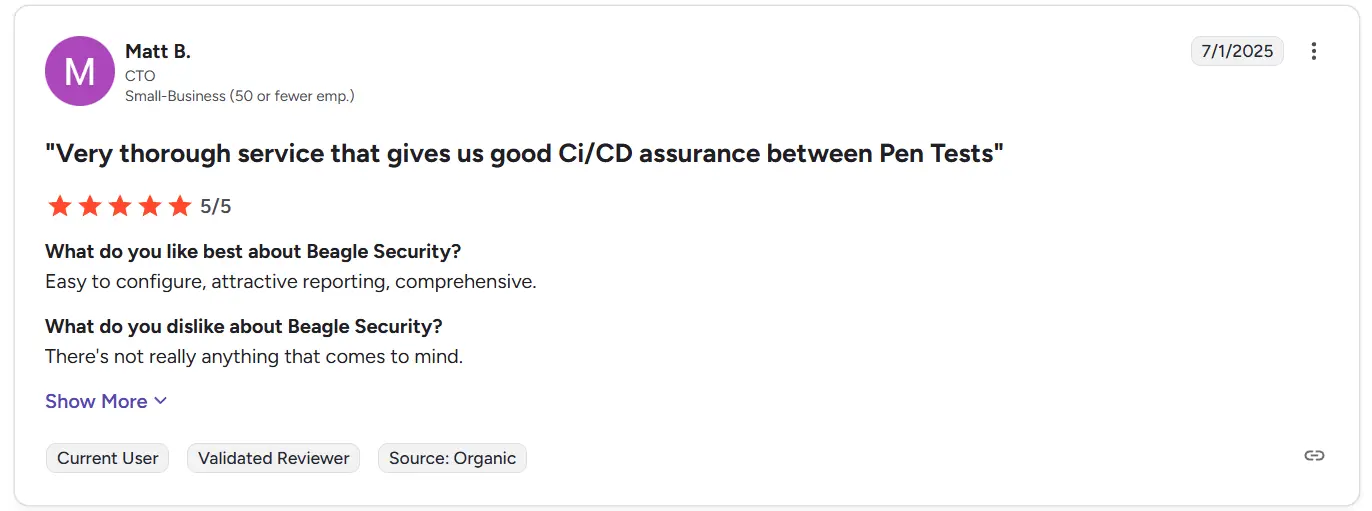
G2 rating & reviews: On G2, Beagle Security scores 4.7/5. Users highlight its ease of setup, developer-friendly reports, and decent detection rate
Why consider it:
Best for teams that want quick, low-overhead API security testing without heavy configuration.
StackHawk
What it does: Developer-friendly DAST and API scanning integrated into CI/CD.
StackHawk is built to bring security scanning directly into developer workflows. It supports API scanning (REST, GraphQL, gRPC) and runs automated vulnerability assessments as part of CI/CD pipelines—helping catch issues early before deployment. With built-in support for black-box scanning, automated scans, and issue tracking, StackHawk can spot common API misconfigurations, injection vulnerabilities, and other DAST-type problems. It’s appreciated for giving fast feedback to developers, helping reduce tech debt.
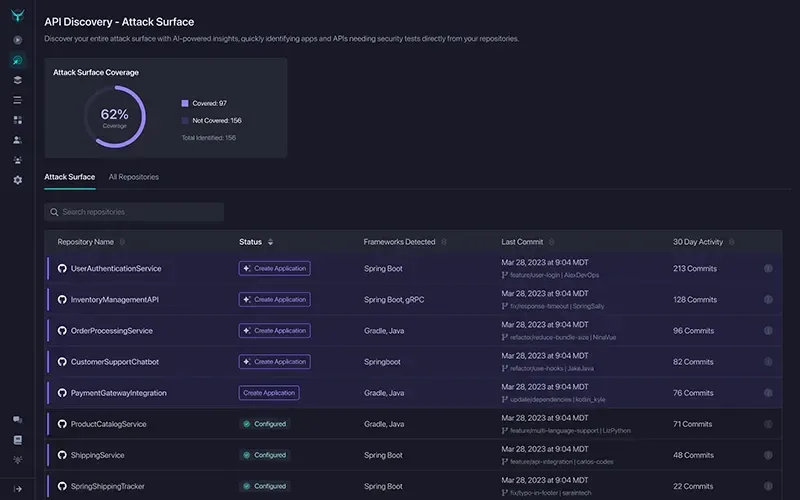
Key features:
Highly CI/CD-friendly workflows
“Security as code” configuration
Dev-oriented debugging and fix guidance
Works with containerized microservices
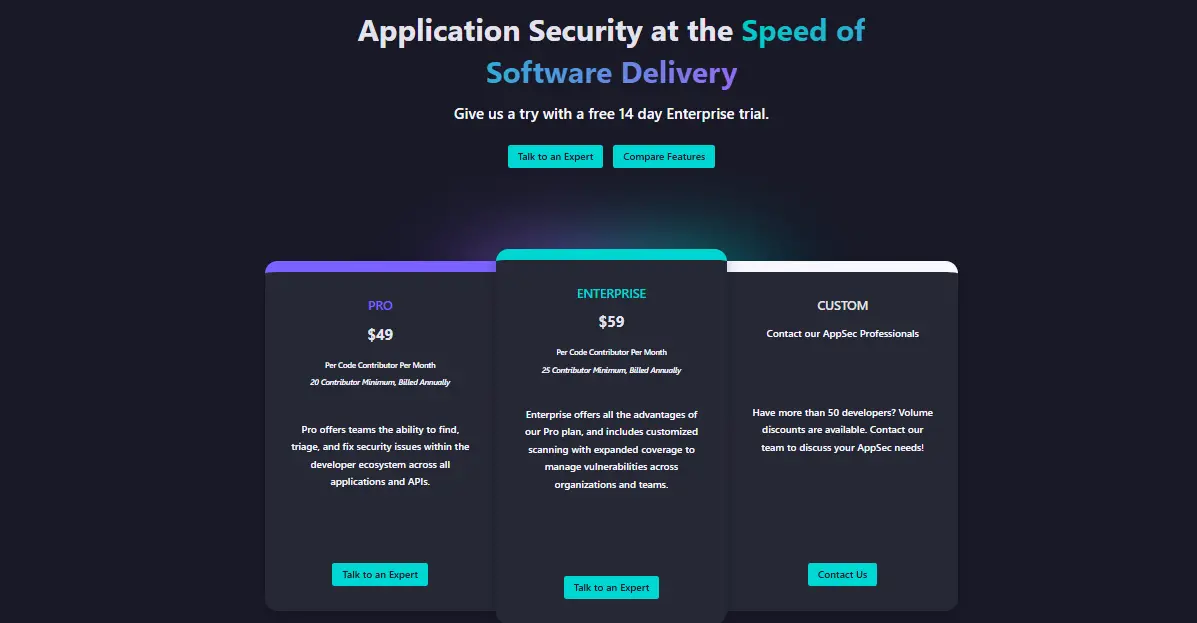
Pricing:
Pro: $49 per code contributor per month
Enterprise: $59 per code contributor per month
Custom: Custom pricing
If you’d like to see a more indepth
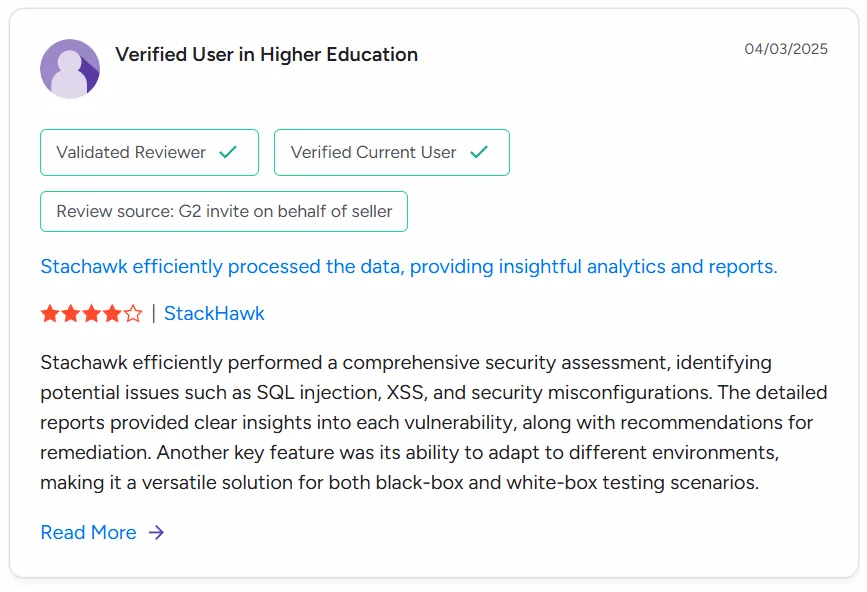
G2 rating & reviews: Reviewers say StackHawk helps teams detect vulnerabilities early and improve security via automated testing; its scan reliability and integration capabilities are often praised.
Why consider it:
Ideal for shift-left development where builds must block insecure API changes.
APIsec
What it does: Automated, logic-aware API security testing pre-production (shift-left).
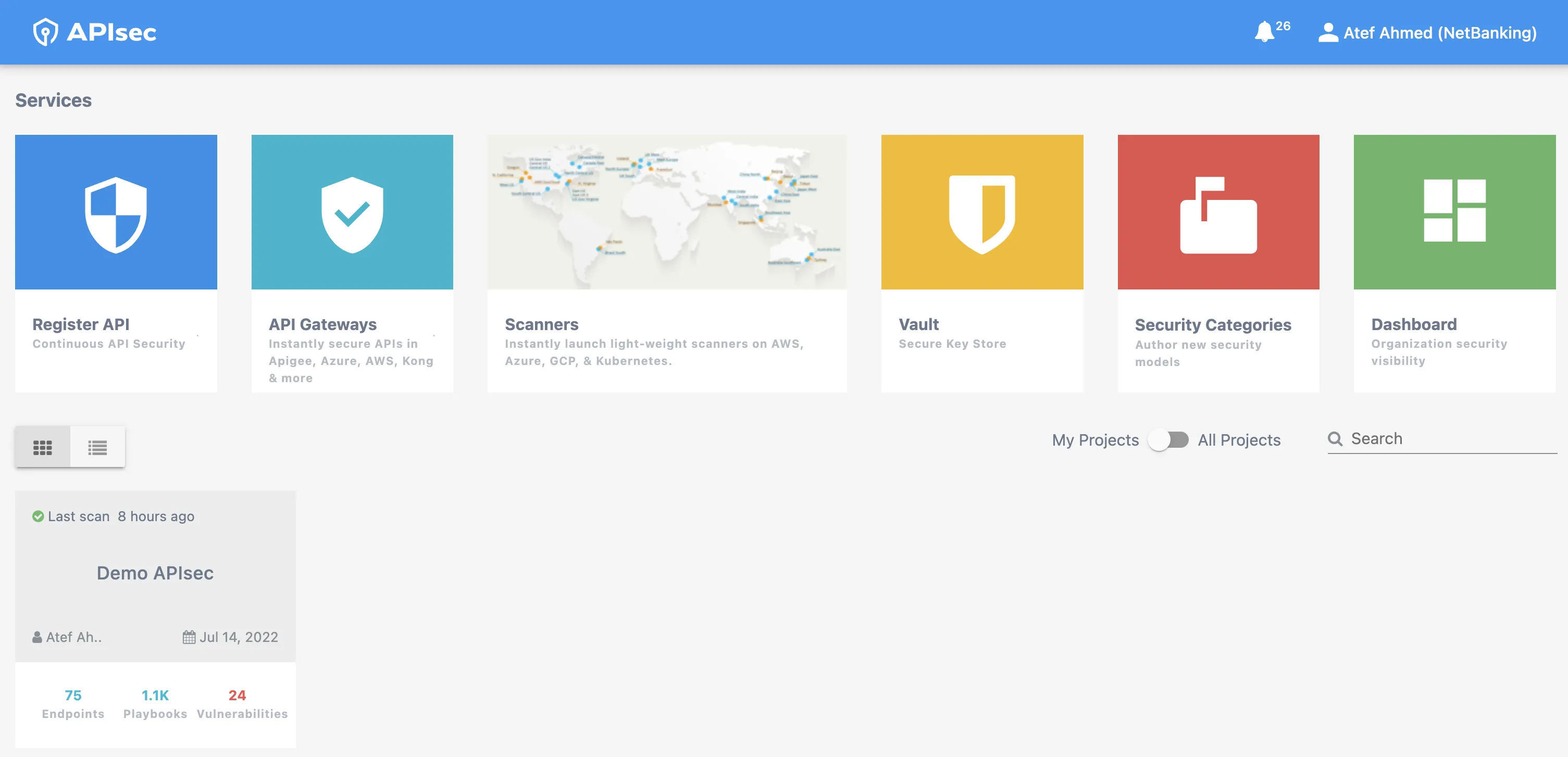
APIsec focuses on uncovering vulnerabilities in APIs by simulating attack paths and business logic abuse, not just typical DAST issues. It automatically generates test scenarios (like parameter tampering, authorization bypass, misuse cases) and runs them to find flaws that conventional scanners often miss. APIsec integrates into CI/CD pipelines, giving security teams and developers a way to continuously test API endpoints before release. Its UI and dashboards are designed to be intuitive, helping teams streamline remediation without heavy manual effort.
Key features:
Business-logic validation
Automated attack-scenario generation
CI/CD and staging integration
Ideal for pre-production pipelines
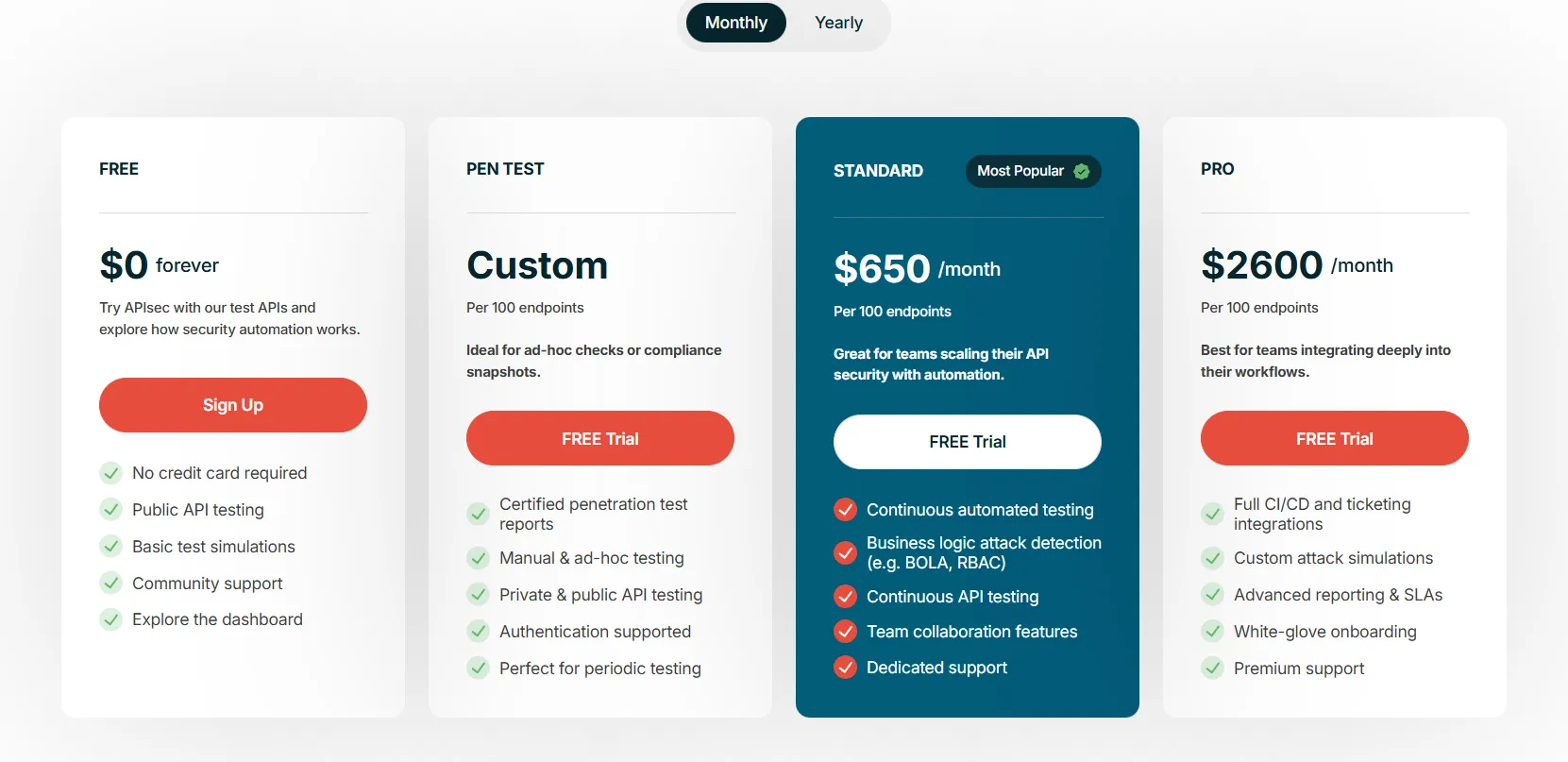
Pricing:
has a free plan
starts from $650 per month on standard plan
pro: $2600/month
custom models exist
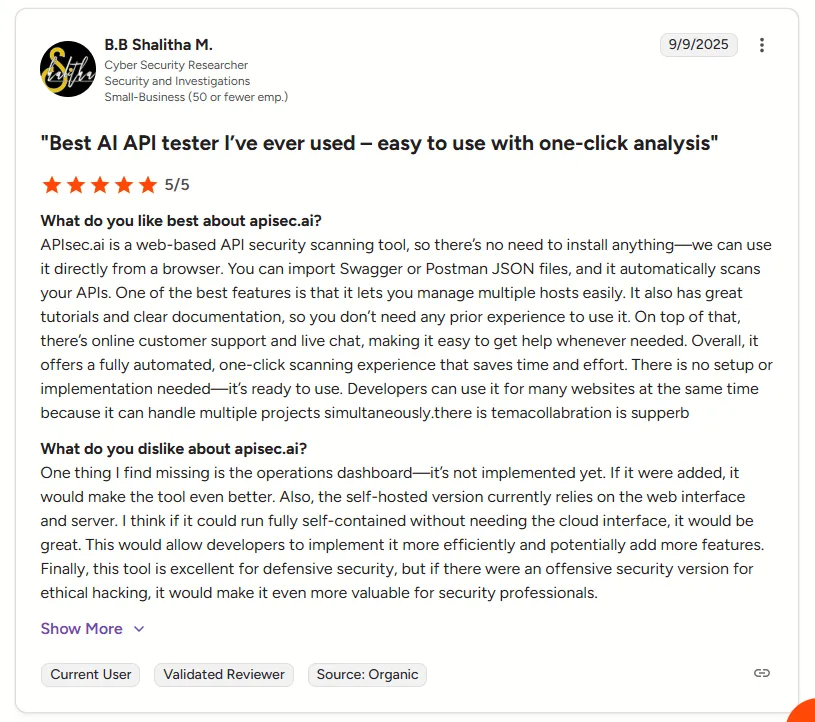
G2 rating & reviews: Recent reviews on G2 give APIsec high marks (e.g., 5/5), with users praising easy setup, seamless CI/CD integration, and detailed actionable reports, though some feel the many features can be a bit overwhelming initially.
Why consider it:
Best for catching logic flaws that cause the most severe API breaches.
Akto.io
What it does: Full-lifecycle API security: discovery, testing, and runtime protection.
Akto.io is an all-in-one API security platform that supports everything from API inventory/discovery to dynamic security testing and continuous runtime monitoring. It’s capable of discovering APIs (including undocumented or “shadow” ones), automating security tests, and monitoring live API traffic for anomalous activity. This makes it suitable for organizations with many APIs or microservices, where visibility and maintenance are challenging. Users say Akto helps them manage growing API portfolios effectively and integrates well with tools like Jira and CI/CD pipelines.
Key features:
Shadow API detection
Continuous scanning
API traffic analysis
Runtime anomaly detection
Pricing:
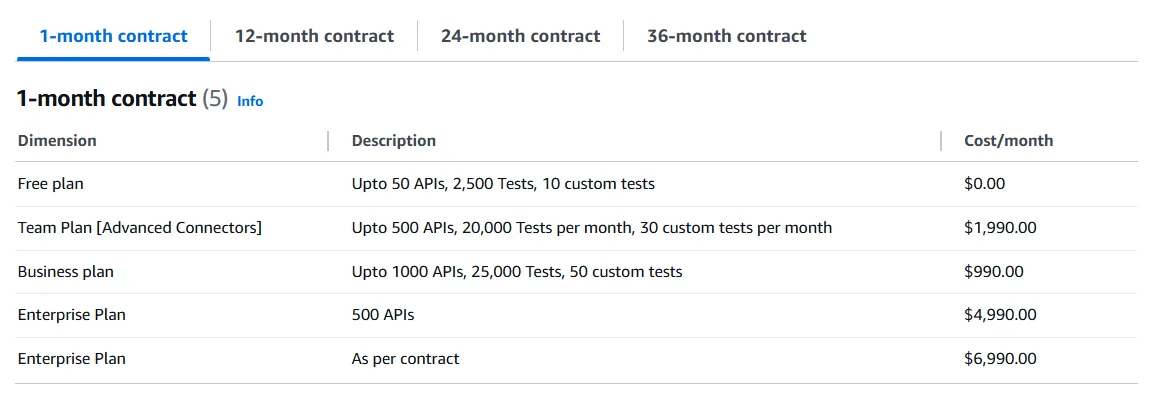
- Can range from $1990 to $225999 depending on organization and time of the contract
Source: aws marketplace
G2 rating & reviews: Akto receives strong praise for ease of deployment, integration, and wide test coverage. Some cons mentioned: initial setup complexity, advanced configuration requiring technical familiarity (e.g. YAML), and sometimes slow test runs.
Why consider it:
Designed for growing orgs that need API discovery, testing and protection in one place.
Traceable AI
What it does: API observability and runtime threat detection across full API ecosystem.
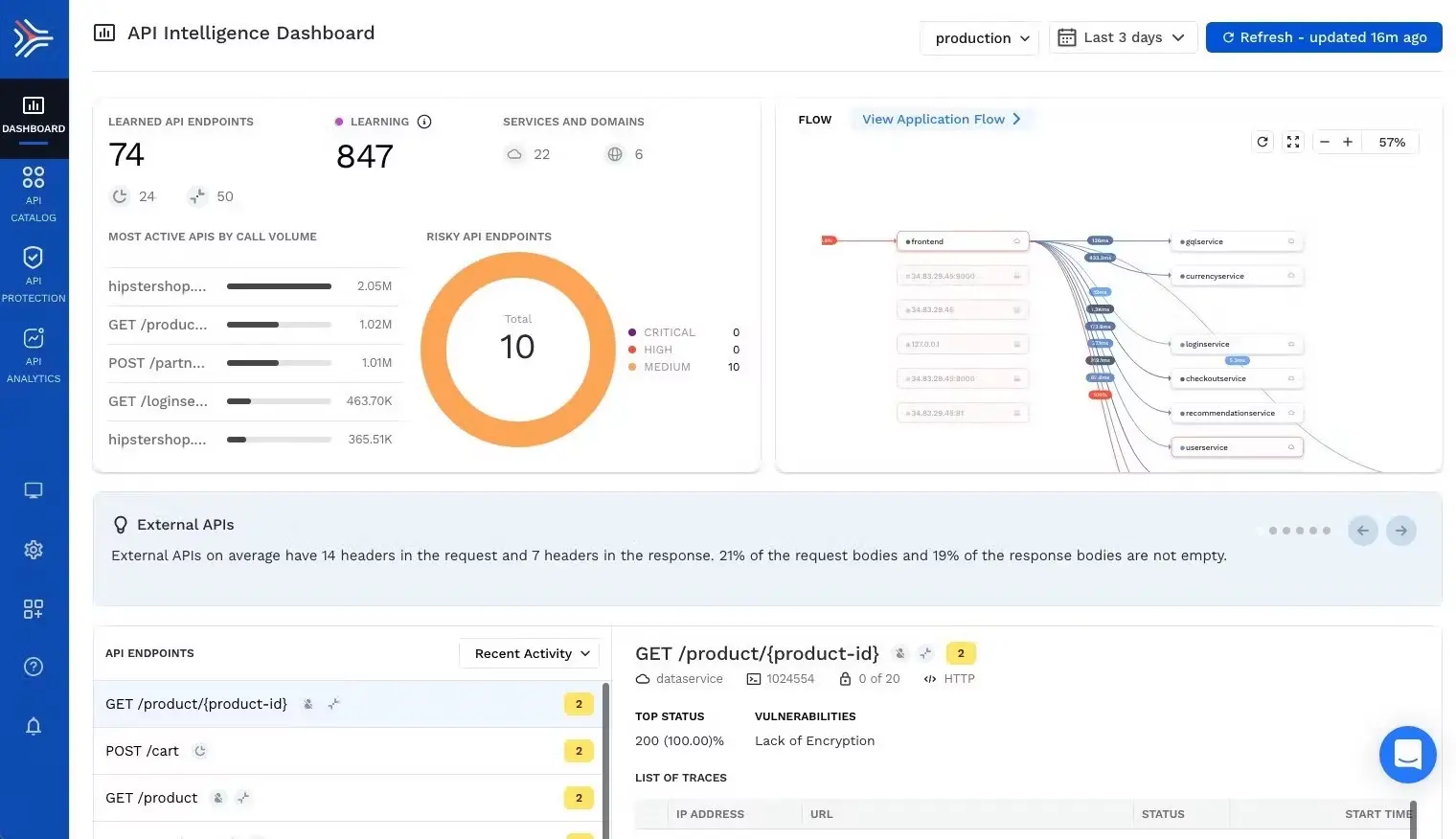
Traceable AI provides a holistic view of your API ecosystem by offering API inventory, behavioral monitoring, anomaly detection, and runtime protection. It tracks API calls across services, enabling real-time detection of suspicious activity, abuse, or design-time vulnerabilities. For organizations with complex microservices, many internal/external APIs, or high compliance/security needs, Traceable helps maintain visibility and rapidly respond to potential threats. Users highlight its ability to give detailed insight into their API usage and security posture.
Key features:
API behavioral monitoring
Threat detection & correlation
Attack replay
Full API inventory mapping
Pricing:
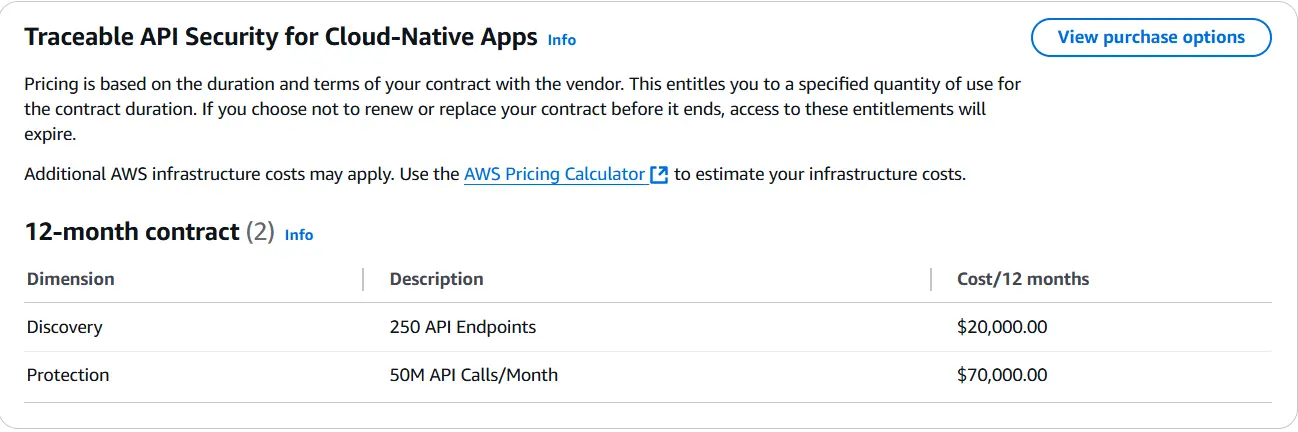
- Based on contract and quote but AWS marketplace lists it as anywhere between $20,000 - $70,000
G2 rating & reviews:
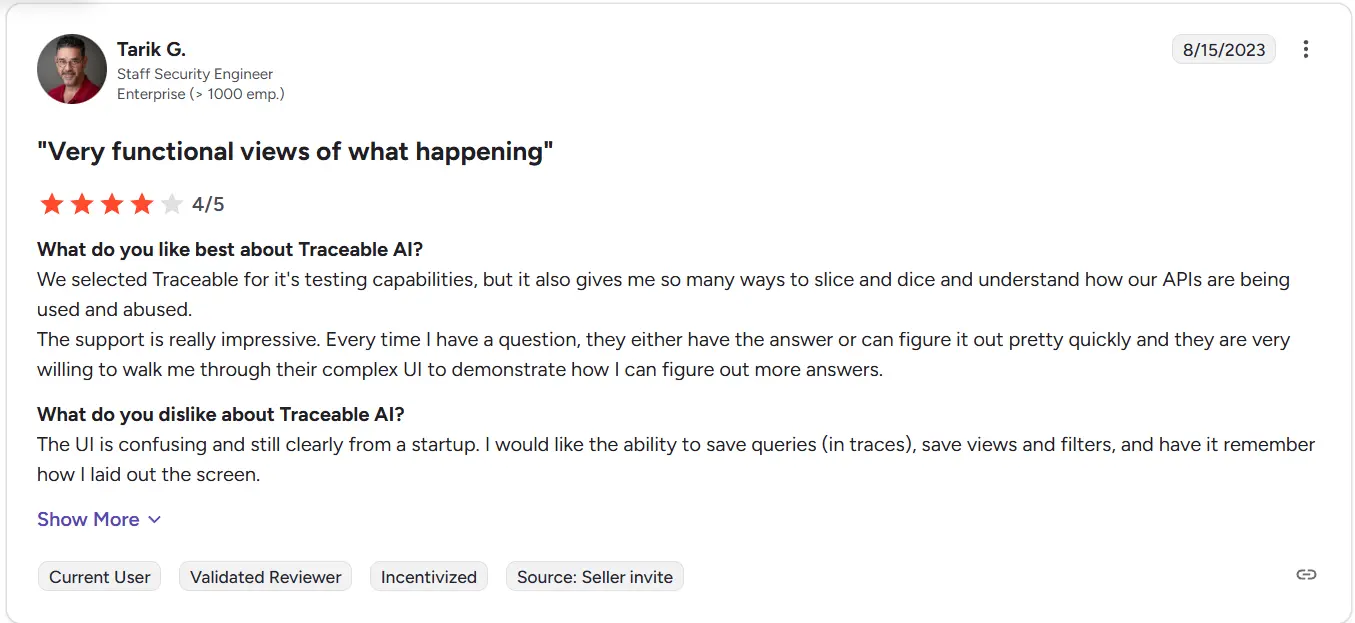
With a G2 rating around 4.7/5 from 20+ reviews users often praise Traceable for excellent support, detailed traffic insights, and strong overall API security features. Some reported drawbacks: occasional false positives, somewhat confusing UI, and limited documentation for advanced configurations.
Why consider it:
Ideal for enterprises that need runtime protection and visibility across many services.
42Crunch
What it does: Design-time (shift-left) API contract analysis and security linting.
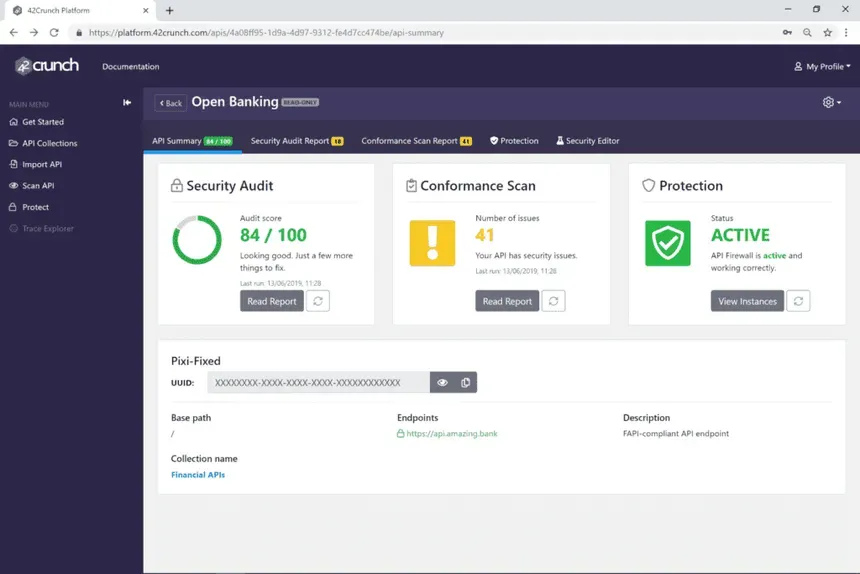
42Crunch focuses on API security early in the development lifecycle, analyzing API specifications (e.g. OpenAPI) and detecting misconfigurations, insecure defaults, and potential authorization/data handling issues before code is even written or deployed. It supports static and dynamic tests and can integrate within IDEs/CI pipelines so developers can catch vulnerabilities at design time. This makes it especially useful for API-first teams and organizations emphasizing secure-by-design workflows.
Key features:
OpenAPI contract auditing
Design-time misconfiguration detection
API token protection
VS Code & IDE integrations
Pricing:
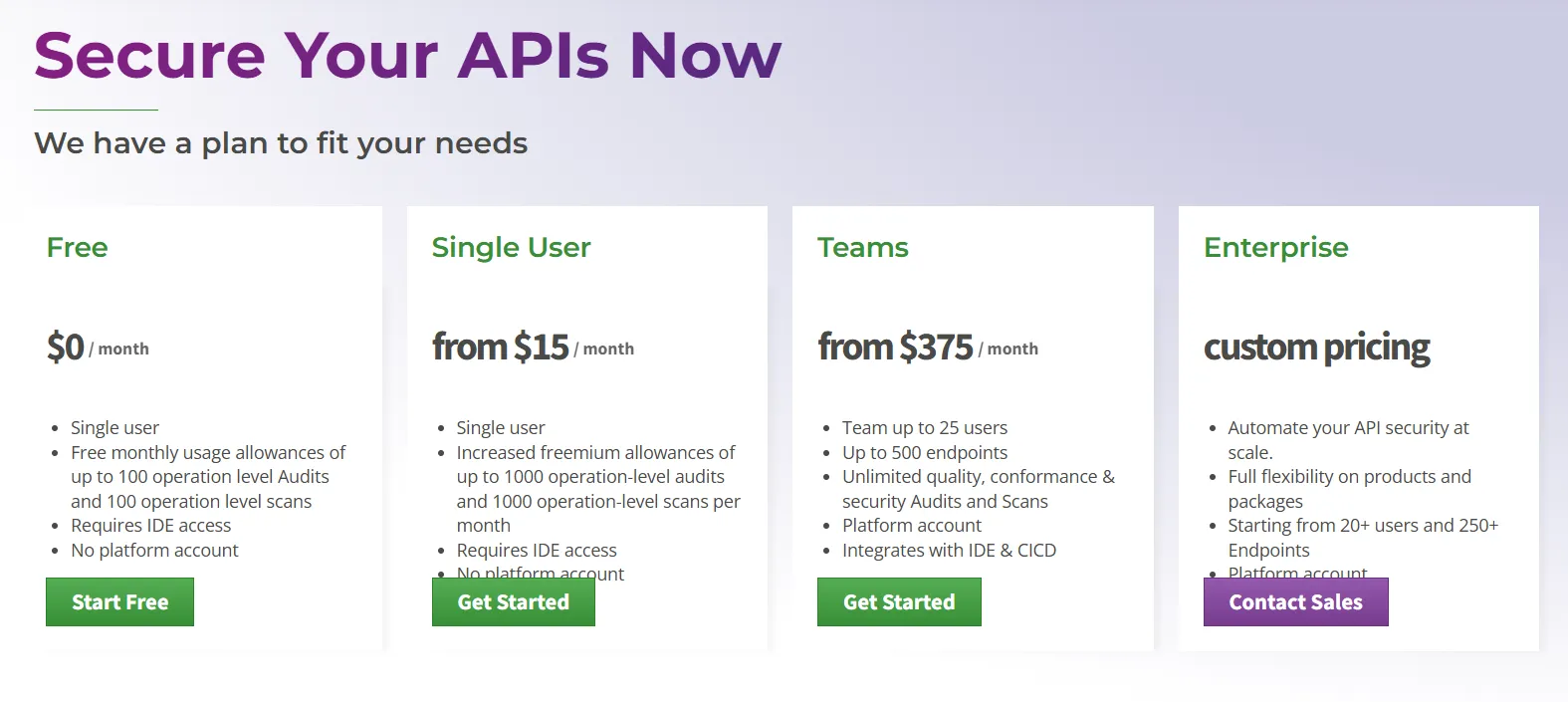
Free tier avaliable
Single user from $15/month
Teams: $375/month
Enterprise: custom pricing
G2 rating & reviews:
According to public data, 42Crunch is used by many developers globally but it does not have public G2 rating and reviews.
Why consider it:
Perfect for API-first teams that want to secure APIs before writing any code.
Escape
What it does: Dynamic API & web-app DAST + business-logic–level security testing with automated API-discovery.
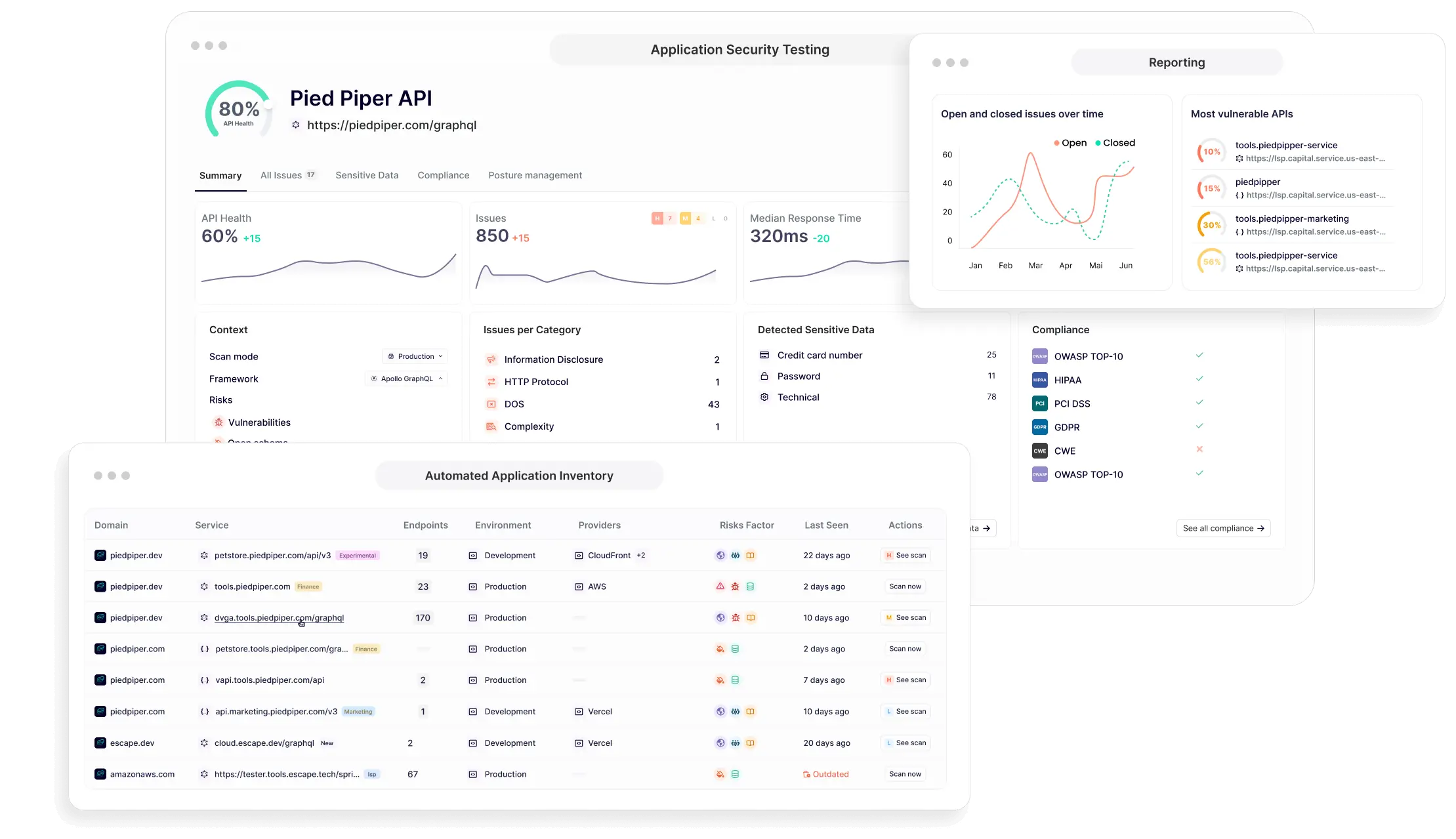
Escape is built to secure modern stack-based applications including REST, GraphQL, SPAs and microservices. It automatically discovers all APIs, builds an inventory, and performs dynamic security testing (DAST) at the business-logic level. This means it doesn’t just check for missing headers or basic misconfigurations: it hunts for logic flaws such as broken object-level authorization (BOLA), IDOR, access control loopholes, data leaks, and complex flow-based vulnerabilities.
Key features:
GraphQL introspection security
Runtime API scanning
Developer-friendly dashboards
Automated vulnerability alerts
Pricing:
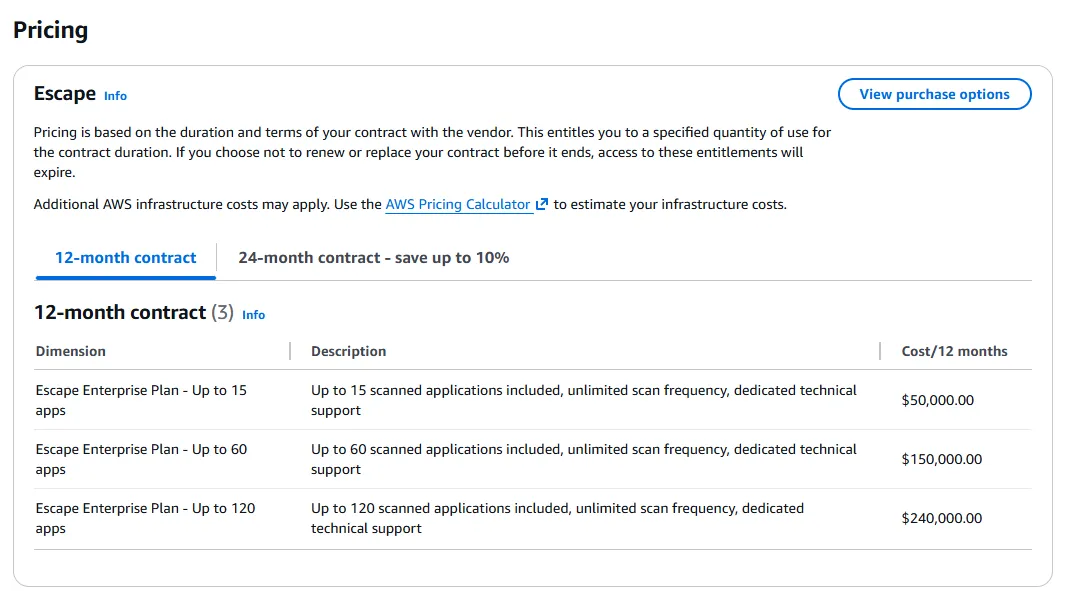
Escape DAST can cost from anywhere between $50,000 to $240000 according to AWS marketplace.
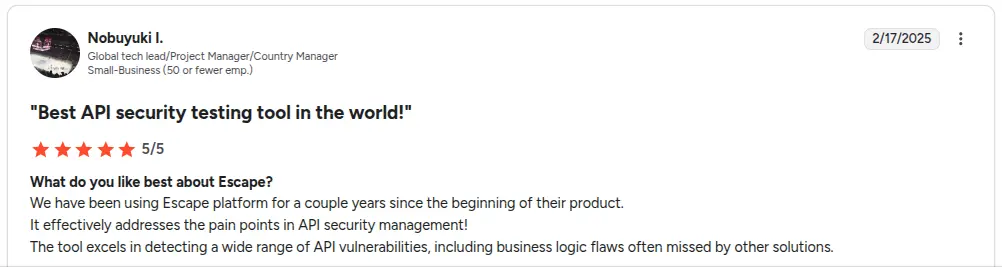
Public feedback / rating: On their website, Escape claims a 5/5 rating on G2 reviews. However, independent third-party reviews are limited; most public claims come directly from Escape’s marketing.
Why consider it:
Best if your API stack is GraphQL-heavy.
Equixly
What it does: AI-powered “agentic hacker” for automated API fuzzing and business-logic security testing.
Equixly markets itself as an “Agentic AI Hacker”: A cloud-based SaaS that automatically and continuously tests your APIs for vulnerabilities. It uses AI-powered bots to perform smart fuzzing and simulate attacker behavior, targeting not only typical API vulnerabilities (e.g. injection, auth flaws) but deeper business-logic issues like access control bypass, IDOR, privilege escalation, data exposure and complex multi-step misuse scenarios. Equixly also helps with API posture management by mapping APIs, tracking endpoints, and helping developers integrate security tests into their SDLC (shift-left).

Key features:
AI-based API fuzzing
Business workflow detection
Traffic anomaly analysis
Continuous integration support
Pricing:
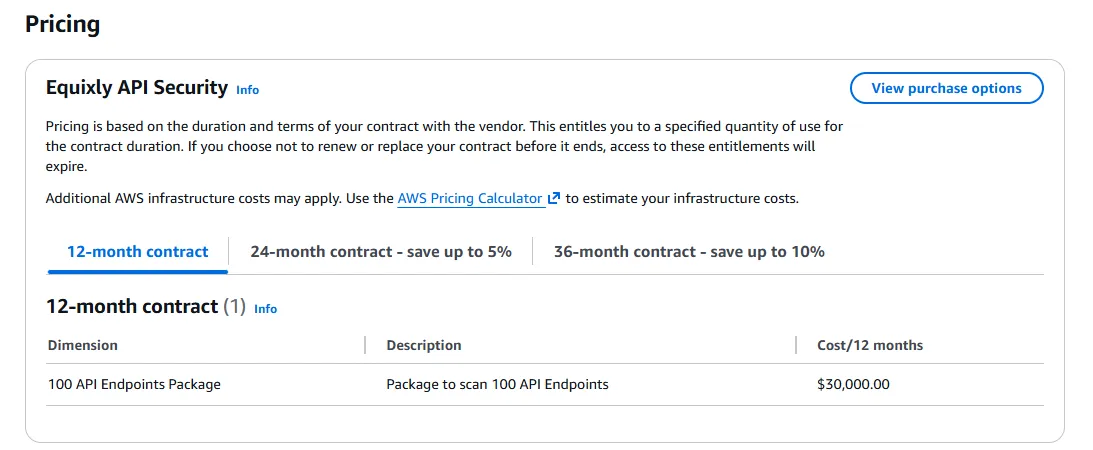
AWS marketplace lists their price as $30,000 to $81,000 depending on the duration and contract with the vendor.
G2 rating & reviews: As of late 2026, there is limited publicly available independent review data (e.g. no widely visible G2 page or verified user feedback). Some industry-commentary pieces describe it as promising and innovative, but lack empirical user-based ratings.
Why consider it:
Ideal for teams experimenting with AI-enhanced testing and fuzzing.
Levo
What it does: Full-lifecycle API (and AI-app) security platform, automatic API discovery, documentation, security testing & runtime protection.
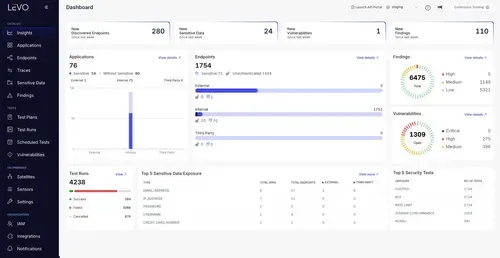
Levo.ai automatically discovers all APIs in an environment and builds a centralized, up-to-date API catalog and documentation (OpenAPI spec, Postman collections, etc.) Then, it runs continuous security testing (pre-production and CI/CD) covering injection, auth/authorization flaws, business-logic abuse, data-leak risks and compliance checks. In production, Levo provides runtime API observability, anomaly detection, and inline protection using kernel-level visibility (eBPF), allowing it to spot suspicious behaviour, data leaks or attacks in real time while minimizing false positives and preserving performance.
Key features:
API integration + security testing
CI/CD compatibility
Workflow test generation
Test data automation
Pricing:
Levo uses a quote based pricing and has no public records of their rates as of now.
G2 rating & reviews:
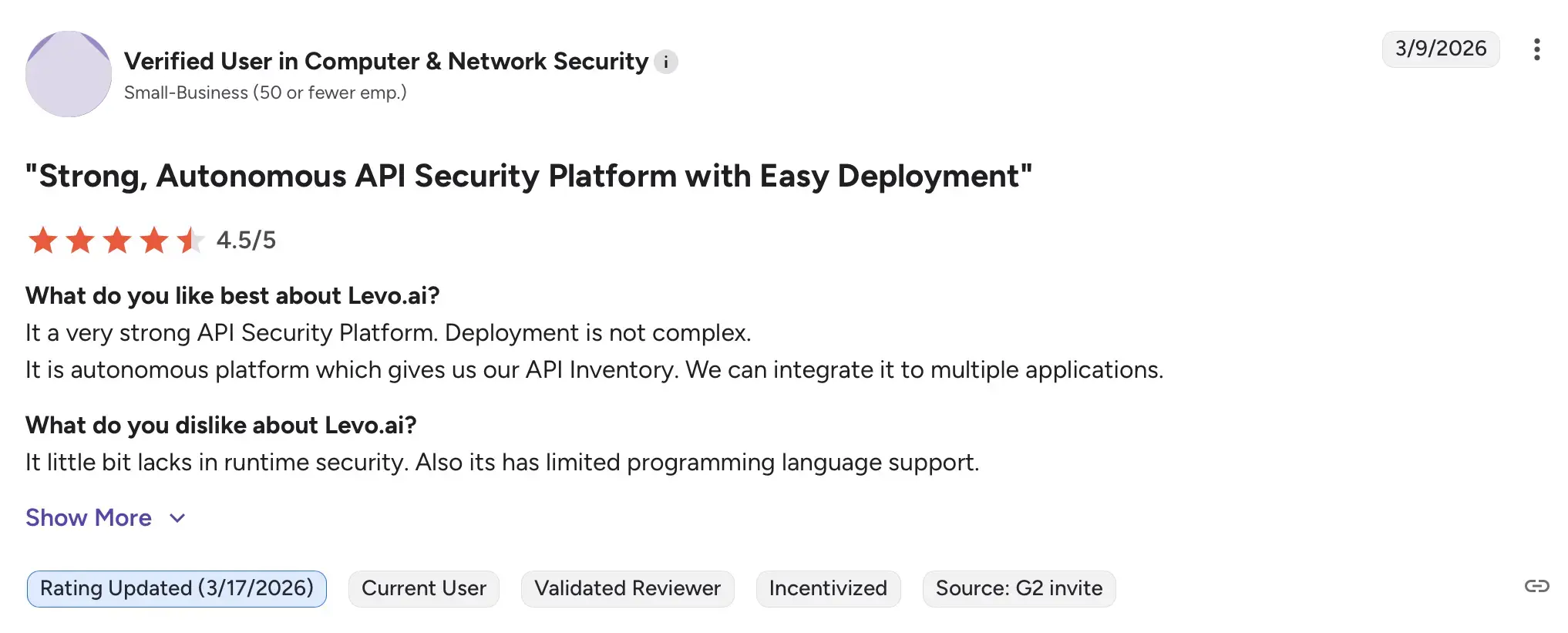
Levo has 4.9/5 on 10 reviews from G2.
Why consider it:
Good for QA and engineering teams who want functional + security testing combined.
ZeroThreat
What it does: AI-driven automated API & web-app penetration testing, DAST, and security posture management.
ZeroThreat is an AI-powered security platform offering automated penetration testing and DAST for APIs and web applications. It discovers exposed, shadow and undocumented APIs, then runs extensive tests covering common and advanced API risks. It also provides AI-powered remediation reports, compliance-ready outputs, and integration into CI/CD pipelines.
Key features:
Attack emulation
Payload testing
Misuse-case scenarios
API threat modeling
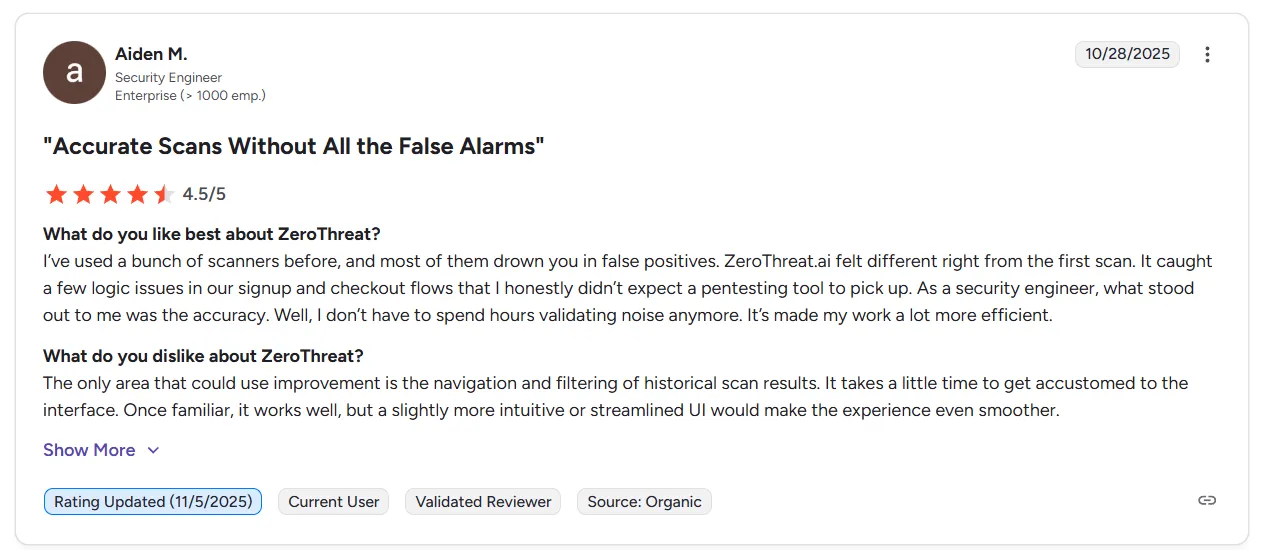
G2 rating & reviews: Zerothreat has a 4.9/5 rating for 11 reviews.
Why consider it:
Best for teams that want API red teaming or augment existing security pipelines.
Things to consider when choosing an API security tool
Choosing an API security tool in 2026 isn’t just about scanning for vulnerabilities, it’s about aligning the tool’s capabilities with your development process, stack, and risk profile. Here are the key factors to evaluate:
1. API discovery capabilities
Modern environments often include shadow APIs, zombie endpoints, or undocumented routes. Choose a tool that automatically discovers APIs instead of relying solely on manually uploaded specs.
2. Support for your API types
Ensure the tool supports the protocols and architectures you use:
REST
GraphQL
gRPC
WebSockets
Event-driven APIs
A mismatch here leads to blind spots.
3. Depth of security testing
Some tools test only for basic misconfigurations. Look for solutions that cover:
OWASP Top 10 / API Top 10
Business logic flaws (BOLA, IDOR, privilege escalations)
Authentication / authorization weaknesses
Data exposure risks
4. Integration with CI/CD
Shift-left requires automation. Check for:
GitHub/GitLab/Bitbucket integrations
Pipeline-based automated scans
Build-blocking policies
Developer-friendly remediation
Tools like Beagle Security excel here.
5. Runtime protection & observability
Pre-deployment scans are not enough. Consider whether you need:
API traffic monitoring
Anomaly detection
Runtime attack blocking
API behavior analytics
This is where Traceable AI, Akto and Levo stand out.
6. Documentation & ease-of-use
Security tools are only effective if teams can actually use them. Prioritize platforms that offer:
Clean dashboards
Clear reports
IDE extensions
Good onboarding & support
Minimal false positives
7. Compliance & reporting
For regulated industries, ensure the tool offers compliance-ready reports for:
SOC 2
ISO 27001
PCI DSS
HIPAA
GDPR
8. Pricing & scalability
Consider the pricing model (per API, per endpoint, per project, per request volume) and whether it scales affordably as your API surface grows.
Final thoughts
API security in 2026 requires more than one-time scanning, it demands continuous, context-aware protection across every stage of the development lifecycle. Modern APIs are dynamic, interconnected, and often exposed to third-party systems, making them one of the most targeted entry points for attackers. With threats centered around BOLA, IDOR, authentication weaknesses, misconfigurations, shadow APIs, and AI-driven attack automation, security can no longer be treated as a final checkbox at deployment.
Ultimately, the “best” API security tool is the one that fits naturally into your development workflow. The right solution should help teams build securely without friction, delivering precise results, developer-friendly insights, seamless integrations, and minimal false positives.
Beagle Security is designed with this balance in mind, supporting fast-moving teams with practical, actionable security that doesn’t slow innovation. With a 14 day advanced trial and an interactive demo, teams can see real vulnerabilities in real environments before committing, making it easier to adopt a solution that lets them move faster while staying confident their APIs are protected in an increasingly complex threat landscape.


![Top ZAP alternatives and competitors [October 2026]](/blog/images/top-zap-alternatives-cover.webp "Top ZAP alternatives and competitors [October 2026]")




![Top 10 penetration testing companies [2026]](/blog/images/top-penetration-testing-companies-cover.webp "Top 10 penetration testing companies [2026]")



![Top vendor application security tools [2026]](/blog/images/top-vendor-application-security-testing-tools-2026-cover.webp "Top vendor application security tools [2026]")



![Top Snyk alternatives & competitors [2026]](/blog/images/top-snyk-alternatives-cover.webp "Top Snyk alternatives & competitors [2026]")