Top Bright Security alternatives [2026]
![Top Bright Security alternatives [2026]](/blog/images/blog-banner-one.webp "Top Bright Security alternatives [2026]")
Bright Security has carved out a reputation as a modern DAST platform built for developers, but it’s not the only player tackling the growing complexity of application security testing. As teams push more frequent releases, juggle microservices, and integrate security into CI/CD pipelines, the real challenge isn’t just finding vulnerabilities, it’s balancing speed, depth, and automation without draining engineering bandwidth.
That’s where exploring Bright Security alternatives becomes valuable. Some tools go deeper on business logic testing, others shine in API and mobile coverage, and a few stand out for transparent pricing or scalable automation.
In this guide, we’ll break down the top Bright Security alternatives that deliver stronger integration flexibility, better vulnerability intelligence, and a smoother path to continuous security testing.
Comparison table
| Tool | Pricing (starts at) | Strengths | Useful for |
|---|---|---|---|
| Beagle Security | Essential: $119/mo; Advanced: $359/mo; | Fast developer-focused DAST, low false positives | Startups, dev teams, CI/CD integration. |
| Acunetix (Invicti) | Quote-based; typical entry ~$4.5k–$7k/yr depending on targets. | Accurate vulnerability detection, enterprise features | Teams needing deep automation and CI/CD. |
| Burp Suite (PortSwigger) | Professional: ~$449–$475/user/yr; Enterprise/DAST quoting available. | Gold-standard pentesting toolkit and extensibility | Pentesters and AppSec analysts. |
| Rapid7 InsightAppSec | Starts $175/mo per app (billed annually), quote for enterprise. | Integrates with Insight platform, prioritization | Mid-market to enterprise AppSec programs. |
| Black Duck (Synopsys) DAST | Pricing quoted by Synopsys. (See vendor for quotes.) | SCA-focused (open-source risk) | Teams focused on OSS risk and licensing (combine with DAST). |
| Fortify DAST (OpenText) | Enterprise quoting — contact vendor. | Enterprise-grade scanning, governance | Large regulated orgs needing compliance. |
| Invicti | Quote-based; entry examples ~$5k–$7k/yr (varies by targets). | Strong automation, proof-based scanning | Organisations needing automated continuous scanning. |
| Qualys WAS | Starts reported around $1,995 per 25 web apps/yr (varies). | Enterprise scale, cloud platform integration | Large estate scanning and compliance teams. |
| Tenable WAS | Example starting bundles reported (e.g., 5 FQDNs ~$3,578 or $7,434 depends on offers) — vendor quote recommended. | Integrated with Tenable exposure platform | Teams wanting exposure management and DAST. |
| HCL AppScan | Pay-per-scan options and subscription quotes. | Mature enterprise feature set (DAST/SAST/IAST) | Enterprises with deep SAST/DAST requirements. |
Top Bright Security alternatives
1) Beagle Security
Beagle is a fast, developer-friendly dynamic application security testing (DAST) tool built for modern web apps and CI/CD. It emphasizes actionable, triaged findings to reduce noise and false positives so engineering teams can remediate quickly without being overwhelmed by low-value alerts. Beagle supports authenticated scans, API discovery, and integrates with tools like Jira and Jenkins to automatically create issues and trigger scans from pipelines. Its UI is designed for developers (not only security teams), and has strong G2 sentiment for ease-of-use and accuracy.
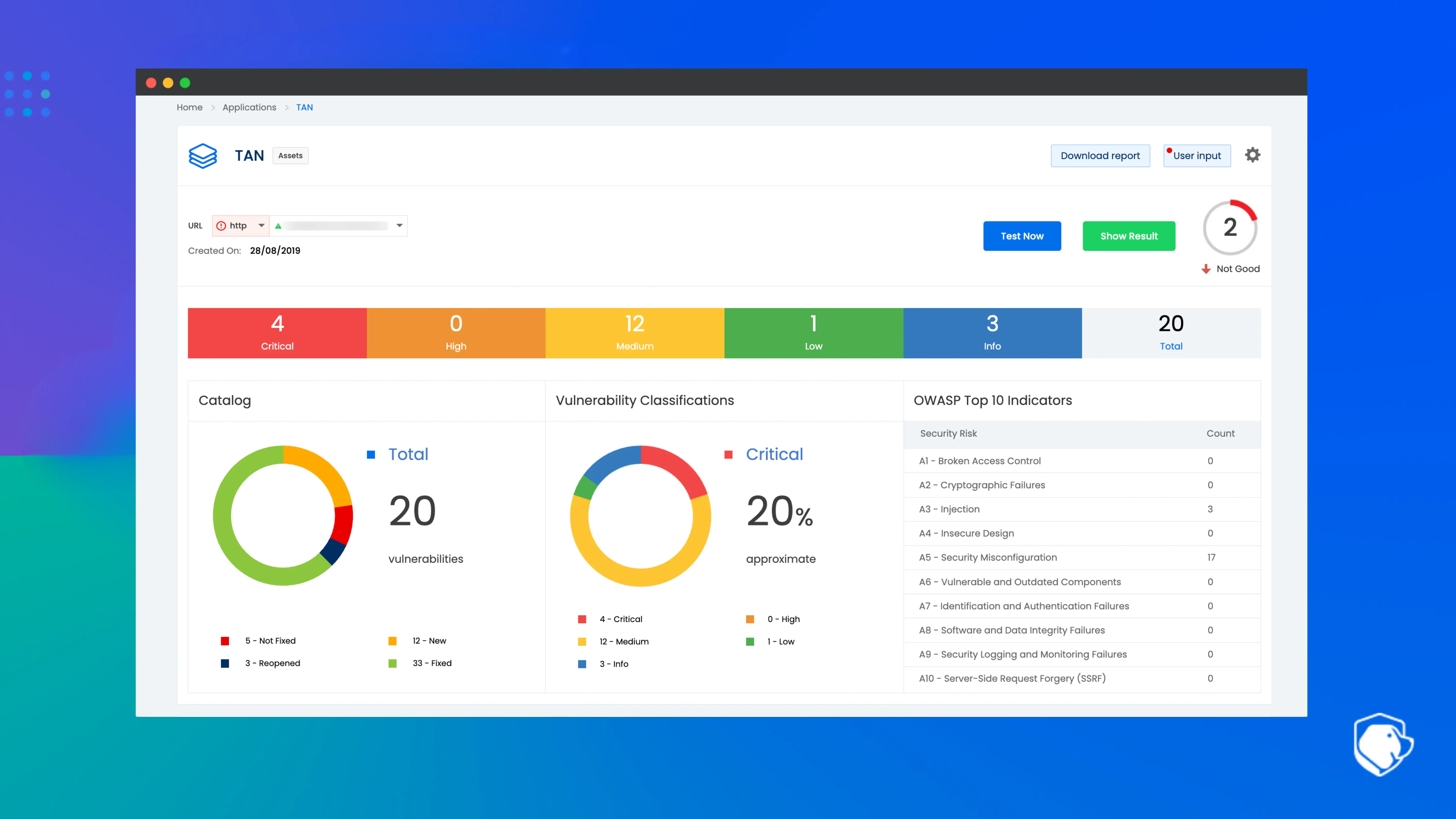
Top features (short):
Fast CI/CD friendly scans
Authenticated app scanning and API discovery
Low false positive triaging
Automated Jira / issue integrations
Concurrent test capacity for scaling
Compliance friendly testing (OWASP, HIPAA, PCI DSS)
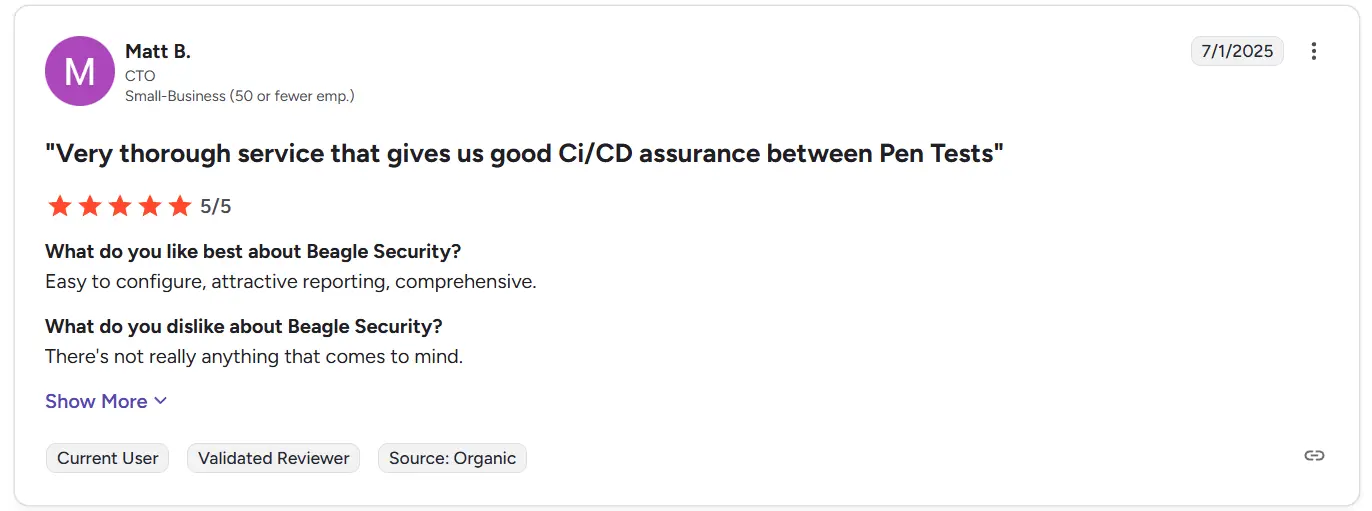
G2 snapshot: Beagle scores 4.7/5 on G2. Users praise Beagle for its intuitive setup, developer-friendly UI and fast integration into CI/CD pipelines. Many highlight its low false positive rate and actionable remediation guidance
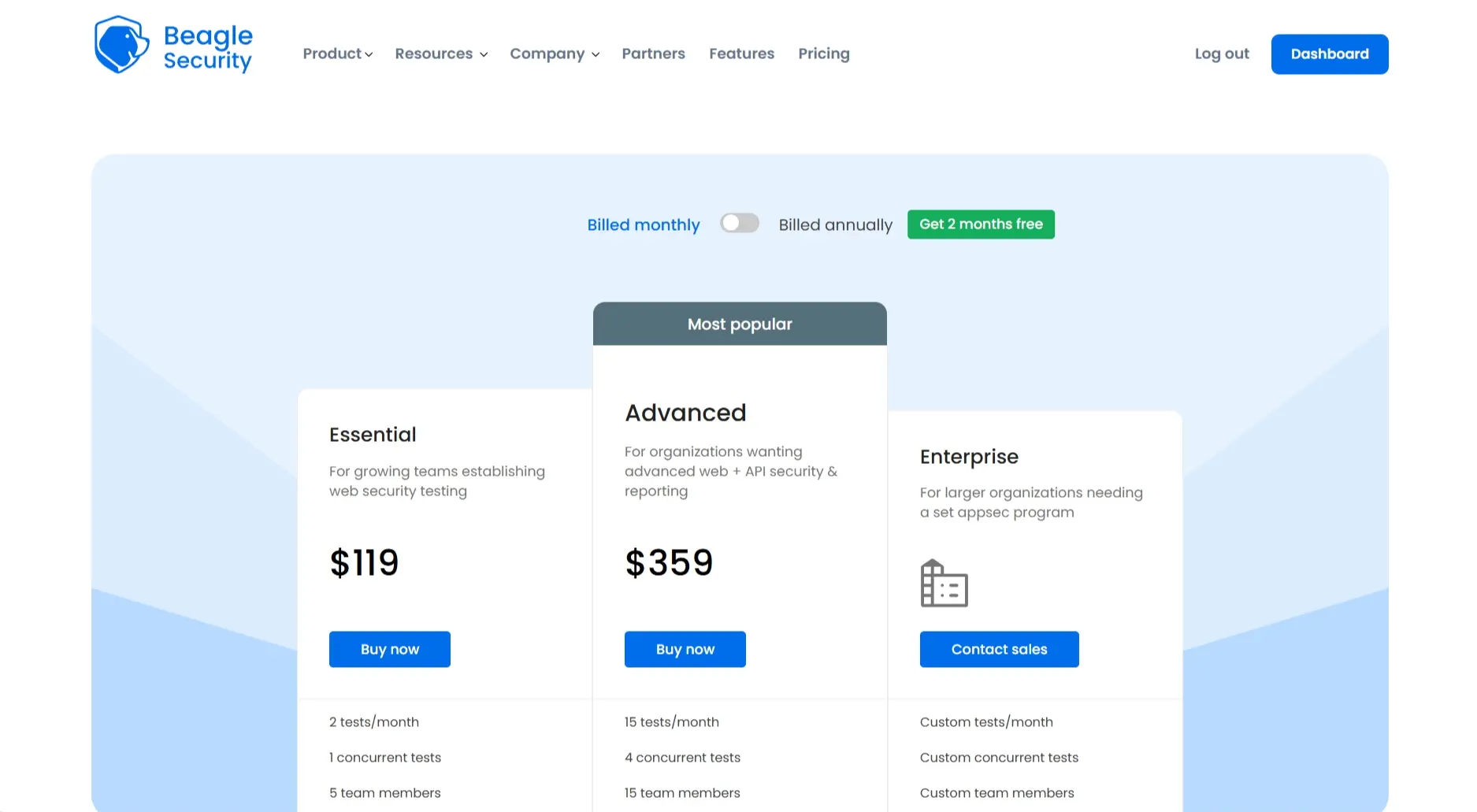
Pricing (tiers / starts):
Essential: $119 / month
Advanced: $359 / month
Enterprise: Custom quote
2) Acunetix (Invicti)
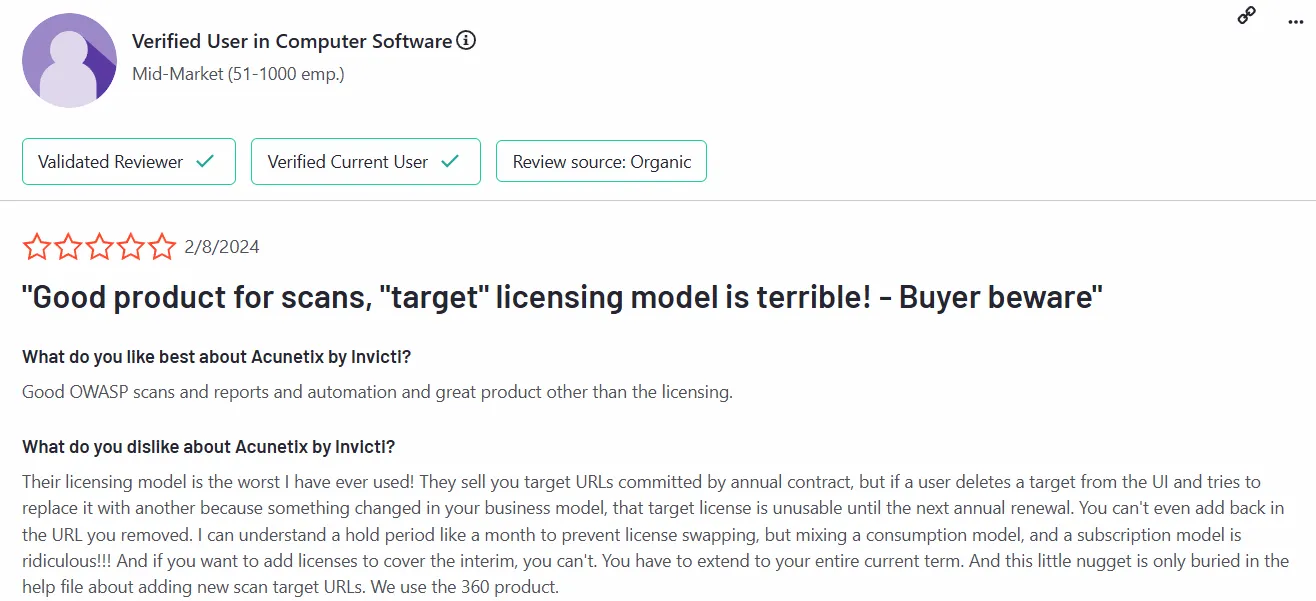
Acunetix (now part of the Invicti family) is a specialized web vulnerability scanner that excels at high-coverage scanning of complex web applications, including heavy JavaScript/SPAs. According to its website it features a scanning engine written in Candand, supports SmartScan that finds ~80% of vulnerabilities in the first 20% of scan time. It offers proof-based evidence, low false positive rates, broad crawling and API endpoint discovery. Useful for teams needing deep scanning control and wide web asset coverage.
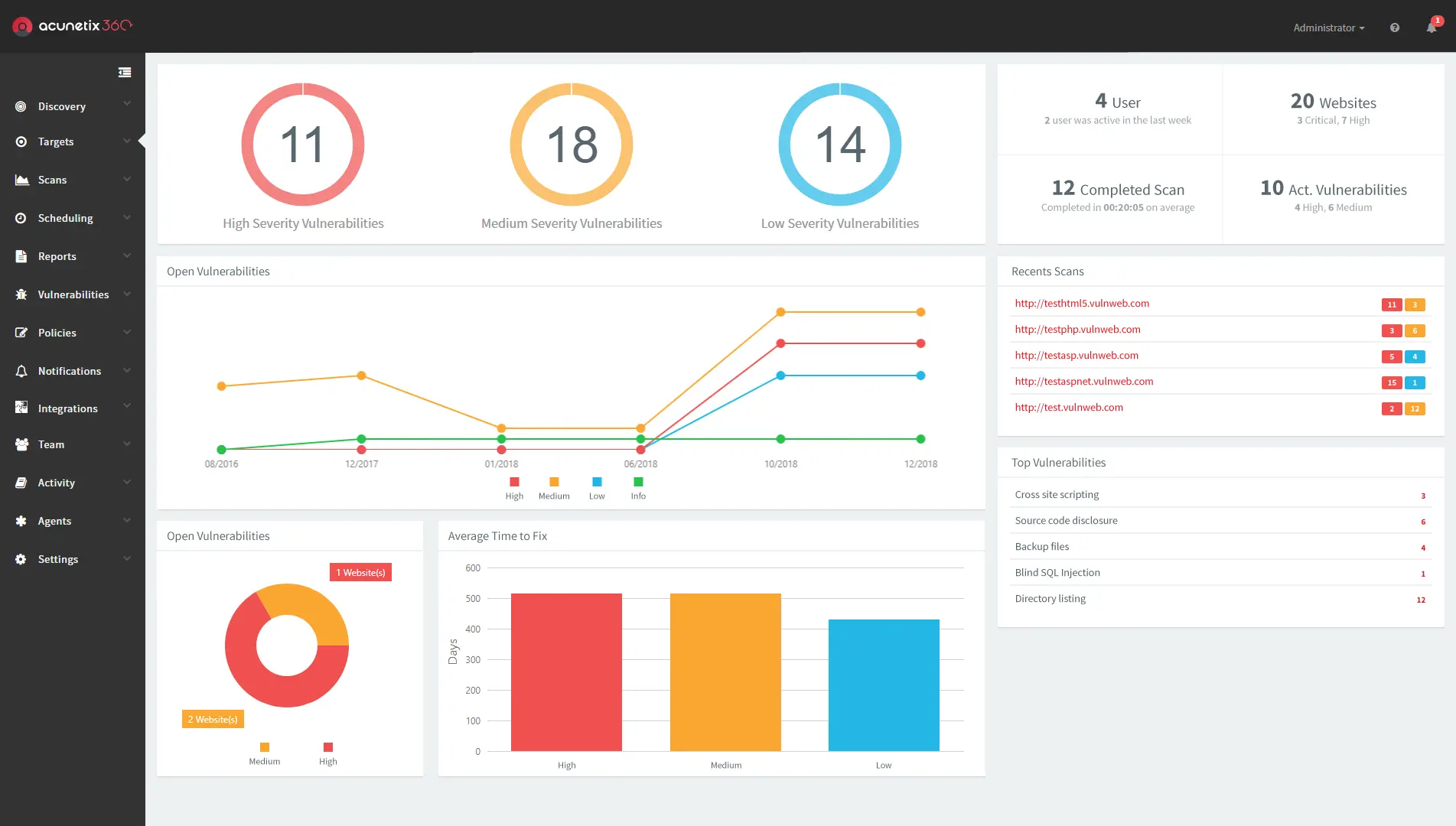
Top features (short):
Broad vulnerability coverage (OWASP Top 10)
SPA and JS-aware crawling
CI/CD and API integrations
Automated scan scheduling
Proof-based verification to reduce false positives
G2 snapshot: Acunetix is rated 4.1/5 on G2. Users say it delivers solid scanning value, though some note the UI could be improved and setup for complex SPAs/APIs can be heavier. Support ratings and ease-of-setup tend to land slightly lower than the very top tools.
Pricing (tiers / starts):
- Quote-based pricing; common entry references: $4.5k–$7k/year for small target packs (varies). Confirm with vendor.
3) Burp Suite (PortSwigger)
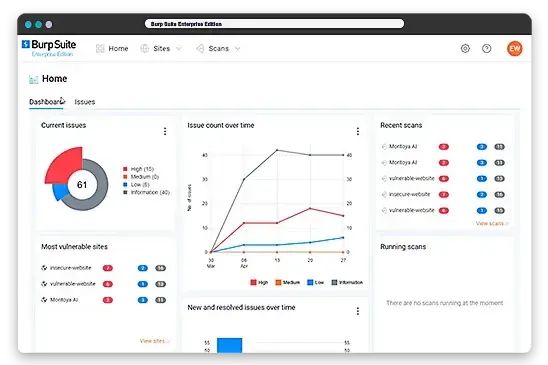
Burp Suite (by PortSwigger) is widely recognised as a top-tier toolkit for web application security testing, both manual and automated. Its DAST/Enterprise edition brings dynamic web scanning powered by the same research engine used by their manual pentesting tool.
It enables automated scanning of modern SPAs/APIs, configurable scan depths, custom plugin support (BApps), CI/CD integrations, and large-scale enterprise deployments. It is suited for security teams and pentesters who want both manual flexibility and automated scanning capability.
Top features (short):
Deep interactive pentesting tools
Automated vulnerability scanner
Extensible via plugins (BApp store)
Proxy, repeater and intruder tools
Enterprise DAST for large portfolios
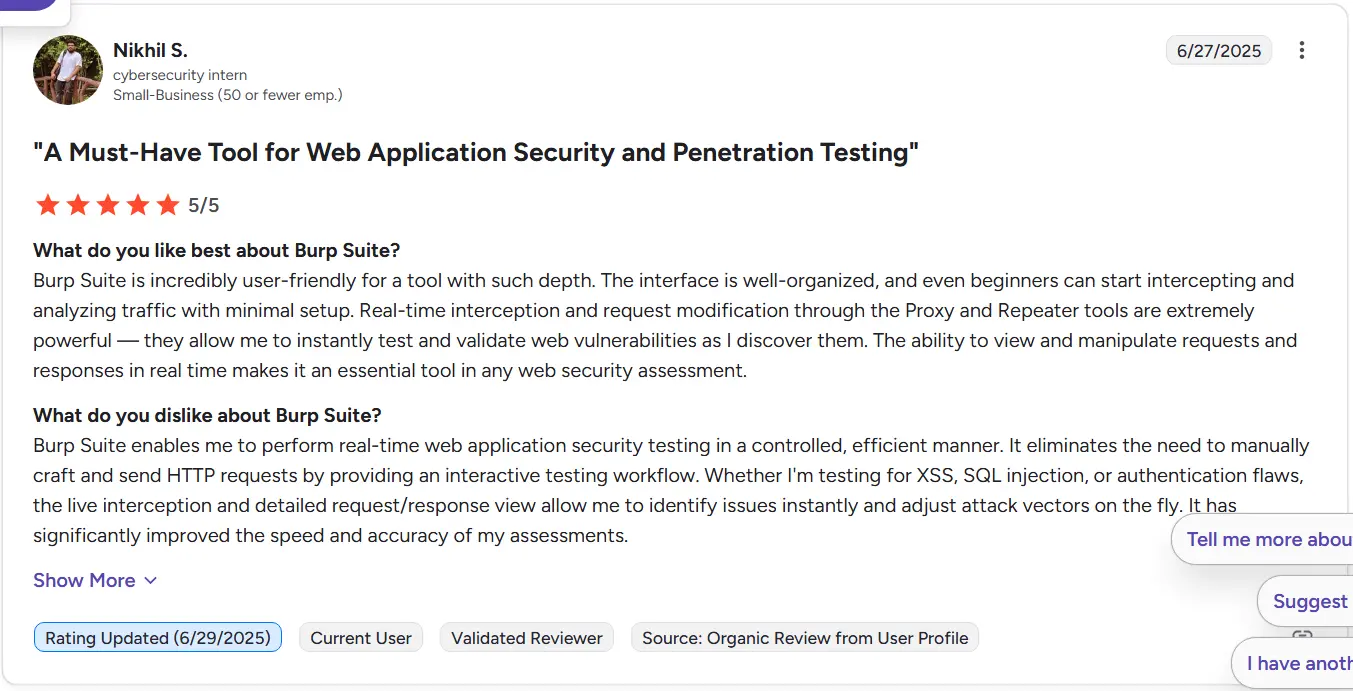
G2 snapshot: 4.8/5 on G2. Users emphasise its deep manual tools, plugin ecosystem, and comprehensive capabilities. Some note the learning curve is steep and pricing for enterprise use can be high but for serious AppSec professionals it remains top choice.
Pricing (tiers / starts):
Community — Free
Professional — ~$449–$475 / user / year.
Enterprise / DAST — quote-based; request demo for volume pricing.
4) Rapid7 InsightAppSec
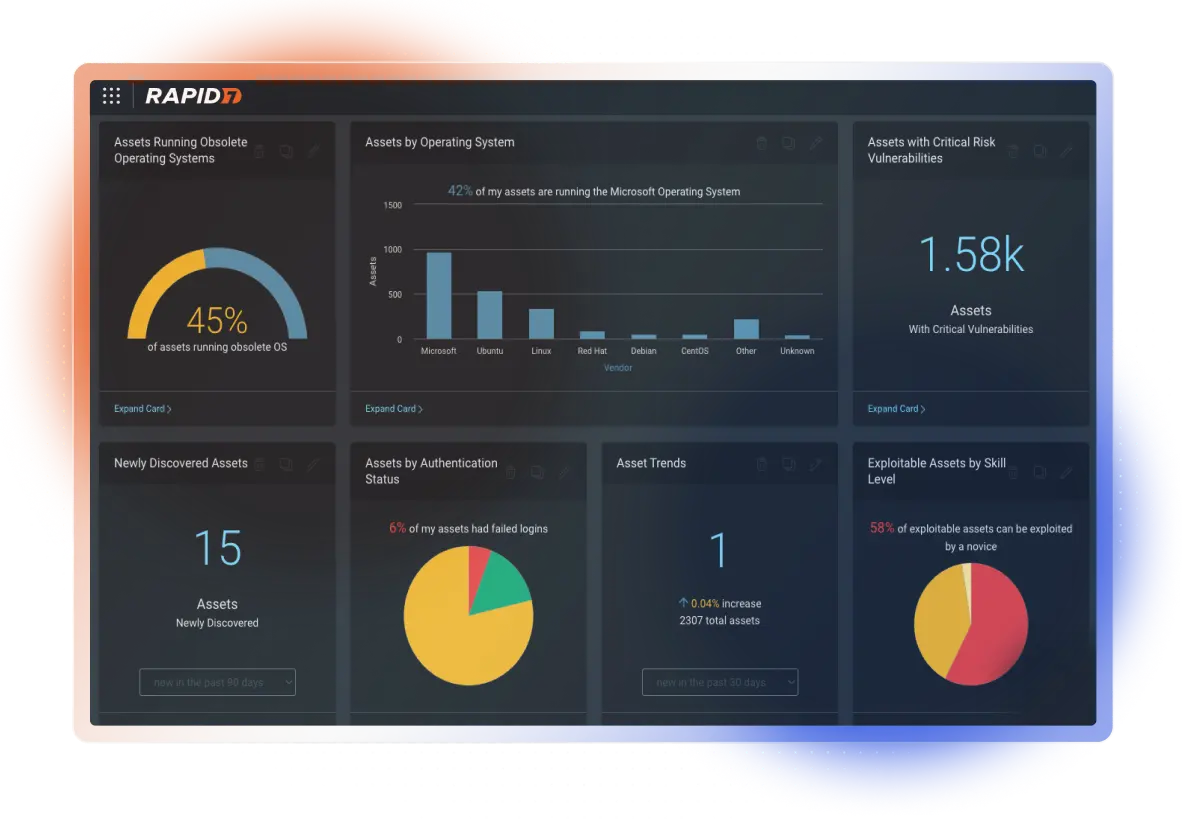
InsightAppSec (by Rapid7) is a DAST platform that is part of the larger Rapid7 Insight cloud suite. It automates web app and API security testing, offers scan-config wizards, attack replay to validate fixes, and integrates tightly with DevOps workflows.
It supports scan engines on-premises or in cloud, compliance reporting (PCI-DSS, HIPAA, OWASP Top 10) and is designed for organizations scaling AppSec programs across many apps. InsightAppSec is a good fit for teams already invested in Rapid7’s platform.
Top features (short):
App discovery and automated crawling
Prioritization with risk metrics
CI/CD and orchestration integrations
Scanning for OWASP Top 10 & APIs
Insight platform integrations (VM/IDR)
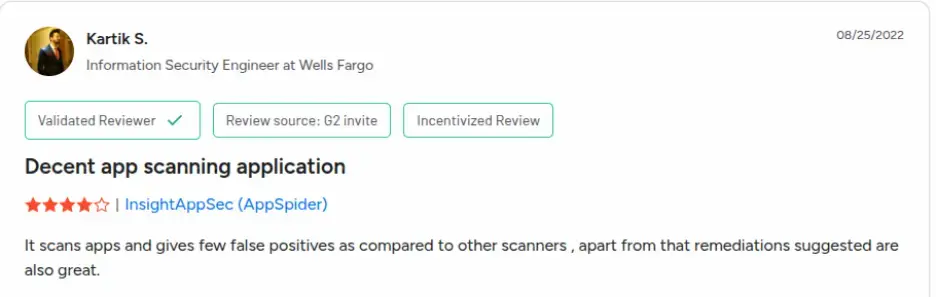
G2 snapshot: 4.3/5 on G2. InsightAppSec gets strong marks for integrating DAST into the broader Rapid7 “Insight” ecosystem (asset management, exposure, etc.). Users like the visibility and enterprise-style features, though some report scan setup or platform complexity can slow early adoption.
Pricing (tiers / starts):
- Starts at $175 / month per app (billed annually); enterprise quotes available.
5) Black Duck (Synopsys)
Black Duck is Synopsys’s market-leading software composition analysis (SCA) product that inventories open-source components and flags security, license, and operational risk. While Black Duck is not a DAST scanner by itself, many organizations combine Black Duck (SCA) with a DAST product to cover both code/component risk and runtime vulnerabilities.
Black Duck shines when your primary goal is governable OSS risk, dependency alerts, and SBOM generation. For DAST functionality you’d pair Black Duck with a dedicated DAST/IAST/SAST tool.
Top features (short):
OSS inventory and SBOM generation
Vulnerability & license risk alerts
Policy enforcement and governance
Component risk scoring and alerts
CI/CD integrate for component checks
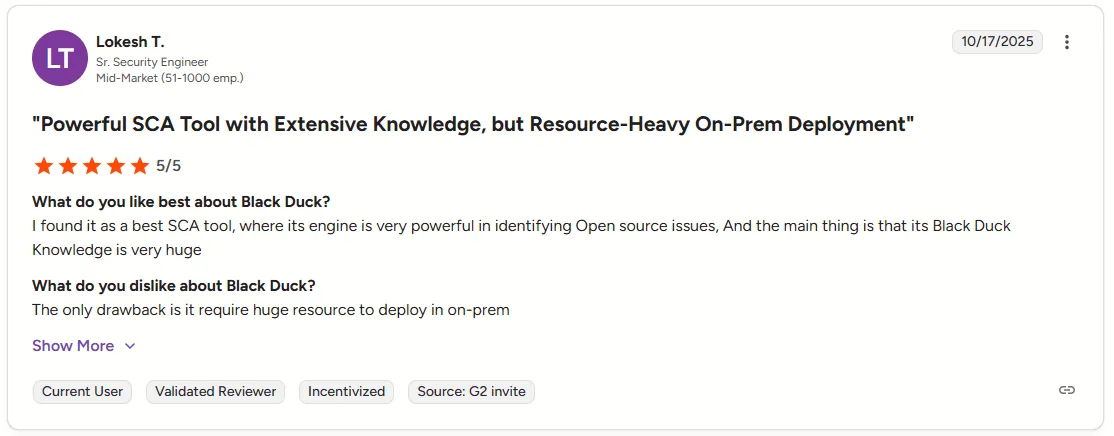
G2 snapshot: Reviewers of Black Duck emphasise its strength in open-source component risk management (SCA) rather than pure DAST. Users say it shines in governance, licence compliance and SBOM support. If used for DAST pairing, expect the runtime scanning component to come via another vendor.
Pricing (tiers / starts): Vendor-quoted; contact Synopsys for bespoke pricing.
6) Fortify DAST (OpenText)
Fortify (OpenText) is an enterprise-grade AppSec portfolio that includes both SAST and DAST capabilities and strong governance/compliance features. Fortify DAST is typically used by large organizations with compliance and deep security process requirements. It integrates with SDLC tools and provides detailed reporting for long-term program management. Pricing is enterprise-quoted and commonly sits with large-deployment budgets (contact OpenText for a tailored quote). Fortify is best for organizations that need rigorous controls, audit trails, and integration with broader governance processes.
Top features (short):
Enterprise SAST and DAST suite
Compliance-focused reporting and auditing
Large portfolio scanning abilities
SDLC integration and role-based access
Custom rule and policy support
G2 snapshot: 4.1/5 on G2. Users say it handles large portfolios and governance well. Some feedback highlights complexity, slower setup and higher cost compared to lighter tools.
7) Invicti (formerly Netsparker)
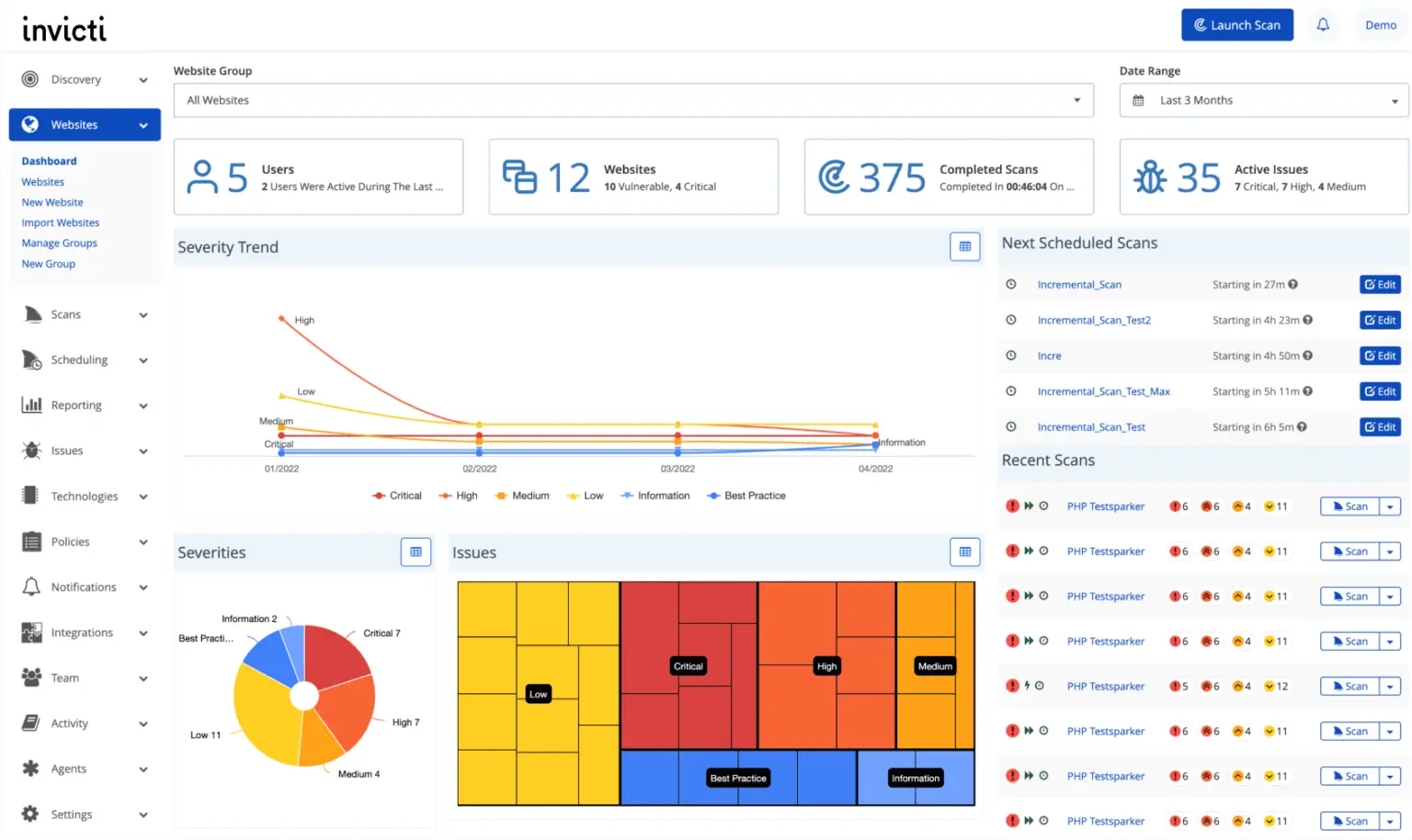
Invicti (formerly Netsparker) offers advanced DAST capabilities with a focus on automation and proof-based scanning. Its proof-based scanning automatically exploits found vulnerabilities in a safe manner to confirm them, helping reduce false positives (the company claims 99.98% accuracy) and save remediation time.
It supports full asset discovery, API scanning, SPA/JS support, integration with CI/CD and issue trackers, and vulnerability trend tracking.
Top features (short):
Proof-based scanning to reduce false positives
Automated, schedulable scans
CI/CD and API integrations
Scalable target management
Enterprise reporting and integrations
G2 snapshot: 4.6/5 on G2. Invicti is praised for proof-based scanning (reducing false positives), good automation and target-scale flexibility. Users like that it integrates with workflows and gives credible vulnerability proofs. Some mention the cost and targeting/licensing model still require careful planning.
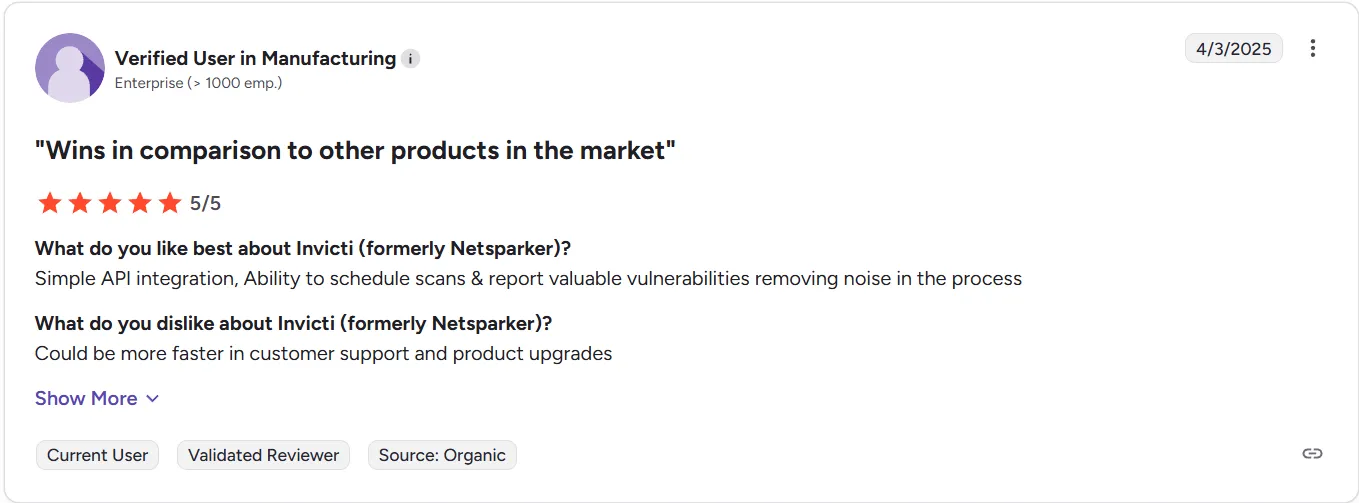
Pricing (tiers / starts): Quote-based; market examples often show $5k–$7k/yr entry points depending on targets. Confirm with vendor.
8) Qualys WAS
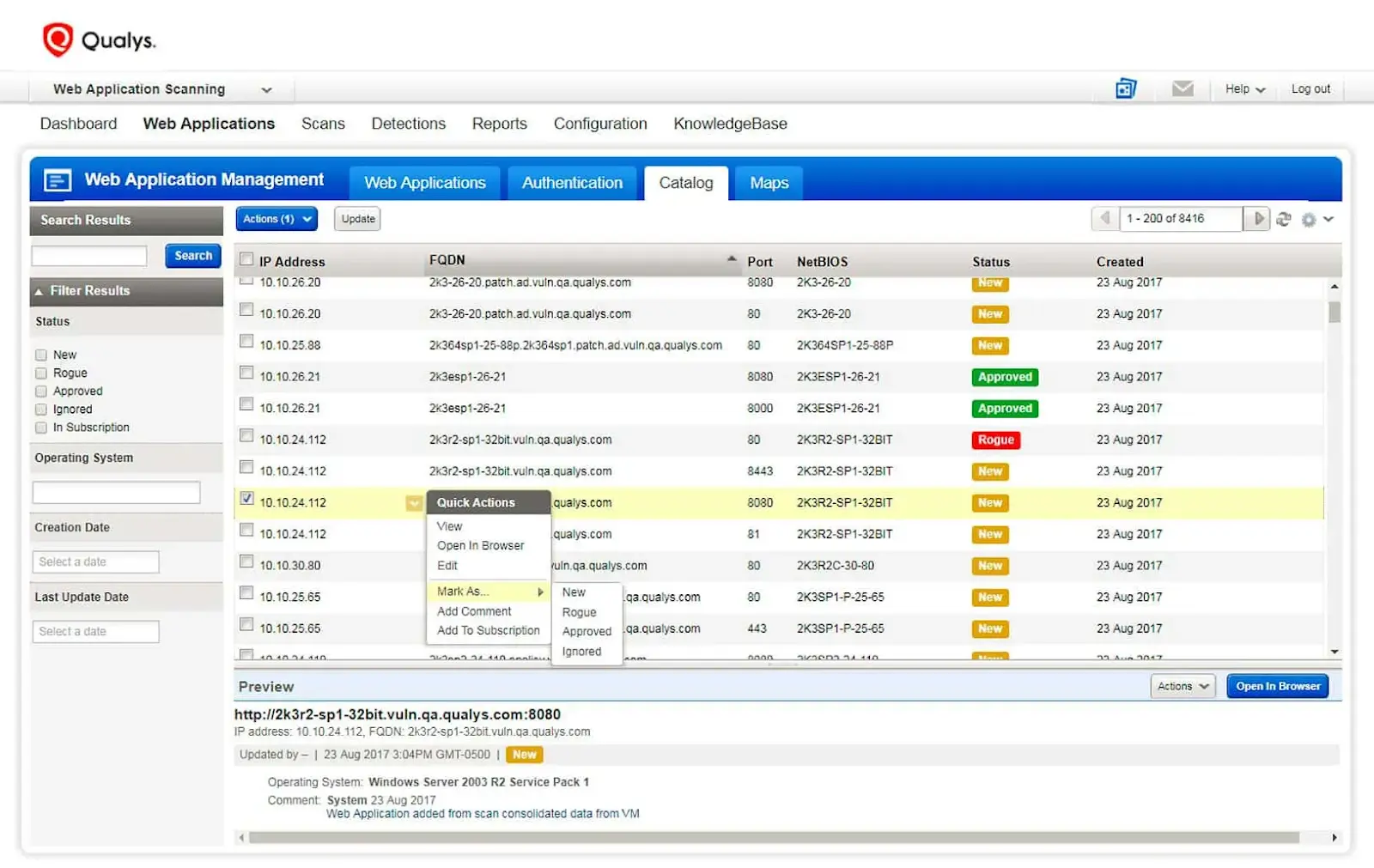
Qualys Web Application Scanning (WAS) is part of Qualys’s cloud security platform, designed for enterprise-scale web and API scanning with centralized lifecycle management. Qualys focuses on broad coverage, integrations, and compliance reporting. Published market references show Qualys WAS starting points around $1,995 per 25 web apps per year, though actual pricing depends on modules and scale. It’s a solid choice for organizations that want a platform approach and integration with asset and vulnerability management across a large environment.
Top features (short):
Cloud-based scalable scanning
API & web app coverage (OWASP/APIs)
Centralized reporting and dashboards
Integrates with asset management
AI/ML-assisted detections
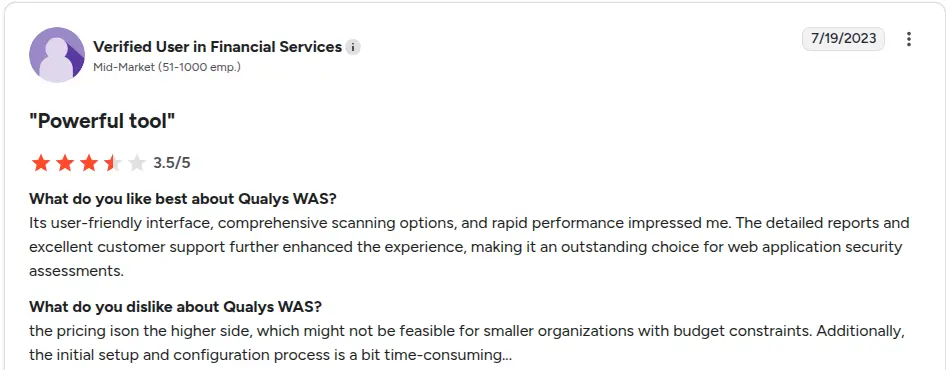
G2 snapshot: Qualys portal shows overall platform 4.3/5 on G2. Users note strong asset discovery and integration with broader vulnerability management. Some reviews mention the UI and onboarding could be more developer-friendly than lighter tools.
Pricing (tiers / starts):
- Example market start: ~$1,995 per 25 apps/yr (varies with platform modules). Quote recommended.
9) Tenable WAS
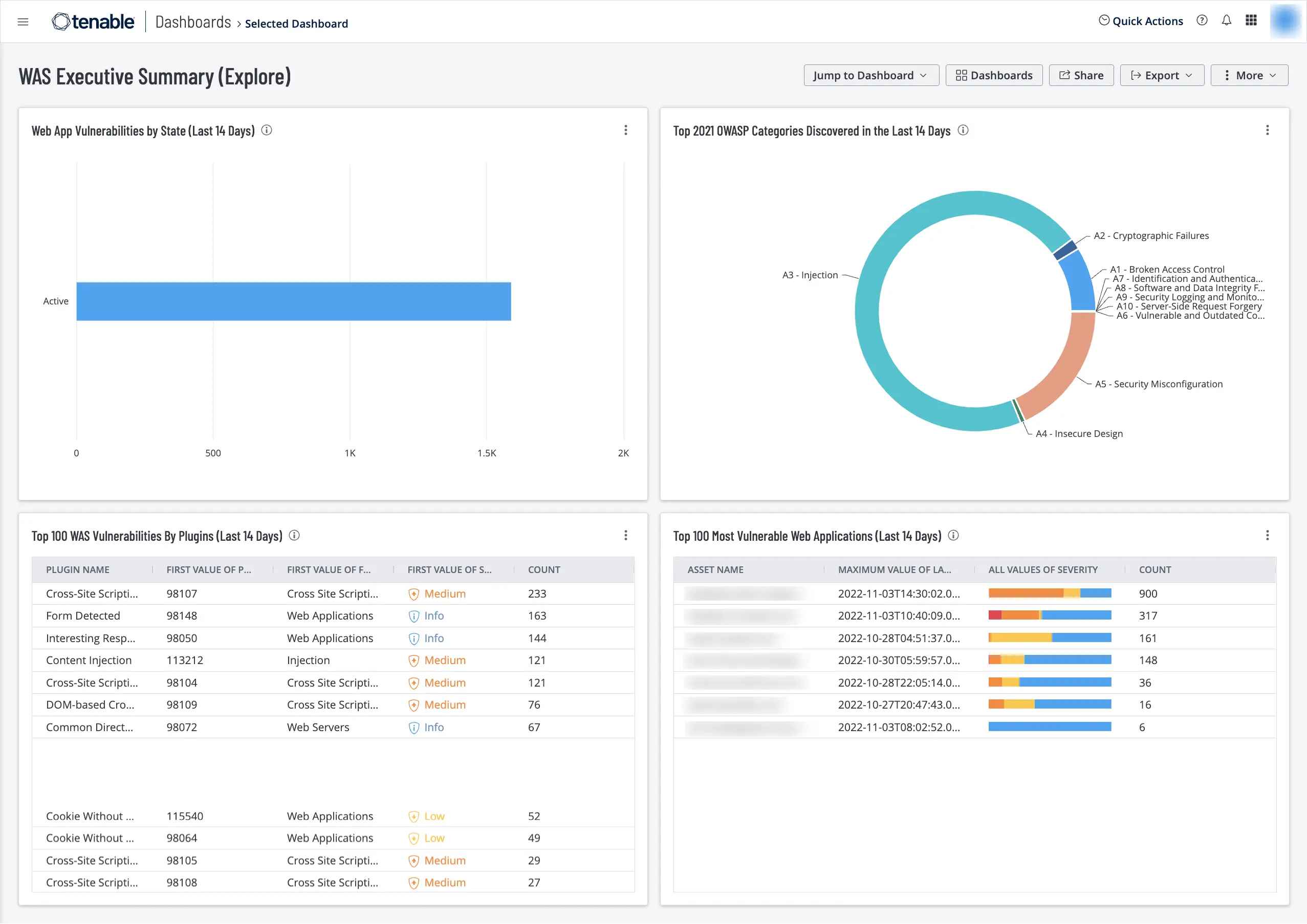
Tenable’s Web App Scanning (WAS) is integrated into the Tenable One exposure management suite and aims to combine application scanning with the broader vulnerability and exposure context Tenable provides. It’s intended for organizations that want a unified exposure story spanning web apps, infrastructure, and cloud assets. Pricing is typically provided via contact/sales channels; example published bundles start in the low thousands for small FQDN packs (e.g., sample public listings show 5 FQDNs at several thousand USD per year). Tenable is ideal when you need DAST within a broader risk/exposure program.
Top features (short):
Integrated exposure and DAST context
Modern SPA and API scanning
Role-based dashboards and reporting
Scan templates and scheduling
Integrates with Tenable vulnerability data
G2 snapshot: 4.5/5 on G2. Users say it gives a unified view of web apps + infrastructure risk. Setup for scanning web apps/APIs may require more configuration relative to simpler tools.
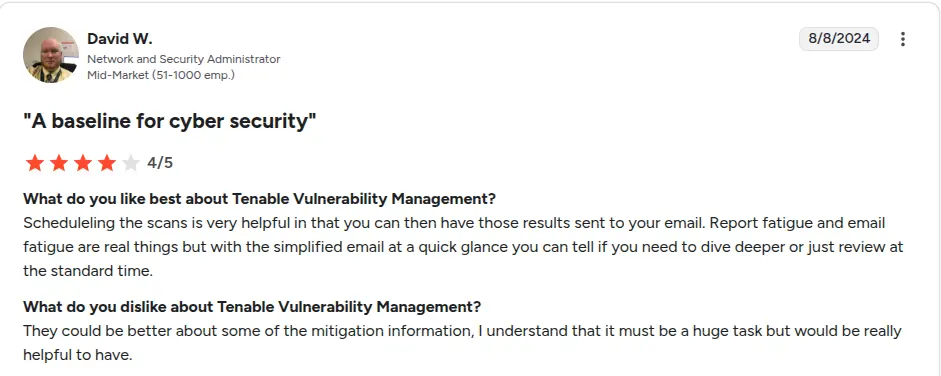
Pricing (tiers / starts): Example offers and bundles are vendor-quoted; public references show starter packs (e.g., five FQDNs) in the mid-thousands.
10) HCL AppScan
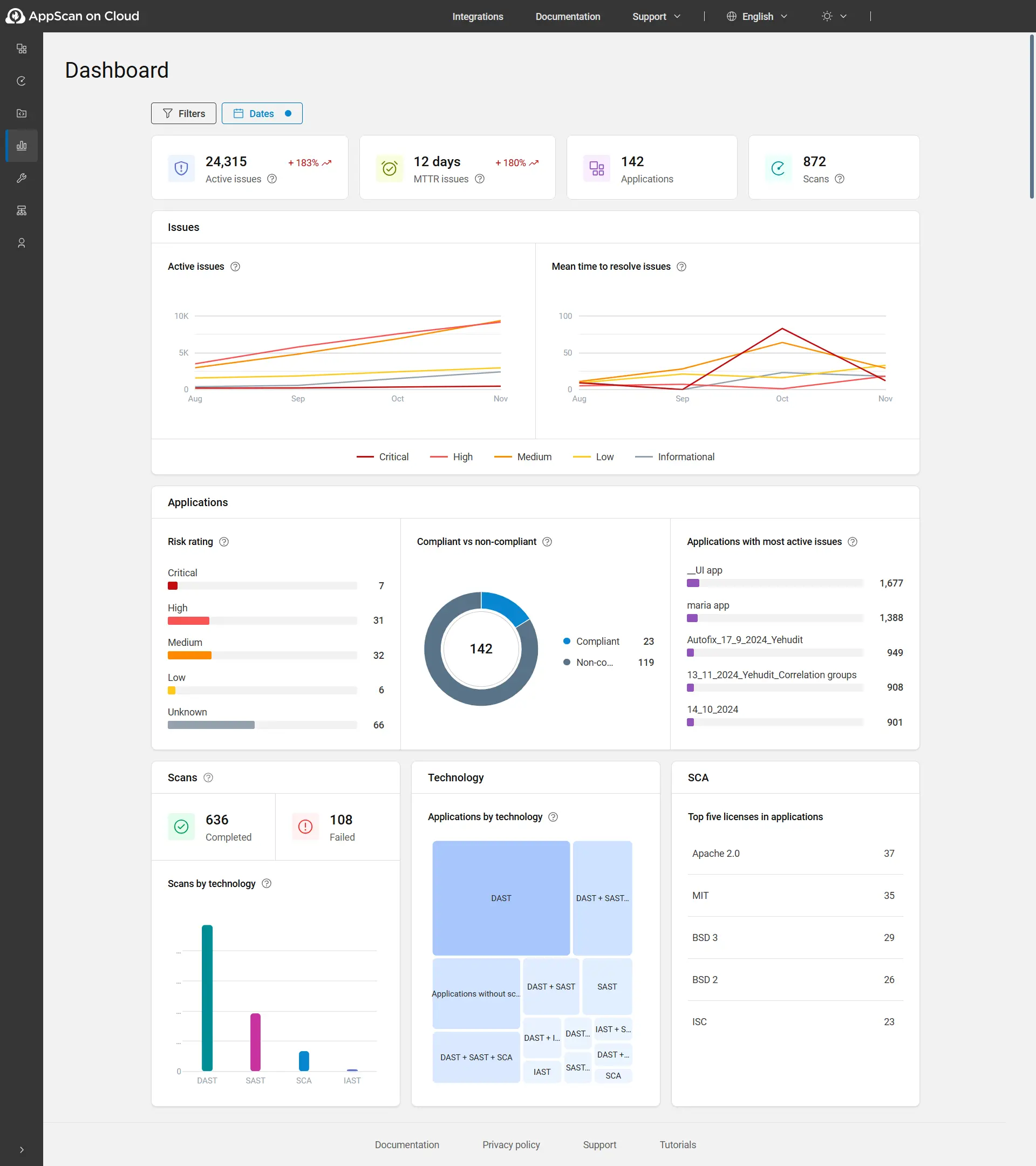
HCL AppScan is a mature AppSec offering with SAST, DAST, IAST and cloud options. It’s used by complex enterprises that need a full-lifecycle AppSec program across code, runtime, and open-source components. AppScan on Cloud offers pay-per-scan as well as subscription models; marketplace listings show pay-per-scan pricing around $313/scan (minimum purchase rules apply) and subscription/enterprise quotes via sales. AppScan is a fit where you want deep SAST/DAST/IAST coverage backed by enterprise support and long-term governance.
Top features (short):
DAST and SAST and IAST suite
Pay-per-scan cloud option
Enterprise reporting & governance
CI/CD and SDLC integrations
Policy enforcement and developer workflows
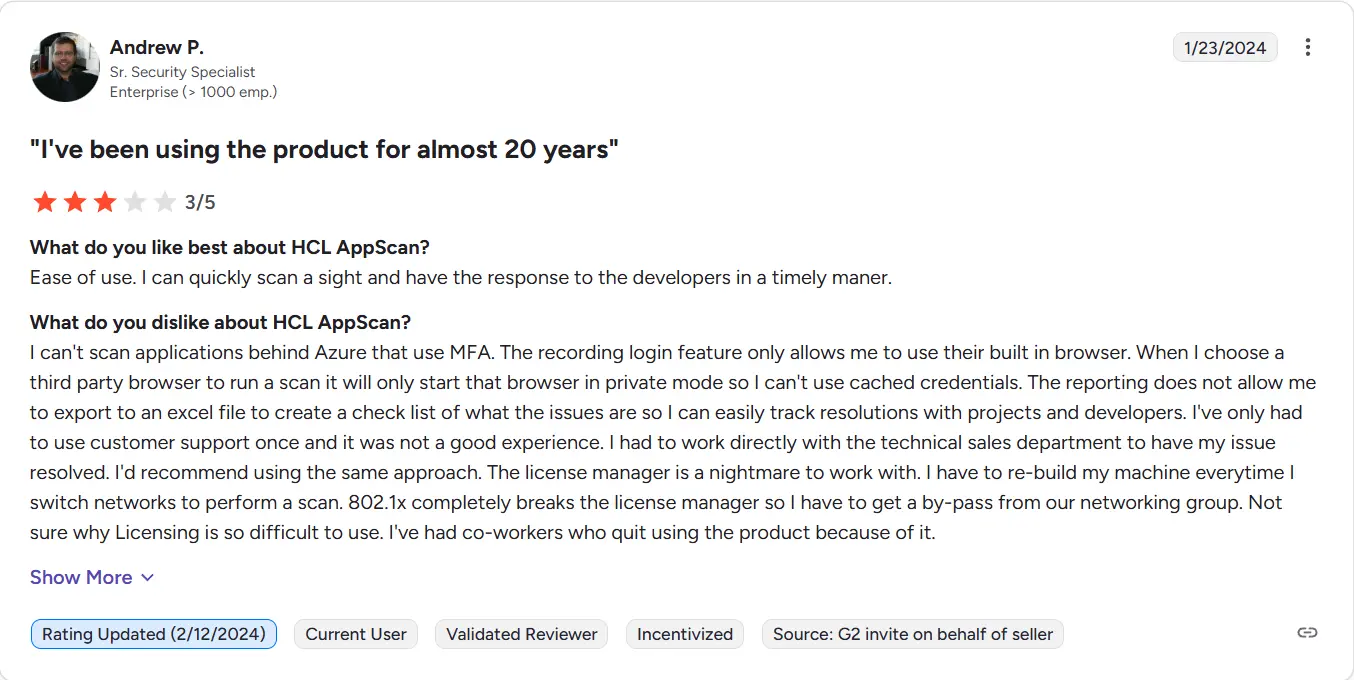
G2 snapshot: 4.1/5 on G2. HCL AppScan is recognized for enterprise breadth (DAST, SAST, IAST) and enterprise governance. Users praise accuracy and longstanding market presence. Some feedback suggests UI and onboarding are less modern relative to newer tools aimed at developers.
Pricing (tiers / starts):
- Pay-per-scan options (e.g., ~$313.62 / per scan / one year on HCL marketplace with minimum order). Subscription/enterprise options quoted by HCL.
Things to consider when looking for a Bright Security alternative
When comparing DAST solutions, focus on what truly impacts long-term value, not just the price tag. Here are the key areas to evaluate:
Accuracy and noise: Tools that minimize false positives save developers countless hours. Prioritize platforms that provide verified or proof-based results.
Developer experience and integrations: If developers are driving remediation, seamless CI/CD and issue tracker integrations are essential. The best tools fit naturally into your existing workflows.
Coverage for modern apps: Make sure the scanner fully supports APIs, SPAs, and complex authentication flows like OAuth, JWT, and GraphQL.
Scalability and pricing: Understand how pricing scales (per app, per test, or through subscriptions) and ensure it matches your current and future needs.Transparent pricing beats quote-only models for long-term planning.
Remediation and triage workflows: Look for features that help prioritize findings, provide exploit proof, and automatically create tickets to speed up fixes.
Reporting and compliance readiness: If you need audit-friendly reports for PCI, ISO, or SOC 2, confirm that the platform offers customizable templates and export options.
Support and roadmap alignment: Smaller vendors often move faster, while larger ones may offer stronger governance features. Choose based on your security program’s maturity.
Trial and proof of efficacy: Always test the tool on real applications. A good DAST solution should uncover genuine, exploitable issues, not just noise.
Final thoughts
Choosing the right Bright Security alternative ultimately comes down to alignment and not just in features, but in how a platform fits your team’s workflow and growth goals. Some tools excel at deep enterprise coverage, others prioritize developer experience or transparent scalability. What matters most is adopting a solution that keeps security continuous, actionable, and invisible to velocity.
If you want a developer-first experience with transparent pricing and a low noise-to-signal ratio, Beagle Security is a standout. It is fast to onboard, built for CI/CD, and designed so developers can act on findings quickly. Check out our 14-day Advanced trial and our interactive demo so you can validate it against your apps before buying.


![Top ZAP alternatives and competitors [October 2026]](/blog/images/top-zap-alternatives-cover.webp "Top ZAP alternatives and competitors [October 2026]")




![Top 10 penetration testing companies [2026]](/blog/images/top-penetration-testing-companies-cover.webp "Top 10 penetration testing companies [2026]")


![Top vendor application security tools [2026]](/blog/images/top-vendor-application-security-testing-tools-2026-cover.webp "Top vendor application security tools [2026]")



![Top Snyk alternatives & competitors [2026]](/blog/images/top-snyk-alternatives-cover.webp "Top Snyk alternatives & competitors [2026]")