Top Burp Suite alternatives in the market [2026]
![Top Burp Suite alternatives in the market [2026]](/blog/images/burpsuite-alternatives.webp "Top Burp Suite alternatives in the market [2026]")
If you are looking for the best Burp Suite alternatives in 2026, you already know that application security testing is shifting.
Burp Suite remains the undisputed gold standard for manual penetration testing and bug bounty research. However, its heavy reliance on manual traffic manipulation and proxy interception creates significant bottlenecks for modern engineering teams.
As organizations transition toward microservices, API-first architectures, and rapid CI/CD deployment cycles, security testing must keep pace. Relying solely on manual testing tools slows down release velocity and leaves continuous integration pipelines exposed.
Today, DevSecOps teams are actively searching for platforms that solve these modern challenges. Specifically, they are looking for alternatives that offer:
Automated security validation that integrates directly into CI/CD pipelines.
Scalability to test hundreds of shifting APIs and microservices.
Deep testing capabilities that do not require a dedicated security engineer to configure every single scan.
In this guide, we explore the top Burp Suite alternatives available on the market right now. Whether you need an open-source scanner like ZAP, a comprehensive enterprise exposure suite like Checkmarx, or a modern, AI-powered automated penetration testing platform like Beagle Security, this breakdown will help you find the right tool to scale your application security.
Best Burp Suite alternatives TL;DR
| Software | Starting prices | Strengths | Best for |
|---|---|---|---|
| Beagle Security | $119 per month |
| Agile teams and modern applications with complex login flows |
| Rapid7 InsightAppSec | $175 per month |
| Organizations already using the Rapid7 Insight Platform |
| Tenable WAS | $7,434 per year |
| Large enterprises with a focus on comprehensive exposure management |
| Qualys WAS | Custom quote |
| Organizations already using the Qualys Cloud Platform |
| ZAP | Free |
| Individual developers, small teams, and budget-constrained projects |
| Invicti | Custom quote |
| Organizations prioritizing DAST and ease of use |
| Checkmarx | Custom quote |
| Organizations needing a full-spectrum, enterprise-grade AppSec solution |
| Veracode | Custom quote |
| Large enterprises with a long-term AppSec strategy |
| HCL AppScan | Custom quote; $295.87 per scan |
| Enterprises needing a flexible, comprehensive solution with on-premises options |
Best Burp Suite alternatives
1. Beagle Security
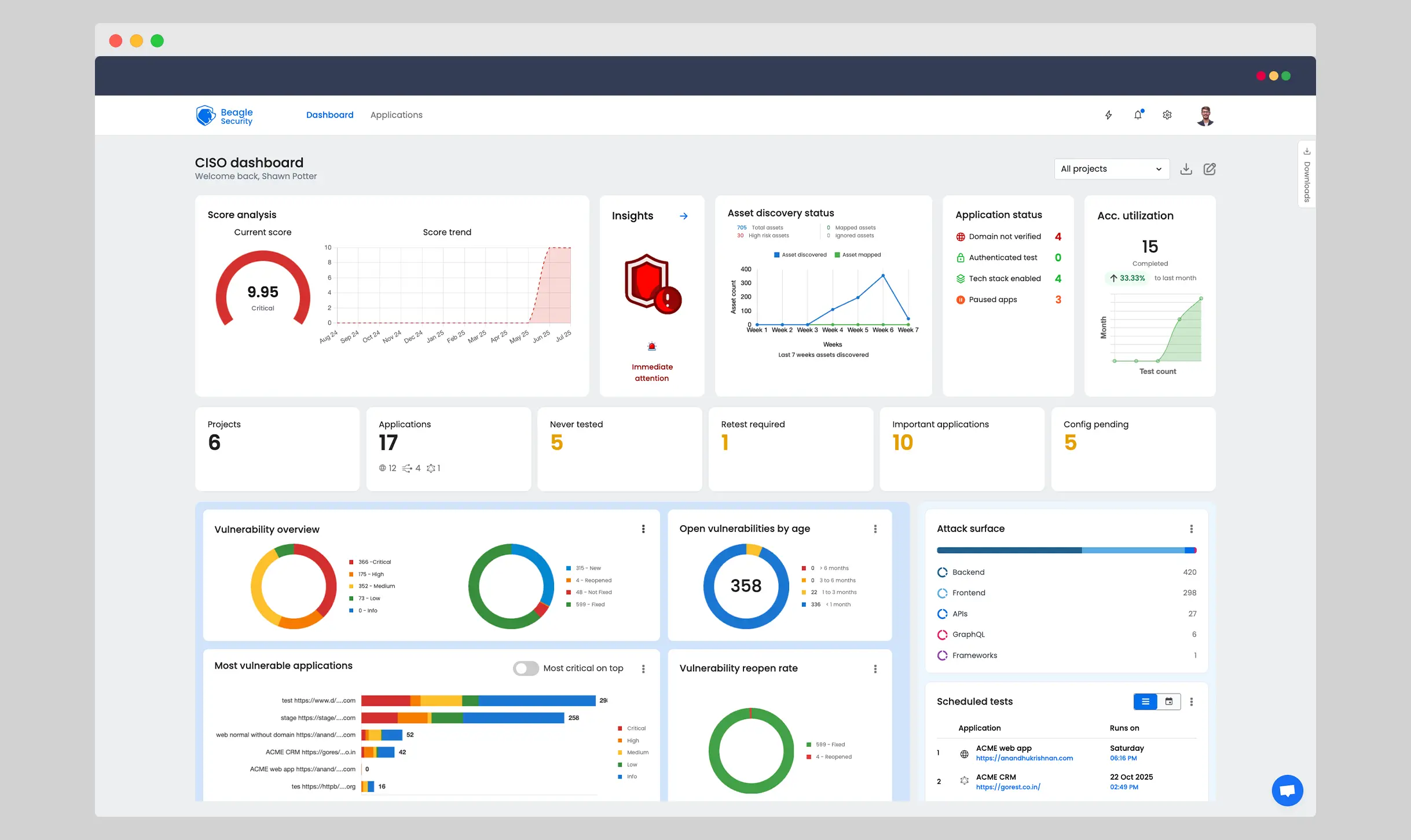
Beagle Security key overview:
AI-native DAST : Offers automated, AI-powered penetration testing.
Pricing : Starts at $1,188 per year, with a concurrent test-based pricing model.
Reviews : Has a G2 rating of 4.7/5 and is praised for its intuitive user interface, AI-based engine, and developer-centric reports.
Beagle Security is an automated penetration testing platform designed to simulate real attacker behavior against modern web applications and APIs.
Instead of relying only on predefined vulnerability signatures, the platform analyzes application behavior and generates contextual test cases based on how the system actually functions. This allows it to uncover deeper vulnerabilities such as authentication issues, authorization flaws, and business logic vulnerabilities that traditional scanners may overlook.
The platform provides full API security testing for REST and GraphQL interfaces and generates contextual reports that include remediation guidance tailored to the technology stack used by the application.
Beagle Security integrates seamlessly with CI/CD pipelines, enabling teams to run automated penetration tests whenever new features are deployed.
It is also capable of navigating complex login flows including multi-step authentication and two-factor authentication, which are common challenges for traditional DAST tools.
Beagle Security key features:
Performs context-aware testing and handles complex login flows, including 2FA.
Simulates real-world attacker behavior to test business logic.
Provides full API security support for REST and GraphQL.
Offers contextual, developer-friendly reports with remediation guidance specific to the tech stack.
Integrates seamlessly with CI/CD pipelines.
Beagle Security pricing
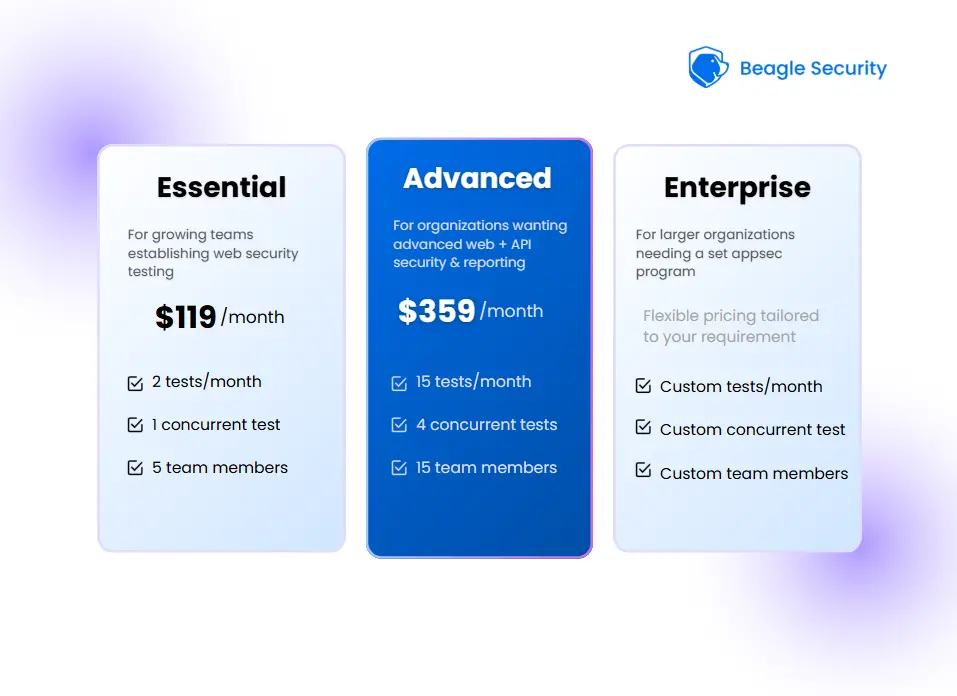
Beagle Security uses a tiered pricing structure with plans starting at $1,188 per year. Enterprise plans begin at $8,500 annually for 5 concurrent tests. A 14-day free trial is available.
Beagle Security reviews
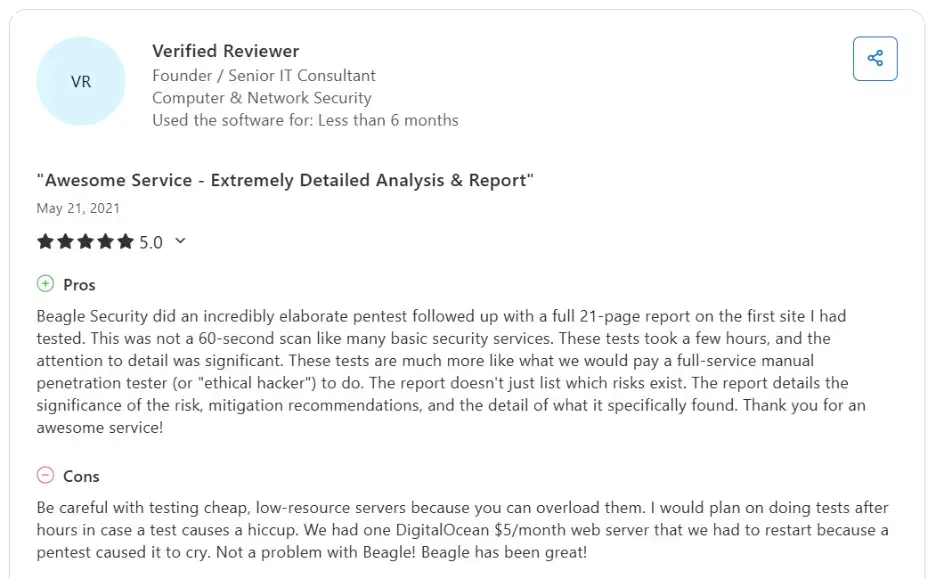
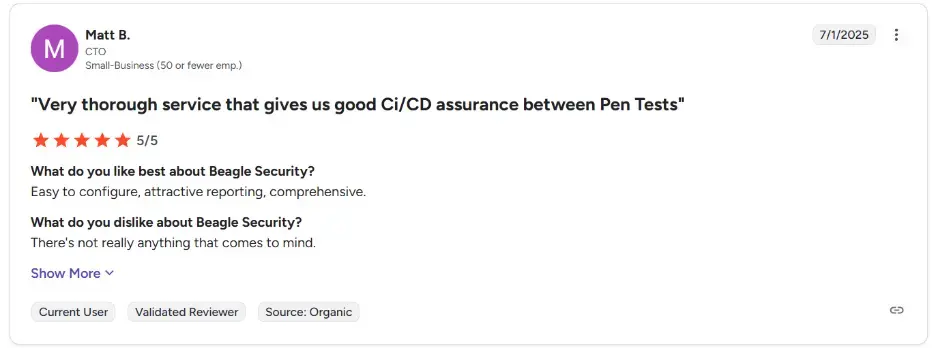
With a G2 rating of 4.7/5, users frequently highlight its intuitive interface, AI-driven testing engine, and developer-friendly reports that make remediation easier for engineering teams.
2. Rapid7 InsightAppSec
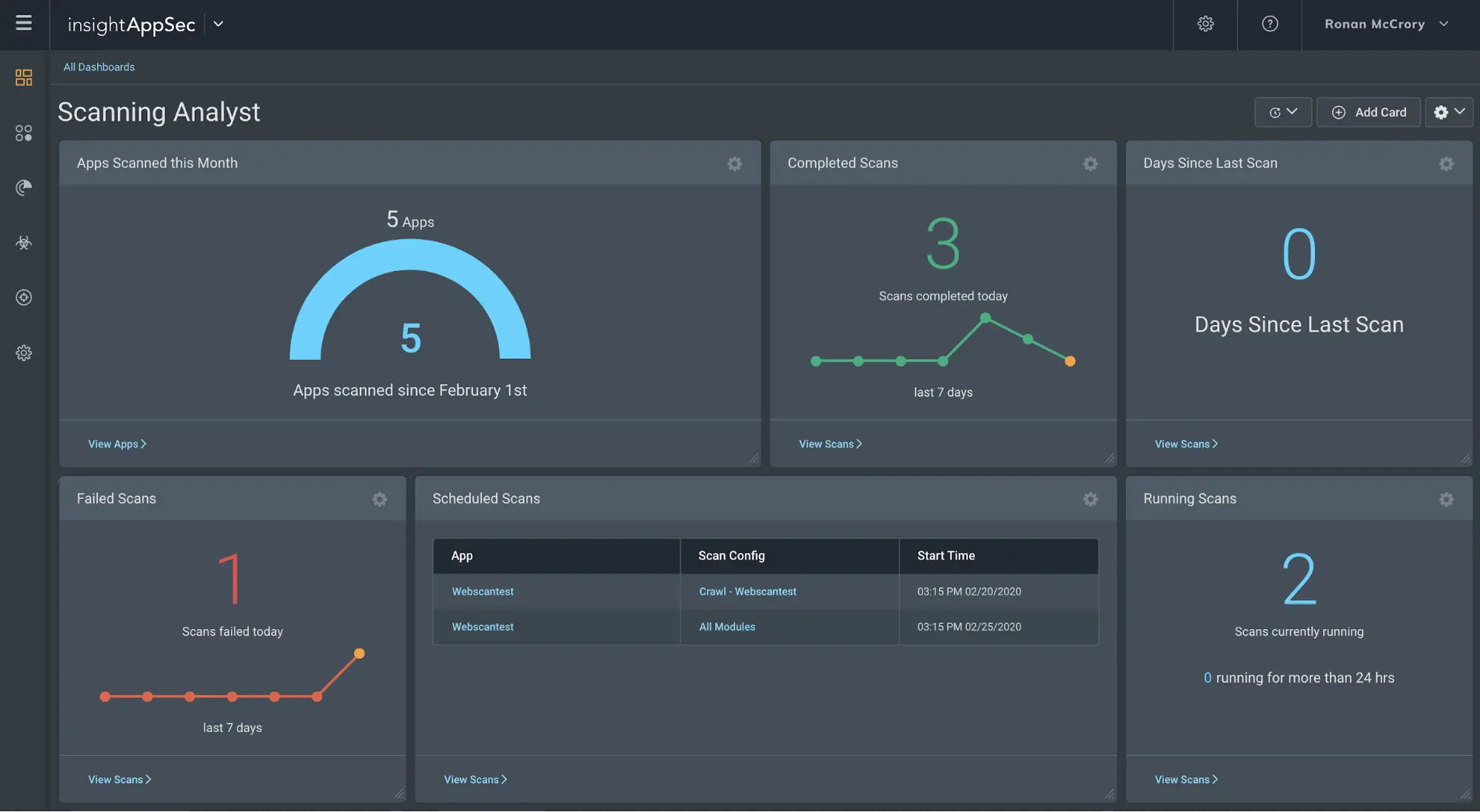
Rapid7 InsightAppSec key overview:
Integrated DAST/IAST : Combines DAST with lightweight IAST capabilities.
Pricing : Starts at $175 per month, based on a per-application model.
Reviews : Users on G2 rate it 4.3/5 and value its integration with other Rapid7 tools.
Rapid7 InsightAppSec is part of the broader Rapid7 Insight Platform, which combines vulnerability management, detection and response, and application security into a unified ecosystem.
The platform integrates DAST scanning with lightweight IAST capabilities, allowing it to analyze applications from both the outside and within runtime environments.
InsightAppSec includes scheduled scanning, vulnerability tracking, and configurable scan blackout periods that prevent tests from running during critical production hours.
The platform also provides dashboards and reporting features that help security teams monitor vulnerabilities across applications and prioritize remediation.
InsightAppSec integrates with CI/CD platforms such as Jenkins and Azure DevOps, although its configuration can be more complex compared to some newer developer-centric tools.
Rapid7 key features:
Offers DAST with lightweight IAST capabilities via agents.
Includes scheduled scanning, scan blackouts, and vulnerability tracking.
Provides visual dashboards and customizable, compliance-focused reports.
Integrates with CI/CD tools like Jenkins and Azure DevOps.
Rapid7 InsightAppSec pricing
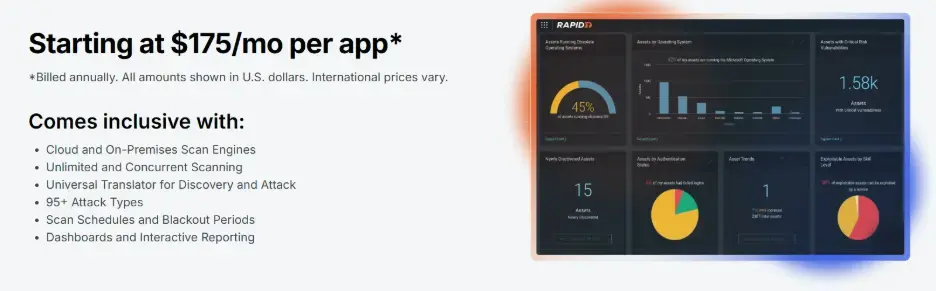
Rapid7 pricing starts at $175 per month for a single application, using a per-application pricing model. This can be costly for organizations with many applications. A 30-day free trial is available.
Rapid7 InsightAppSec reviews
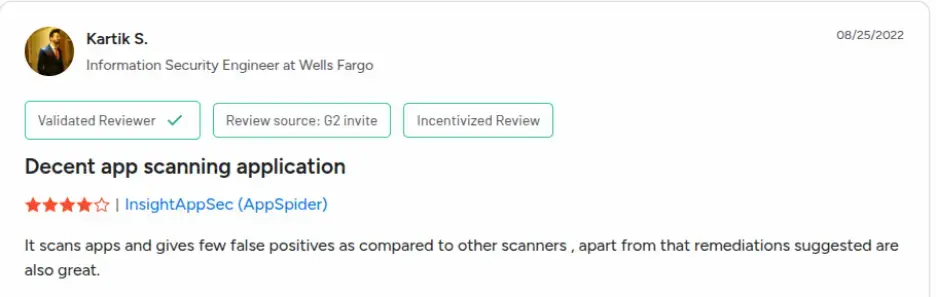
Rated 4.3/5 on G2, users appreciate its integration with other Rapid7 tools. Common complaints include a steep learning curve and performance issues.
3. Tenable WAS
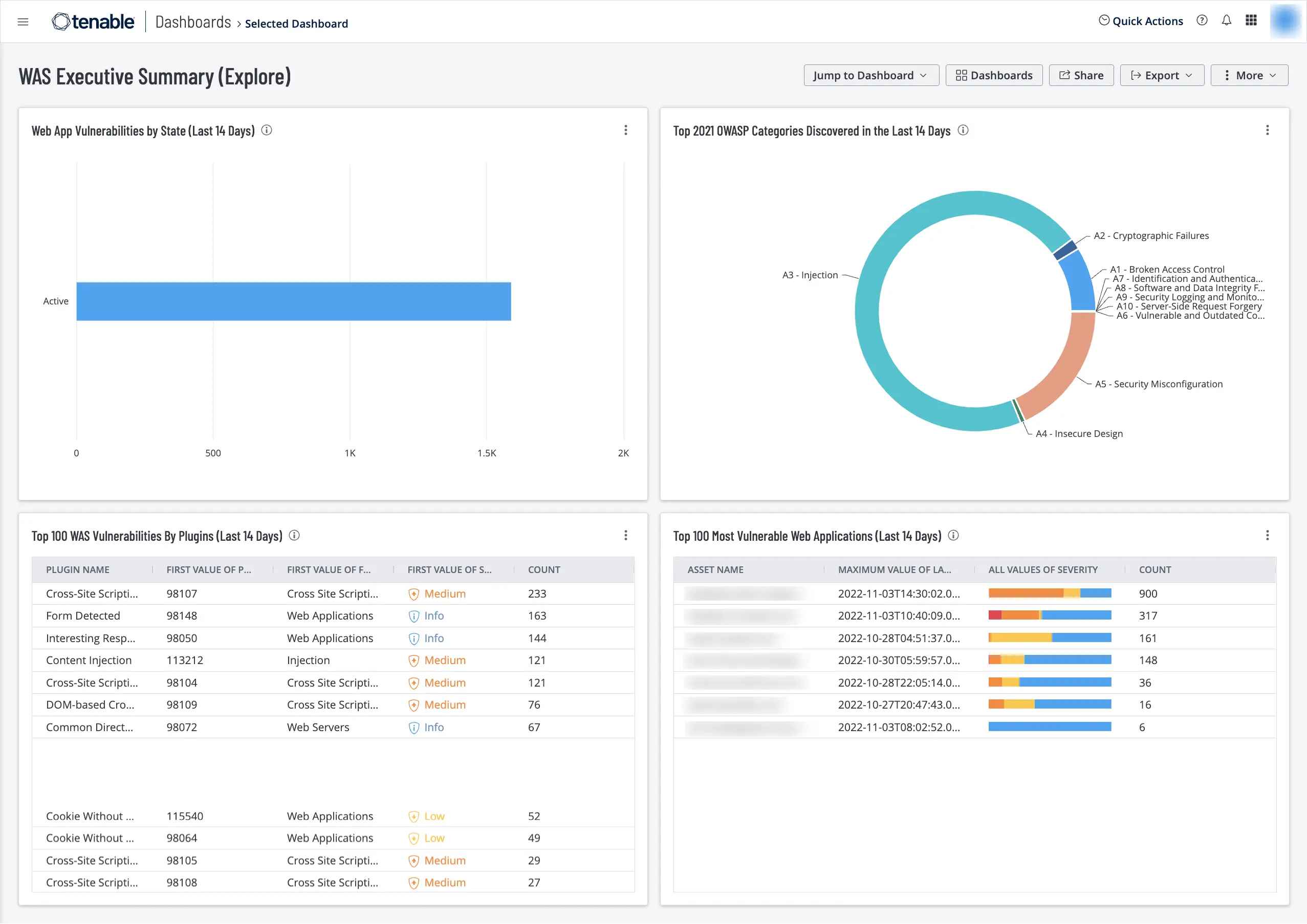
Tenable WAS key overview:
Risk-based approach : Prioritizes vulnerabilities according to their exploitability.
Pricing : The annual starting price is $7,434 for 5 FQDNs.
Reviews : On G2, Tenable WAS is rated 4.5/5, with users praising its comprehensive vulnerability coverage and intuitive dashboards.
Tenable Web Application Scanning is part of the Tenable One Exposure Management platform, which provides unified visibility across network infrastructure, cloud environments, and applications.
The platform performs DAST scanning alongside API security testing and vulnerability intelligence.
Tenable emphasizes risk-based prioritization, helping organizations focus on vulnerabilities that are most likely to be exploited in real-world attacks.
While the platform excels at enterprise exposure management and large-scale vulnerability visibility, it lacks some of the AI-driven business logic testing and developer-focused reporting found in newer AppSec tools.
Tenable WAS key features:
DAST and API scanning capabilities
Risk-based vulnerability prioritization
Comprehensive vulnerability coverage
Integration with the Tenable One exposure management ecosystem
Tenable WAS pricing
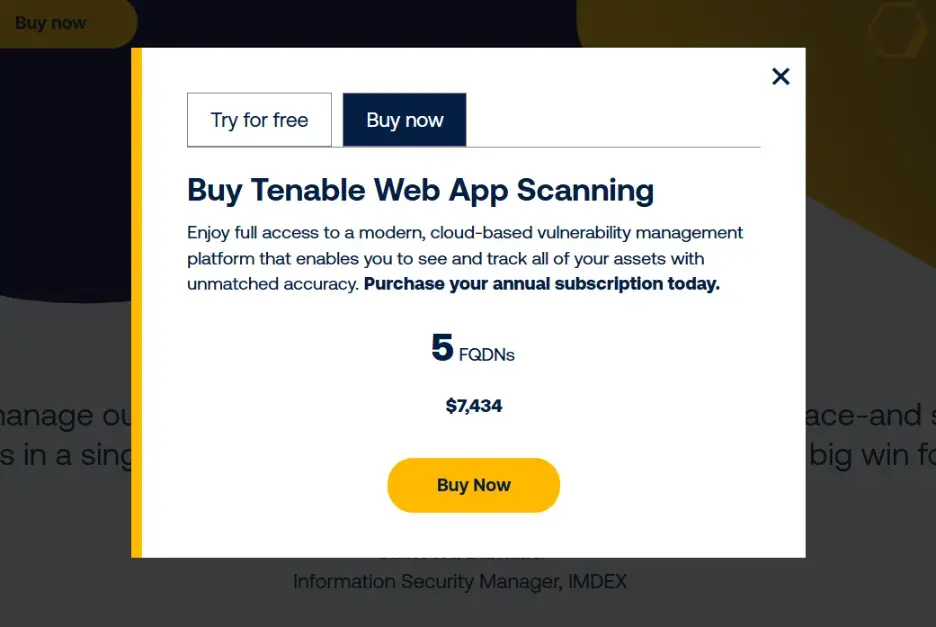
Tenable WAS pricing starts at $7,434 per year for 5 FQDNs. A 30-day free trial is available, but it is often limited in functionality.
Tenable WAS reviews
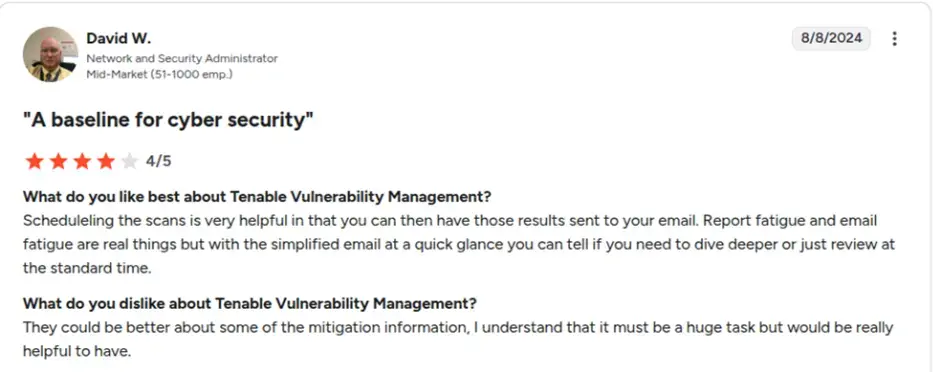
With a G2 rating of 4.5/5, users praise its comprehensive vulnerability coverage and intuitive dashboards. Some reviewers mention that the initial setup can be complex and scan times can be lengthy.
4. Qualys WAS
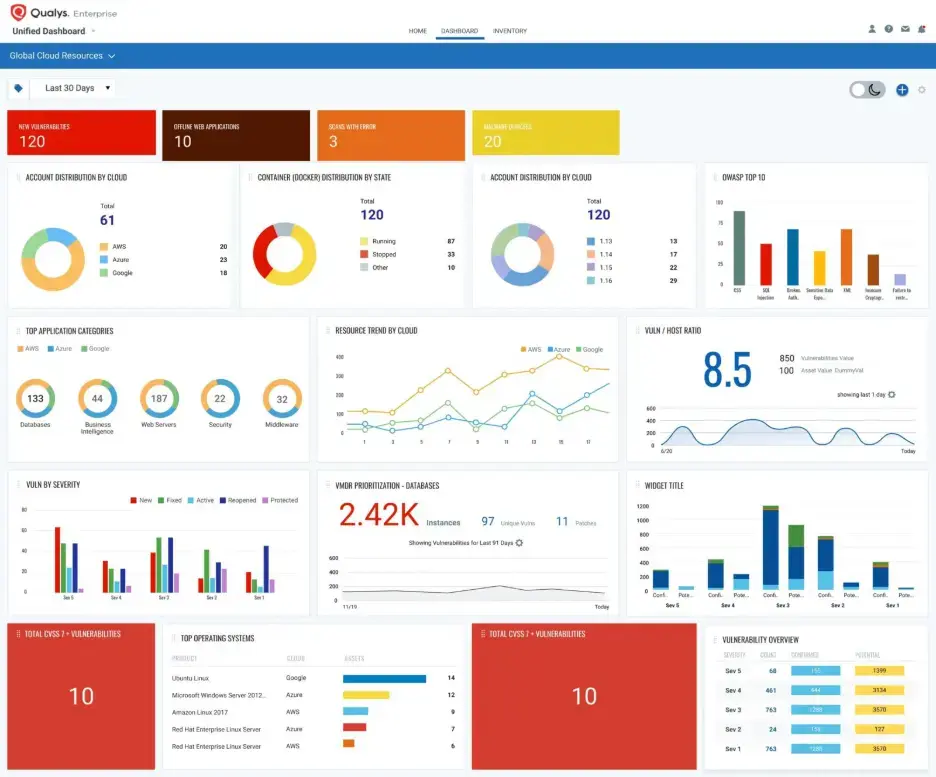
Qualys WAS key overview:
All-in-one platform: A component of the Qualys VMDR platform, it includes integrated vulnerability management.
Pricing: Quoted on a case-by-case basis and priced per target.
Reviews: Holds a 4.3/5 rating on G2, earning recognition for its robust asset visibility and integrated vulnerability management.
Qualys WAS is part of the Qualys VMDR platform, which helps organizations discover web assets and continuously monitor them for vulnerabilities.
The platform combines DAST scanning with the TruRisk prioritization engine to assess vulnerability severity based on threat intelligence and asset criticality.
Qualys also offers extensive asset discovery capabilities, enabling organizations to identify previously unknown web applications and APIs within their environment.
While powerful, some users report a steeper learning curve and higher false positive rates compared to certain modern DAST tools.
Qualys WAS key features:
Employs DAST and includes a TruRisk™ engine for prioritizing vulnerabilities based on risk.
Offers seamless integrations with CI/CD pipelines.
Generates reports that help meet compliance standards.
Provides integrated capabilities for vulnerability management and asset discovery.
Qualys WAS pricing
Pricing is determined by a custom quote and is based on a per-target model. A 30-day free trial is available for prospective users.
Qualys WAS reviews
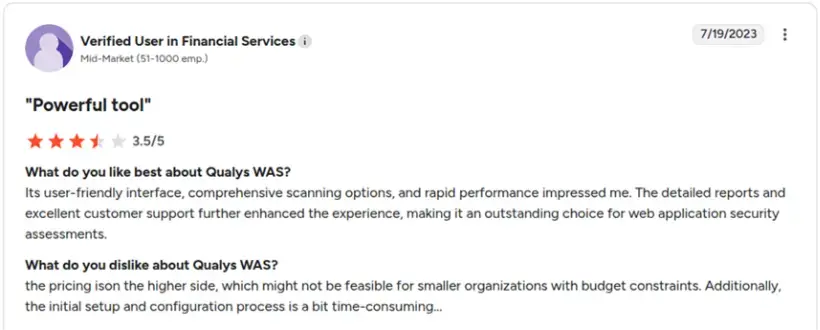
Rated at 4.3/5 on G2, the platform is frequently commended for its extensive asset visibility and effective, integrated approach to vulnerability management.
5. ZAP by Checkmarx
ZAP by Checkmarx key overview:
Open-source & free: This is a no-cost, open-source utility supported by its community.
Pricing: It is completely free to use.
Reviews: With a 4.7/5 G2 rating, ZAP is celebrated for being effective and user-friendly for all skill levels.
ZAP by Checkmarx is an open-source DAST solution that facilitates both automated and manual security testing.
The tool’s automated scanner is capable of detecting common vulnerabilities like XSS and SQL injection, and it produces reports aligned with the OWASP Top 10.
The platform is accessible to users of various skill levels and includes support for API, scheduled, and SSO testing. However, be aware that filtering false positives requires manual intervention.
ZAP by Checkmarx key features:
An automated scanner that identifies common vulnerabilities such as XSS and SQL injection.
Generates comprehensive OWASP Top 10 reports.
Its design makes it approachable for users of all experience levels.
Offers support for API security testing, scheduled scans, and SSO.
ZAP by Checkmarx pricing
As a free and open-source tool, ZAP does not have any associated costs.
ZAP by Checkmarx reviews
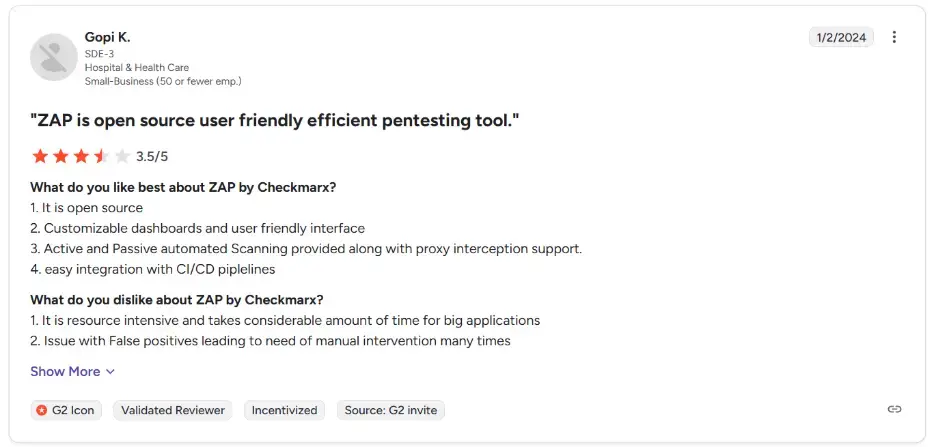
The platform has earned a G2 rating of 4.7/5. It is highly regarded for its effectiveness and accessibility, although users have noted that the initial setup can have a learning curve.
6. Invicti
Invicti key overview:
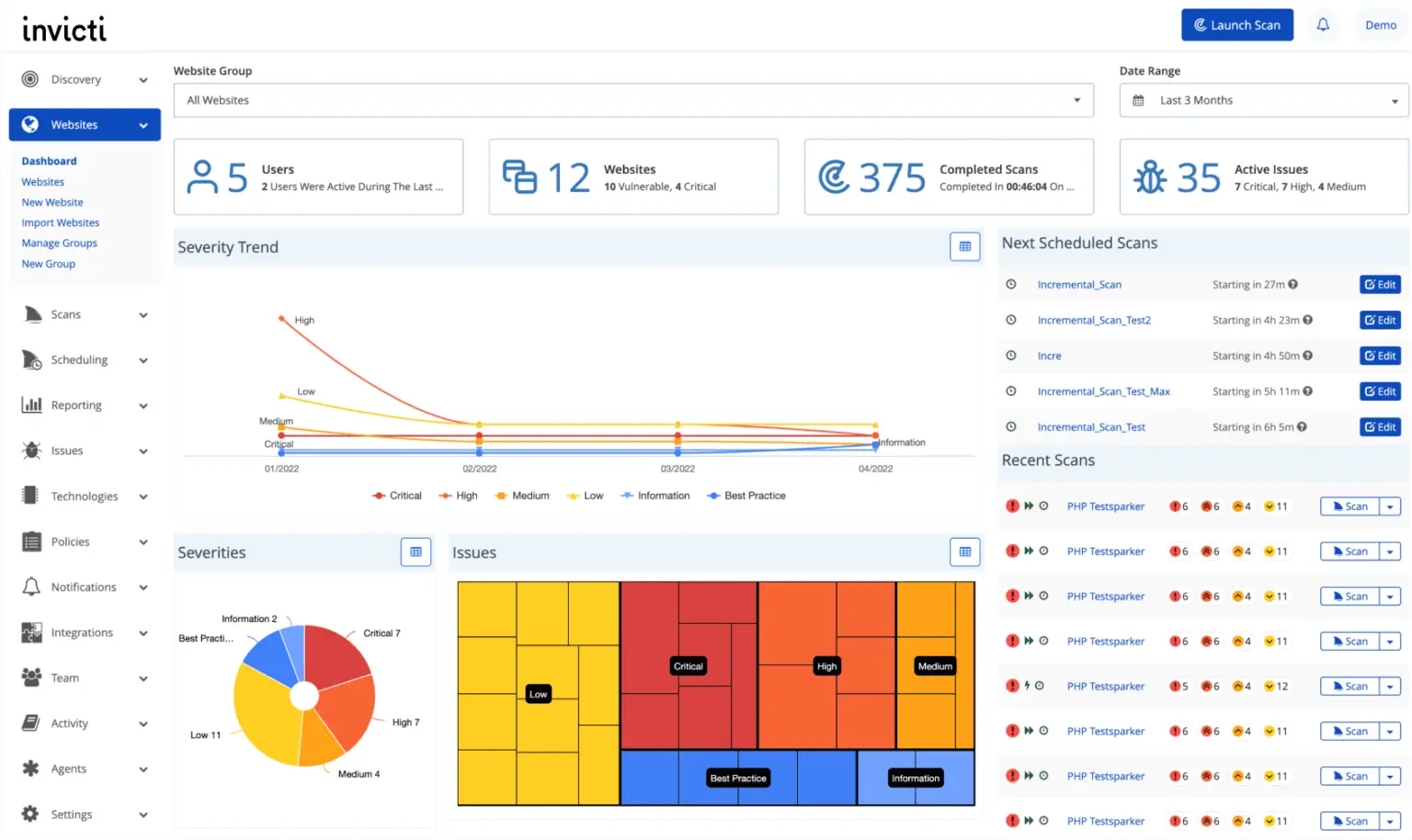
Scalability & Automation: The platform is known for its automation and scalability, making it suitable for organizations of all sizes.
Pricing: A custom quote is required, as pricing is not publicly available.
Reviews: The platform is highly rated on G2 (4.6/5) for its ease of use and ability to automate security scanning.
Invicti (formerly Netsparker) is an enterprise-grade automated DAST platform known for its proof-based scanning technology.
Instead of simply flagging potential vulnerabilities, the platform safely exploits the flaw to confirm that it is real, significantly reducing false positives.
Invicti is designed to automate vulnerability detection at scale, helping organizations integrate security testing into development workflows.
Invicti key features:
Automates web vulnerability scanning for applications and APIs.
Combines dynamic and interactive scanning techniques.
Provides a scalable solution that fits organizations of all sizes.
Integrates into development lifecycles to streamline security workflows.
Invicti pricing:
Pricing for Invicti is based on a custom quote, and you will need to contact their sales team for a personalized plan.
Invicti reviews:
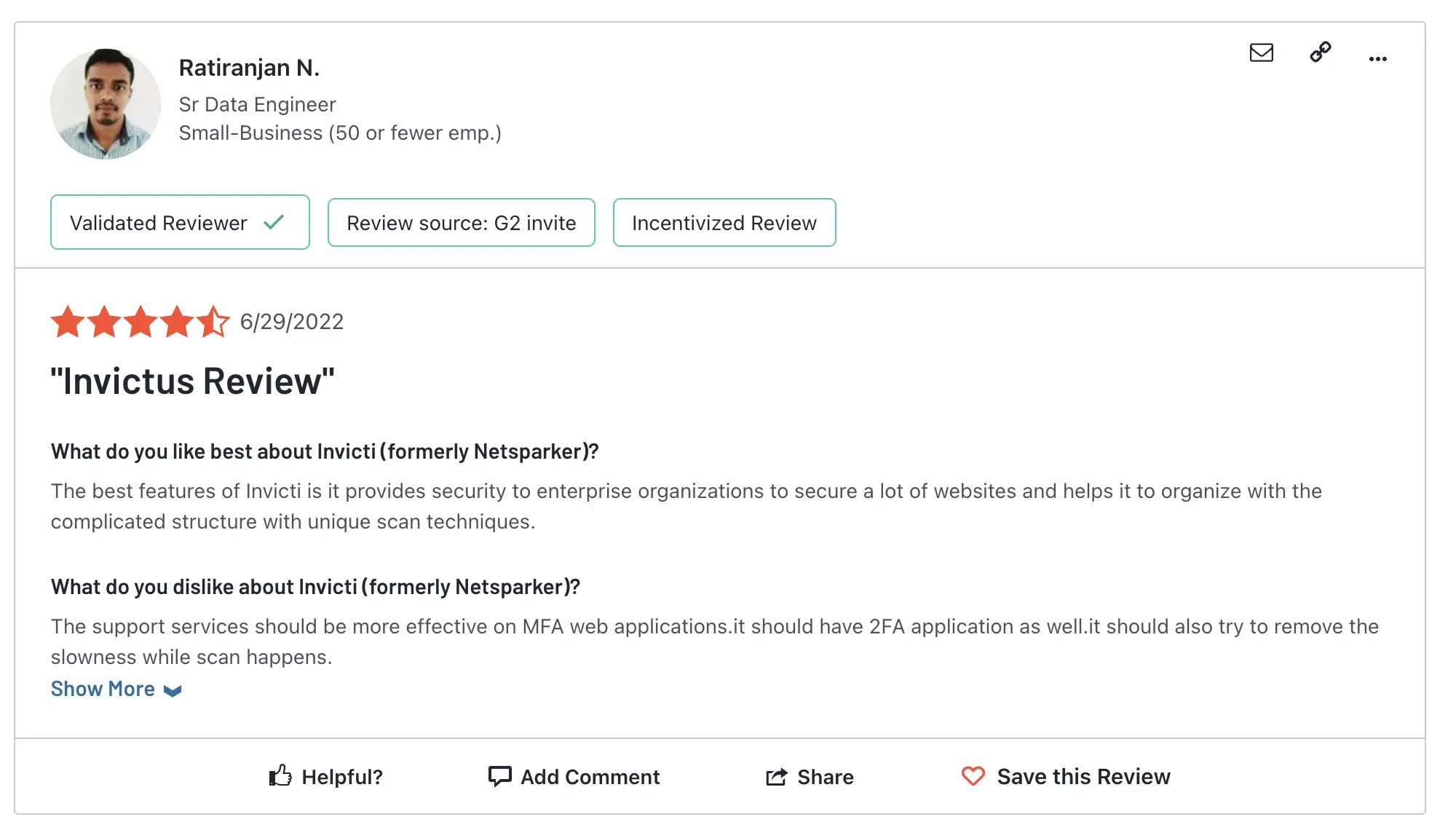
On G2, Invicti is highly regarded for its user-friendliness and its powerful automation capabilities, which simplify the security testing process.
7. Checkmarx
Checkmarx key overview:
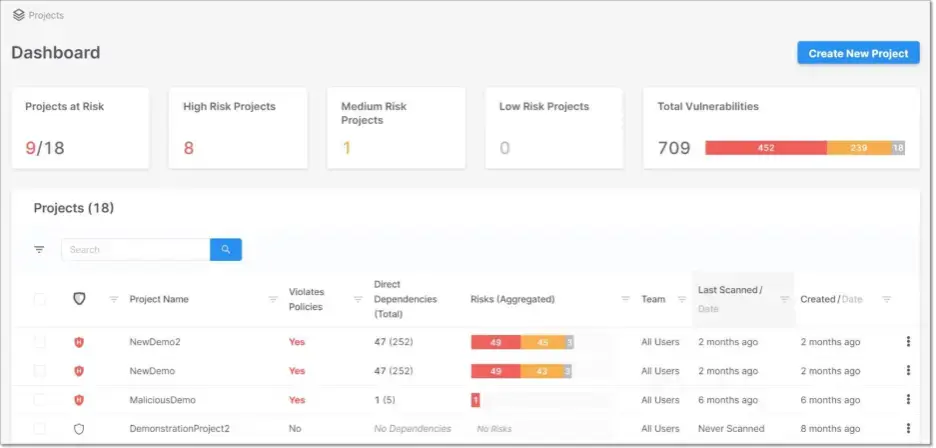
Comprehensive suite: Provides a full range of solutions, including SAST, DAST, and SCA.
Pricing: Custom quotes are provided upon request, as pricing is not publicly disclosed.
Reviews: The platform is rated 4.2 on G2, and users often commend its user-friendly interface and valuable vulnerability fix suggestions.
Checkmarx provides a comprehensive application security platform designed to secure the entire software development lifecycle. The platform includes solutions for static application security testing (SAST), dynamic application security testing (DAST), and software composition analysis (SCA).
One of Checkmarx’s primary strengths lies in its deep source code analysis capabilities. The SAST engine scans application code to detect vulnerabilities early in the development lifecycle, allowing developers to fix issues before the software reaches production.
Checkmarx also integrates seamlessly with popular development tools such as GitHub, GitLab, and Bitbucket, enabling organizations to incorporate security testing directly into their development pipelines.
Because the platform combines multiple security testing technologies into a unified solution, it is commonly used by enterprises seeking full-spectrum application security coverage.
Checkmarx key features:
Offers a complete suite of security solutions, including SAST, DAST, and SCA.
Integrates with popular development tools such as GitHub, Bitbucket, and GitLab.
Checkmarx pricing
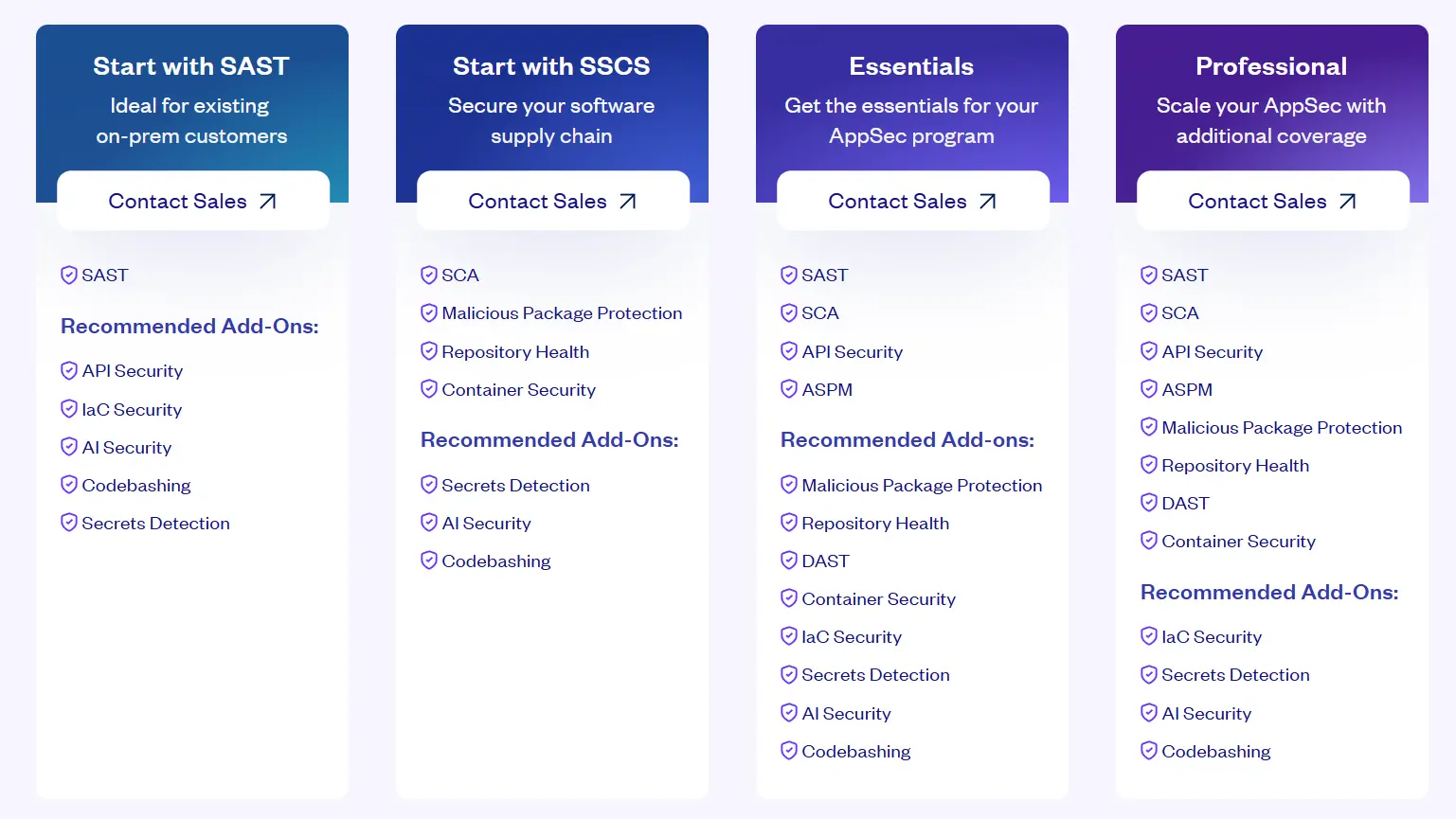
Checkmarx provides a variety of plans tailored to different levels of application security maturity.
Pricing is not publicly listed; for a personalized quote based on your specific requirements, you must contact their sales team directly.
They offer plans named “Start with SAST,” “Start with SSCS,” “Essentials,” and “Professional.”
Details of what is offered in each plan can be found below:
Checkmarx reviews
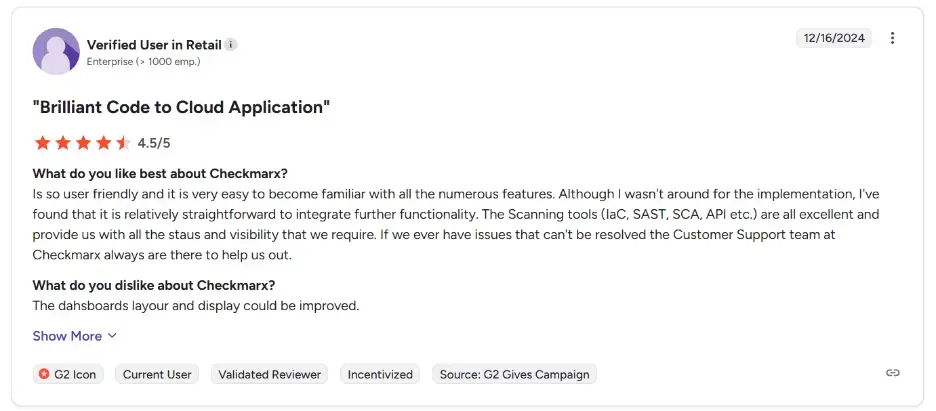
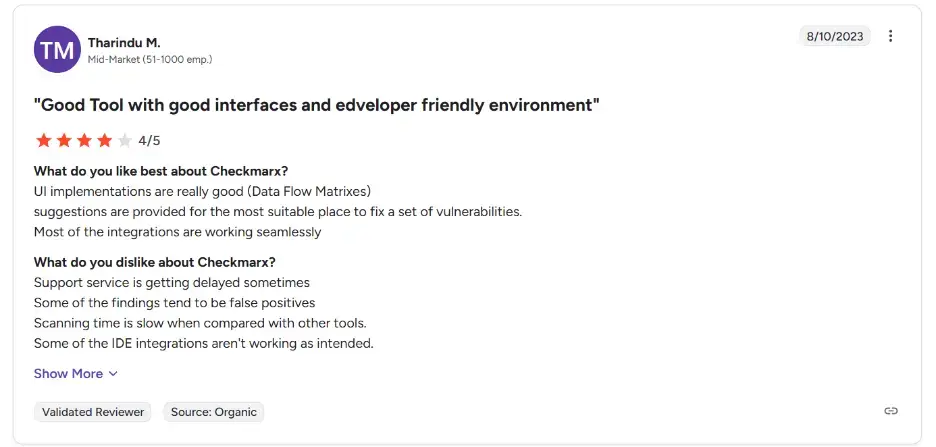
With a G2 rating of 4.2/5, Checkmarx is widely appreciated for its developer integrations and vulnerability detection capabilities. However, some users report slower scan times and occasional false positives.
8. Veracode
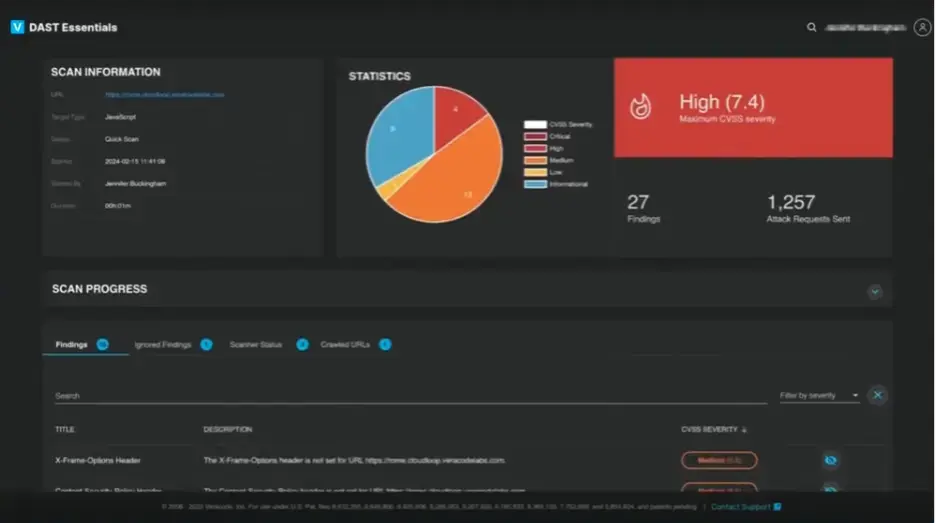
Veracode key overview:
Full-spectrum platform: Offers a wide array of security solutions, including SAST, DAST, IAST, SCA, and IaC security.
Pricing: Based on a custom contract; pricing details are not publicly available.
Reviews: With a G2 rating of 3.7/5, it is well-regarded for its extensive scanning capabilities and dedicated customer support.
Veracode is a cloud-native application security platform widely used by enterprises that require comprehensive security testing capabilities across their development pipelines.
The platform combines static and dynamic testing techniques to provide visibility into vulnerabilities across both source code and running applications. Veracode also supports software composition analysis to identify risks within open-source dependencies.
One of Veracode’s key differentiators is its patented binary analysis technology, which analyzes compiled code rather than relying solely on source code scanning. This approach can uncover vulnerabilities introduced during compilation or through third-party libraries.
Veracode also provides AI-assisted remediation suggestions that help developers address vulnerabilities more efficiently.
Veracode key features:
Combines static and dynamic testing capabilities for comprehensive coverage.
Integrates seamlessly with popular IDEs and CI/CD pipelines.
Provides AI-generated suggestions for fixing code vulnerabilities.
Utilizes a patented binary code analysis method.
Veracode pricing
Veracode’s pricing information is not publicly accessible. The company uses a tiered pricing structure that is based on the number of applications and scans required.
To get a clear understanding of the costs, you must schedule a demo and speak with one of their sales representatives.
Veracode reviews
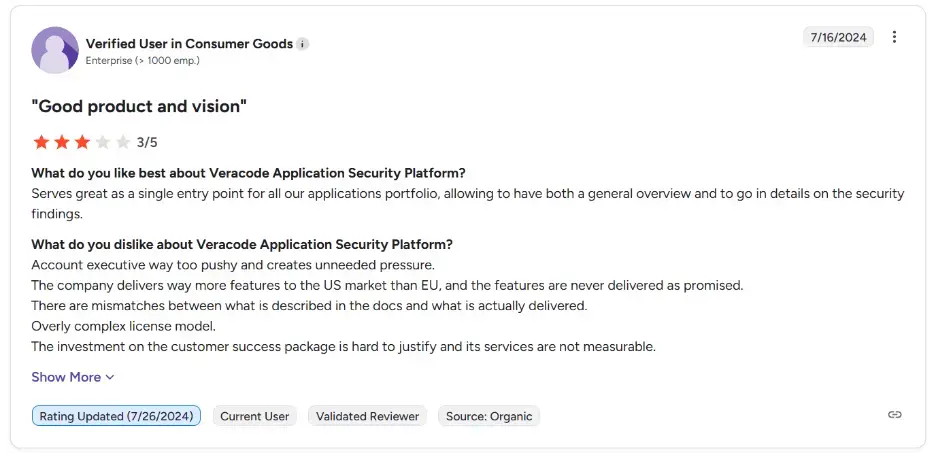
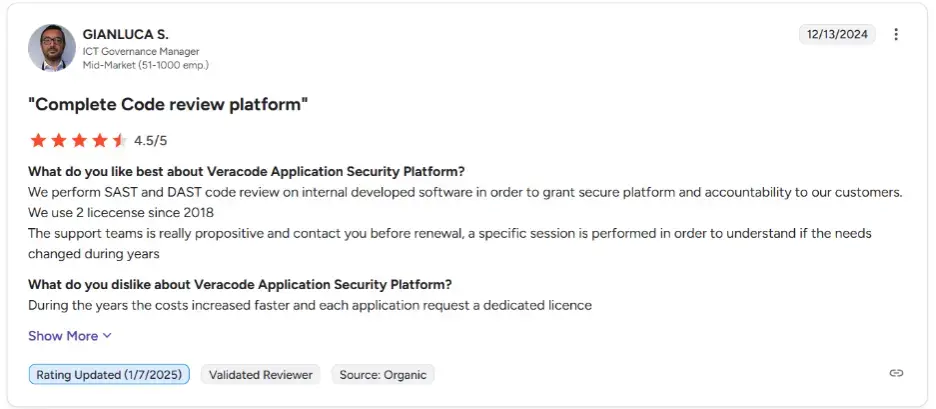
With a G2 rating of 3.7/5, Veracode is appreciated for its comprehensive scanning and reliable support. However, some users have found the platform to be complex to implement, and they note that the pricing model can be expensive.
9. HCL AppScan
HCL AppScan key overview:
Full suite: Offers a comprehensive set of technologies, including SAST, DAST, IAST, SCA, and API testing.
Pricing: The cloud version starts at $295.87 per scan.
Reviews: With a G2 rating of 4.1/5, it is recognized for its ease of use and the accuracy of its scan results.
HCL AppScan provides a comprehensive suite of application security testing tools designed to help organizations detect vulnerabilities across their entire software development lifecycle.
The platform includes capabilities for static, dynamic, and interactive testing, along with software composition analysis and API security testing.
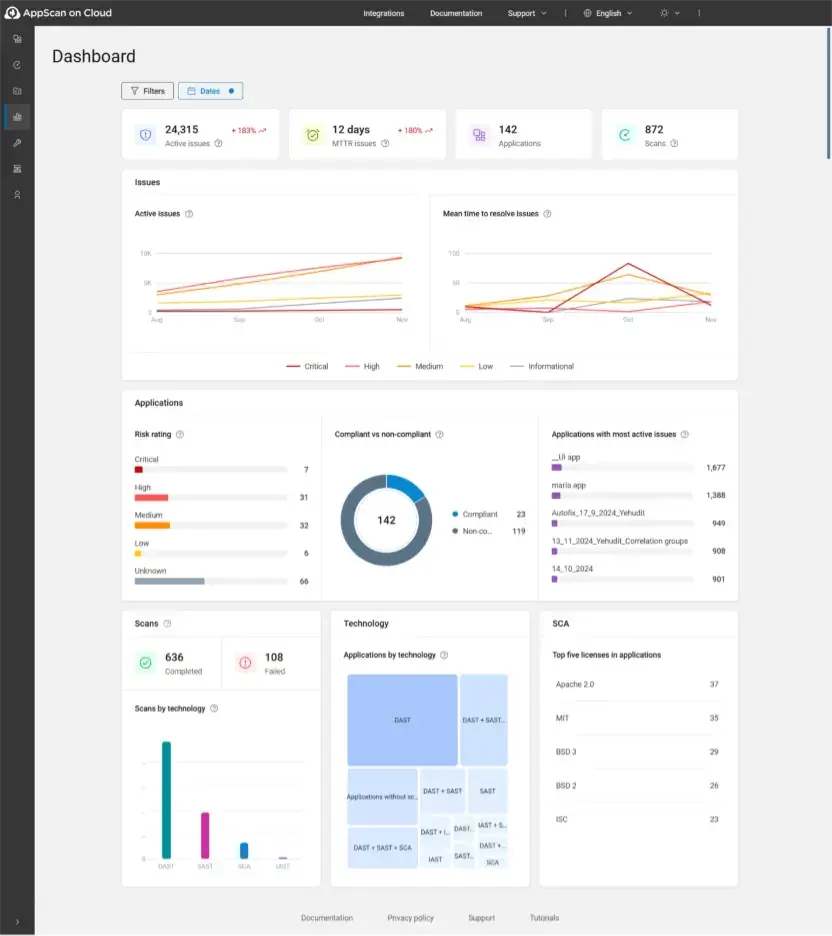
AppScan also incorporates AI and machine learning techniques to improve vulnerability detection accuracy and reduce false positives. The platform’s centralized dashboards provide visibility into security posture and compliance requirements.
Organizations can deploy AppScan either in the cloud or on-premises depending on their security and compliance requirements.
HCL AppScan key features:
Offers a full suite of technologies for comprehensive application security testing, including SAST, DAST, IAST, SCA, and API testing.
Employs AI-driven accuracy to minimize false positives and prioritize risks more effectively.
Provides centralized dashboards and reports with actionable fix recommendations.
Integrates smoothly with existing developer workflows.
HCL AppScan pricing
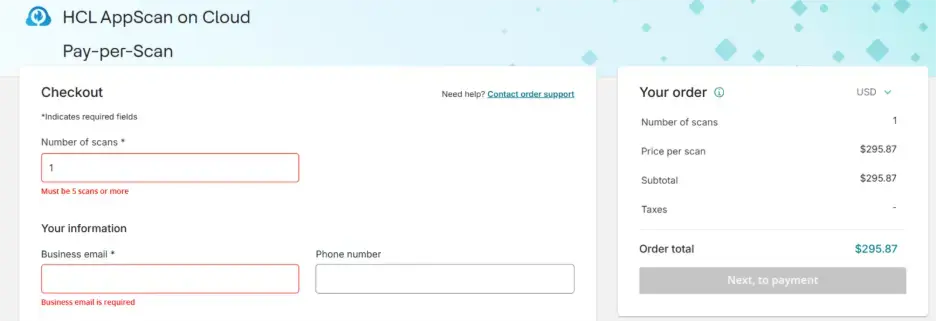
While pricing for HCL AppScan is typically provided via a custom quote, a pay-per-scan option is available for the cloud version, starting at $295.87 per scan (with a minimum of five scans). A 30-day free trial is also offered.
HCL AppScan reviews
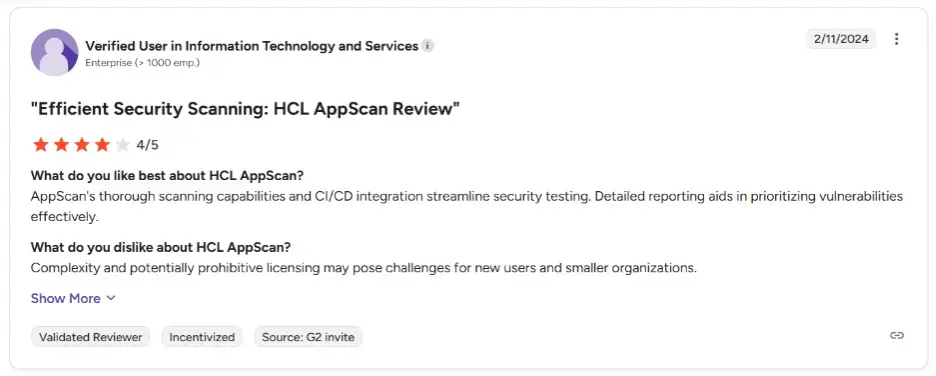
HCL AppScan holds a G2 rating of 4.1/5. Users often praise its accurate scan results, though some have noted challenges with the installation process and a lack of detailed documentation.
Key factors to consider when choosing a Burp Suite alternative
Pricing model
Pricing can differ significantly between different solutions. It is important to evaluate which pricing model, whether it is per-application, concurrent testing, usage-based, or a custom enterprise quote, best fits your budget and the number of applications you need to test. You should also consider how pricing scales as your environment grows, especially if you are managing multiple APIs, microservices, or staging environments.
Ease of use & integration
The value of a tool is often linked to its usability. Look for platforms with intuitive interfaces, seamless integrations with CI/CD pipelines, and developer-friendly reports that provide clear and actionable remediation guidance. Strong integrations with tools like GitHub, GitLab, Jenkins, and Jira can help security findings reach development teams faster and improve adoption across engineering workflows.
Advanced features
Modern applications require advanced capabilities such as AI-powered logic testing, support for complex authentication flows, and API security testing for technologies such as GraphQL and REST. Some platforms also provide contextual attack simulation or business logic testing to identify vulnerabilities that traditional scanners may miss. Make sure the alternative you select can effectively handle your application architecture and technology stack.
Accuracy and false positive management
Security scanners can sometimes generate large volumes of alerts, many of which may not represent real vulnerabilities. Platforms that provide proof-based scanning, contextual validation, or automated filtering can significantly reduce false positives. This allows security teams to focus on real risks instead of spending time verifying inaccurate findings.
Support & community
Some solutions, like ZAP, are community-driven and rely on open-source contributors, while others, like Beagle Security, offer dedicated customer support and onboarding assistance. Consider your team’s internal expertise and whether you need hands-on support, documentation, and guidance when implementing and maintaining the platform.
Final thoughts
While Burp Suite remains a powerful tool for manual penetration testing, the application security market now offers a wide range of alternatives that may better align with modern development workflows.
Whether you are looking for an open-source tool like ZAP, a comprehensive enterprise solution like Veracode or HCL AppScan, or a modern AI-powered platform like Beagle Security, choosing the right tool can significantly strengthen your application security strategy.
By considering factors such as pricing, features, integrations, and how well the platform fits your development processes, you can select a solution that not only meets your current requirements but also scales effectively as your applications and security needs evolve.


![Top ZAP alternatives and competitors [October 2026]](/blog/images/top-zap-alternatives-cover.webp "Top ZAP alternatives and competitors [October 2026]")




![Top 10 penetration testing companies [2026]](/blog/images/top-penetration-testing-companies-cover.webp "Top 10 penetration testing companies [2026]")


![Top vendor application security tools [2026]](/blog/images/top-vendor-application-security-testing-tools-2026-cover.webp "Top vendor application security tools [2026]")



![Top Snyk alternatives & competitors [2026]](/blog/images/top-snyk-alternatives-cover.webp "Top Snyk alternatives & competitors [2026]")