Top Jit alternatives in 2026

Jit built its reputation as a developer-first security platform that unified SAST, DAST, SCA, secrets detection, IaC scanning, and CSPM under a single interface. The premise was straightforward: instead of stitching together ten separate tools, engineering teams could manage their entire security posture from one place, directly inside their CI/CD workflow.
In May 2026, Torq acquired Jit, folding its Security Context Graph capabilities into Torq’s AI SOC platform. The acquisition repositions Jit’s technology toward enterprise security operations, with a focus on agentic triage and contextual risk analysis at the SOC level. For development and DevSecOps teams that adopted Jit specifically for its code-to-cloud scanning and developer workflow integration, this shift raises a fair question: what comes next?
If you are evaluating what to move to, this guide covers seven alternatives worth looking at closely, with a focus on what each actually does, how they price it, and what real users say.
TL;DR: Top Jit alternatives at a glance
| Tool | Best for | G2 rating | Starting price |
|---|---|---|---|
Beagle Security |
| 4.7/5 | $119/month |
Snyk | Developer-first vulnerability management | 4.5/5 | Free / $25 per dev/month |
Semgrep | Custom rule-based static analysis | 4.6/5 | Free / $30 per contributor/month |
StackHawk | CI/CD-native API security testing | 4.6/5 | StackHawk Pro: $588/year StackHawk Enterprise: $708/ year |
Probely | API-first vulnerability scanning | 4.7/5 | Custom / free trial |
Veracode | Enterprise compliance-driven AppSec | 3.8/5 (platform) | Custom pricing |
Checkmarx One | Enterprise application security programs | 4.2/5 | Custom pricing |
Beagle Security
Beagle Security is an agentic AI penetration testing platform built for development and DevSecOps teams. Founded in 2020, it focuses on automated penetration testing for web applications, REST APIs, and GraphQL endpoints, covering over 3,000 test cases across OWASP and SANS standards.
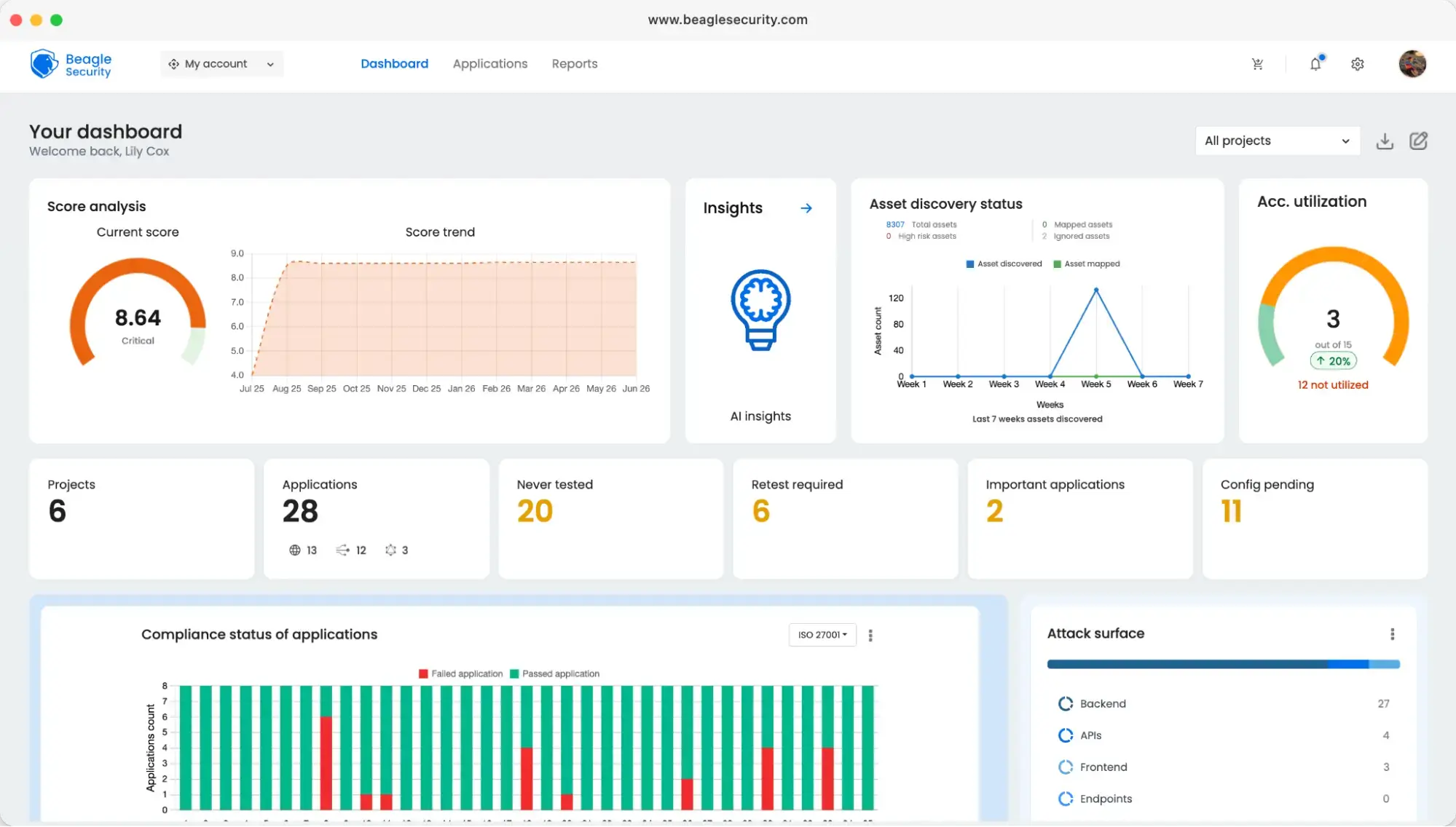
Where Jit took a broad posture management approach, Beagle Security goes deep on runtime testing. It tests what your application does under real-world attack conditions, not just what the code looks like at rest.
Key features
Agentic AI pen testing: Beagle Security’s testing engine simulates real attacker behavior to identify business logic vulnerabilities that standard scanners typically miss. The AI component learns from prior tests, which means coverage improves across repeated runs on the same application.
GraphQL and API security: The platform provides dedicated scanning for GraphQL endpoints alongside REST APIs, covering authentication flaws, injection vulnerabilities, and schema-level exposures that API-specific testing requires.
CI/CD integration: Beagle Security connects directly into pipelines via plugins for GitHub Actions, GitLab CI, Jenkins, CircleCI, and others. Security results surface at the PR level, so developers see findings before code is merged, not after deployment.
Business logic testing: Unlike scanners that focus on known CVEs, Beagle Security can test authenticated flows, multi-step user journeys, and application-specific logic paths that automated tools with no context tend to skip.
Compliance reporting: Out-of-the-box reports map findings to GDPR, HIPAA, PCI DSS, and other frameworks, which is useful for teams that need to produce evidence for audits alongside their development workflow.
Zero false positives approach: The platform is designed to verify findings before reporting them, reducing the triage overhead that plagues teams running high-volume scanners.
Pricing
Beagle Security uses transparent, usage-based pricing. A 14-day free trial is available.
Essential tier: $119/month
Advanced tier: $359/month
Enterprise: Custom pricing for large-scale use.
Reviews
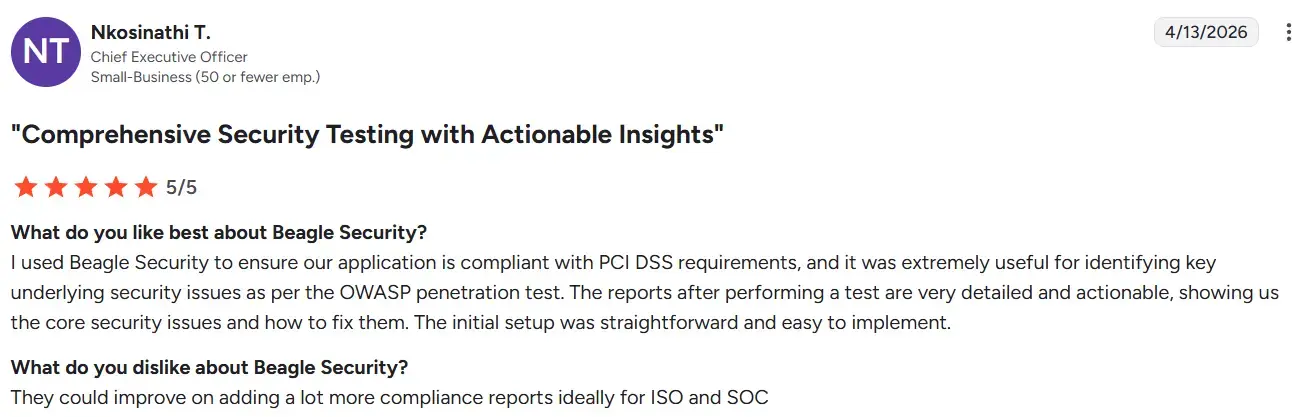
Beagle Security holds a 4.7/5 rating on G2 across 88 reviews, with the majority from small and mid-sized businesses. Users consistently highlight ease of setup, developer-friendly reporting, and accurate results with minimal noise. Common feedback points to strong support responsiveness and effective API and SPA testing coverage.
Snyk
Snyk is one of the most widely adopted developer security platforms, covering SCA (open-source dependencies), SAST (code analysis via Snyk Code), container scanning, IaC security, and DAST through its acquisition of Probely in late 2024. It is built around the developer workflow, with IDE integrations, PR checks, and real-time feedback at the coding stage.
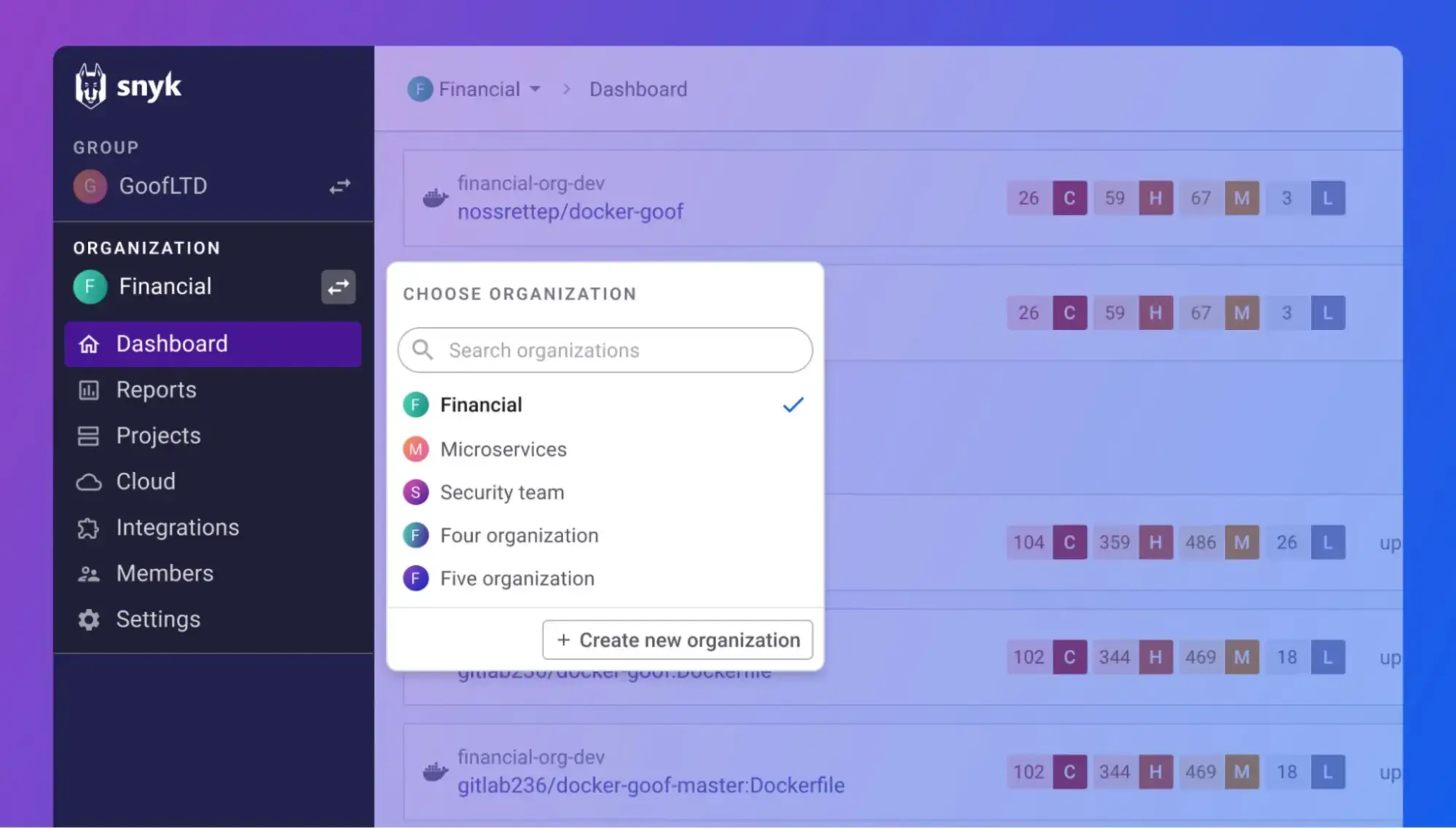
Snyk’s breadth makes it a natural point of comparison for Jit users who valued a single-platform approach. However, the products underneath the Snyk umbrella are modular and priced separately, which means total cost can compound quickly for teams that need full coverage.
Key features
SCA scanning with Snyk’s own vulnerability database (Snyk is a CVE Numbering Authority)
Real-time SAST via Snyk Code (originally the DeepCode acquisition from ETH Zurich)
Container image scanning and IaC security analysis
API and web application DAST through the Probely integration
IDE plugins for VS Code, IntelliJ, Eclipse, and others
GitHub, GitLab, Bitbucket, and Azure Repos integrations
Pricing
Snyk offers a free tier with limited tests. The Team plan starts at $25 per developer per month, and Enterprise plans use custom negotiated pricing. Costs scale linearly with team size across each module, and teams using multiple Snyk products pay separately for each. G2 reviewers note that final costs can run significantly higher than initial estimates, particularly at scale.
Reviews
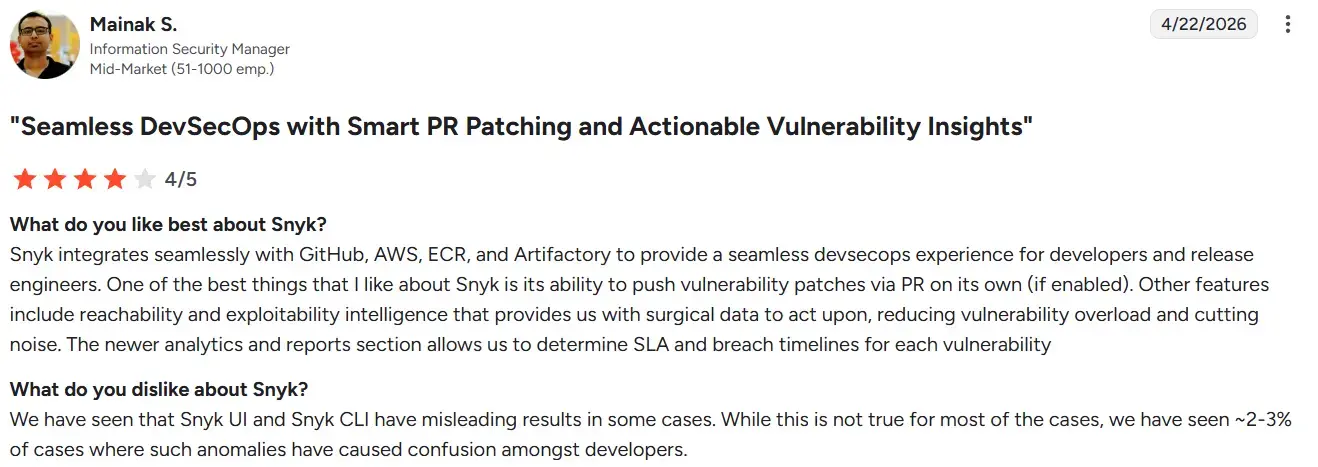
Snyk holds a 4.5/5 rating on G2 from over 132 reviews. Users consistently praise its developer experience, IDE integrations, and breadth of SCA coverage. Some users note a frequent occurrence of false positives in vulnerability detection.
Semgrep
Semgrep is a software security tool that provides static application security testing (SAST), software composition analysis (SCA), and secrets detection.
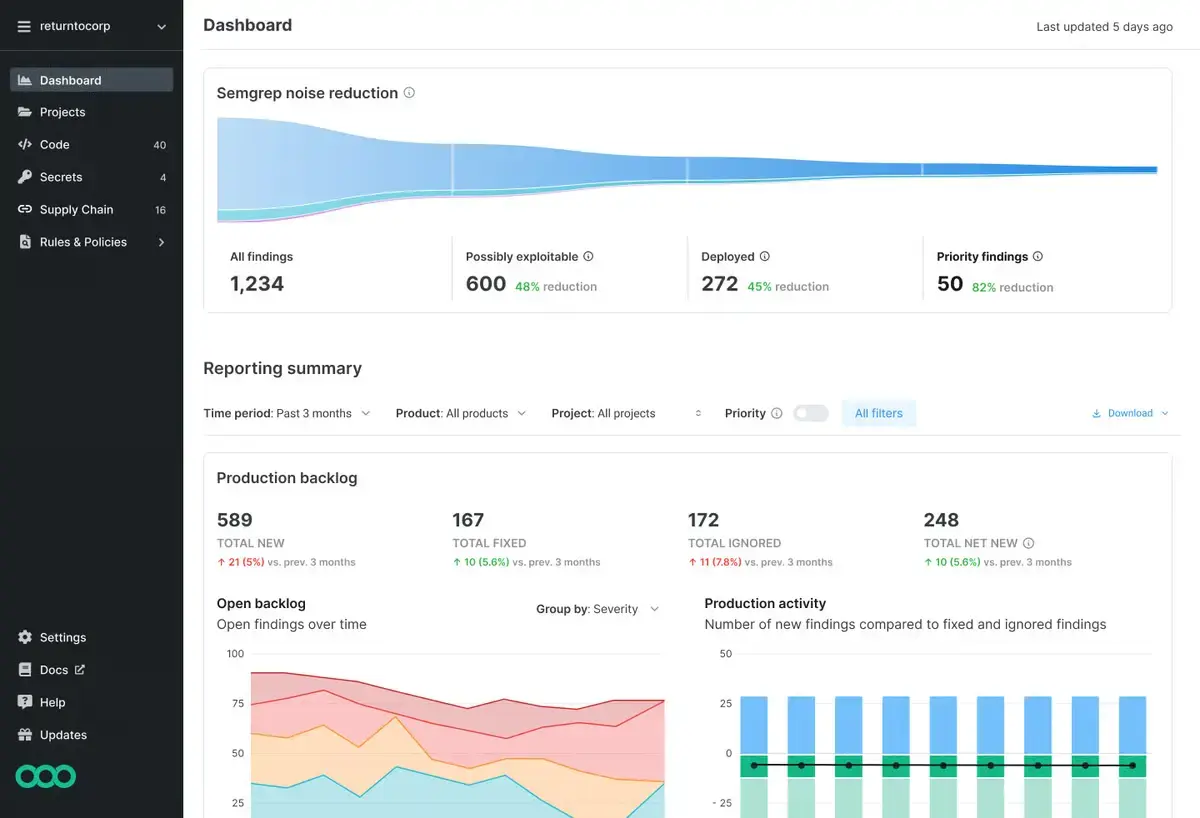
Semgrep started as an open-source static analysis engine,evolved into a commercial platform with a free community tier and paid plans targeting engineering and security teams. Semgrep identifies vulnerabilities in your source code without executing your code. It integrates with IDEs and CI/CD, and can also run from the Semgrep AppSec Platform.
Key features
SAST with a large library of community rules (LGPL licensed) plus 20,000+ Pro rules in paid tiers
Supply chain security (SCA) and secrets detection bundled into the Team plan
Cross-file analysis and data flow analysis in paid tiers
CI/CD integration with GitHub Actions, GitLab CI, Jenkins, and others
AI-powered triage assistance to reduce finding noise
Custom rule development without needing AST syntax expertise
Pricing
The Community Edition is free and open-source. The Team plan starts at $30 per contributor per month, which includes SAST, SCA, and secrets detection. Enterprise pricing is custom. Advanced features like supply chain security and custom rule support are sometimes priced separately.
Reviews
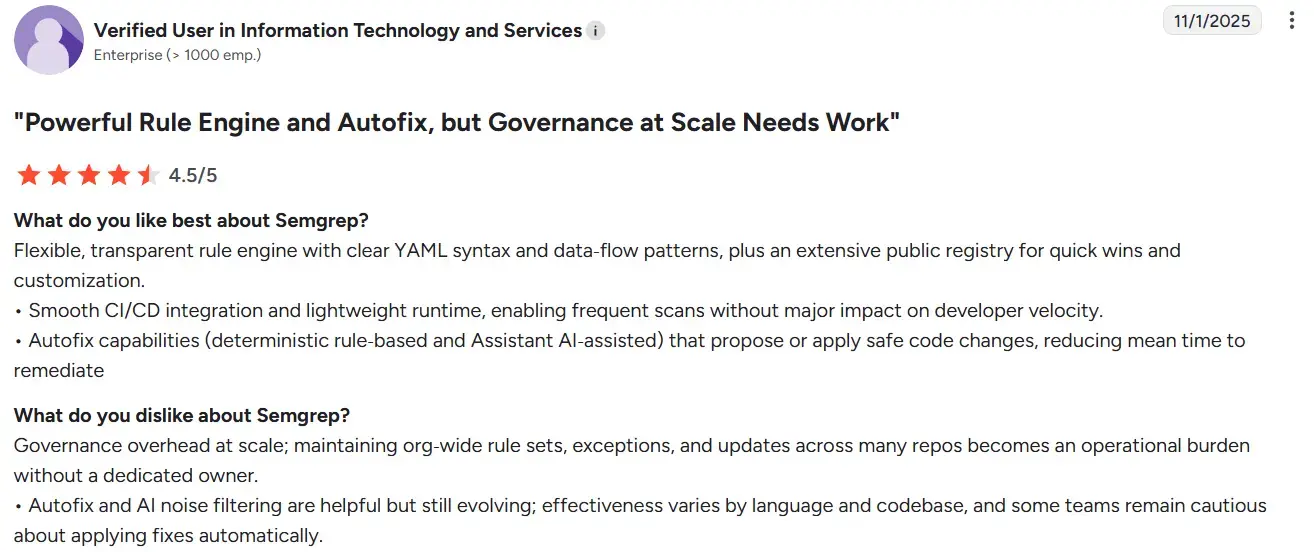
Semgrep holds a 4.6/5 on G2. Users consistently cite fast scans and low false positive rates as standout strengths. Reviewers specifically praise its flexibility for rule creation and its straightforward CI/CD integration. Some feedback points to a learning curve for teams new to SAST tooling, and a few note that the gap between community rules and Pro rules is more significant than the documentation implies.
StackHawk
StackHawk is a DAST platform built on top of OWASP ZAP, designed to make dynamic security testing accessible inside CI/CD pipelines. It entered the market in 2019 with a developer-first focus, and its primary value is in automated API security testing that runs as part of a normal build process.
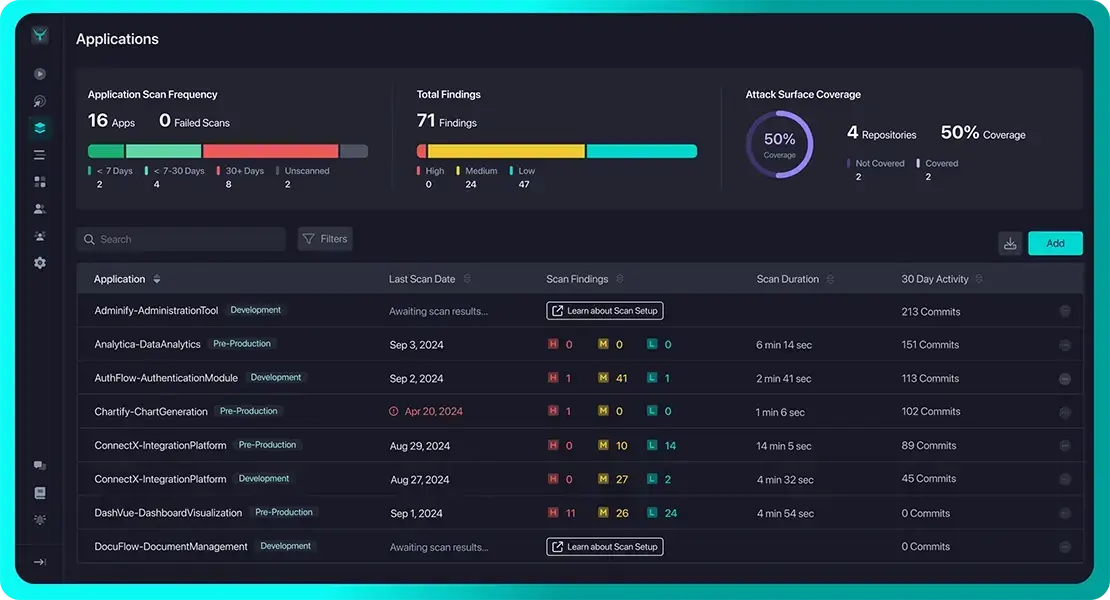
Teams using StackHawk typically value its pipeline-native approach and its support for REST, GraphQL, and SOAP APIs. It sits closest to Beagle Security in terms of what it tests, though the underlying engines and pricing models differ.
Key features
DAST and API security testing running in CI/CD via Docker containers
Attack surface mapping from code, including API endpoint discovery
Support for REST APIs, GraphQL, and SOAP
Integration with GitHub Actions, GitLab CI, Jenkins, CircleCI, and others
Findings dashboard with remediation context and request/response payloads
OWASP Top 10 coverage
Pricing
(As per AWS marketplace)
StackHawk Pro: $588/year priced per code contributor for applications under test (minimum 20)
StackHawk Enterprise: $708/ year priced per code contributor for applications under test (minimum 25)
An Enterprise tier adds role-based access, SSO, and advanced reporting at custom pricing. A free tier is available for individual developers testing a single application.
Reviews
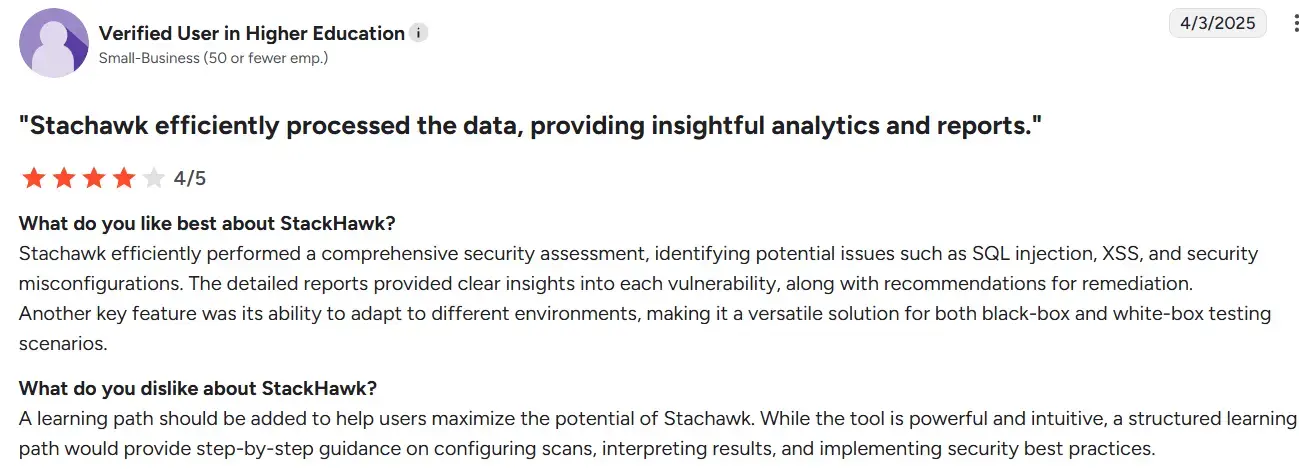
StackHawk holds a 4.6/5 on G2 from 68 reviews. Users highlight its ease of integration and clean dashboard. Some reviewers note the setup can be complex, particularly for non-containerized environments, and that the contributor-based pricing model becomes expensive for larger teams relative to what it provides. One reviewer called it “a decent front end to ZAP scanning,” which captures both its value and its ceiling.
Probely
Probely is a web vulnerability scanner built with an API-first design, targeting security and DevOps teams that want to automate scanning as part of a DevSecOps workflow. It covers OWASP Top 10, thousands of additional vulnerability types, and supports compliance verification for PCI DSS, HIPAA, GDPR, and ISO27001.
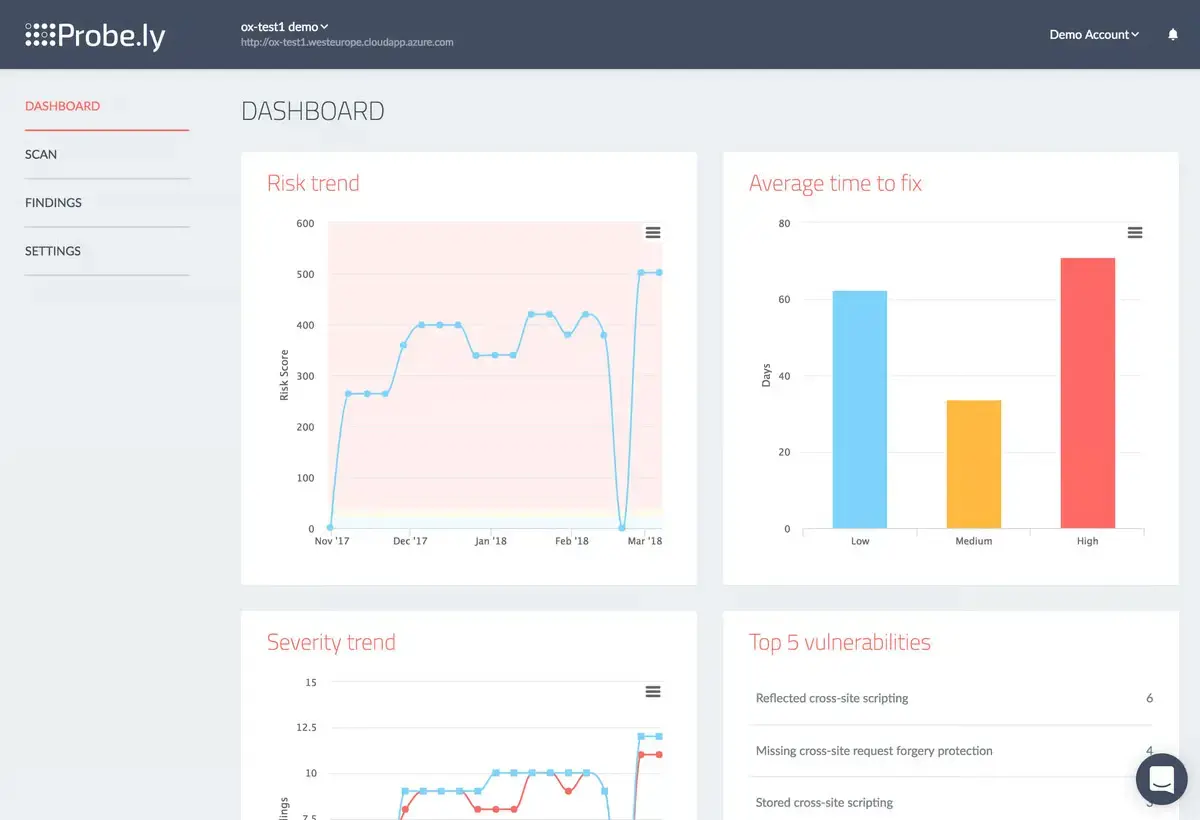
Source: G2
Probely was acquired by Snyk in 2024 and now powers Snyk’s DAST capability. Teams evaluating it should consider whether they want it as a standalone product or as part of the broader Snyk platform.
Key features
Web application and API vulnerability scanning with CI/CD integration
Full-featured API that allows integration into any SDLC or deployment pipeline
Lifecycle management for vulnerabilities including assignment, tracking, and resolution
Compliance-specific scanning for PCI DSS, HIPAA, GDPR, ISO27001
Jira and Slack integrations for workflow automation
Support for testing both staging and production environments under a single target
Pricing
Probely does not publish pricing publicly. A free trial is available. Pricing is negotiated based on the number of targets and feature requirements. As part of Snyk’s portfolio, Probely’s DAST capabilities can also be accessed through a broader Snyk subscription, though the DAST component is bundled rather than separately structured.
Reviews
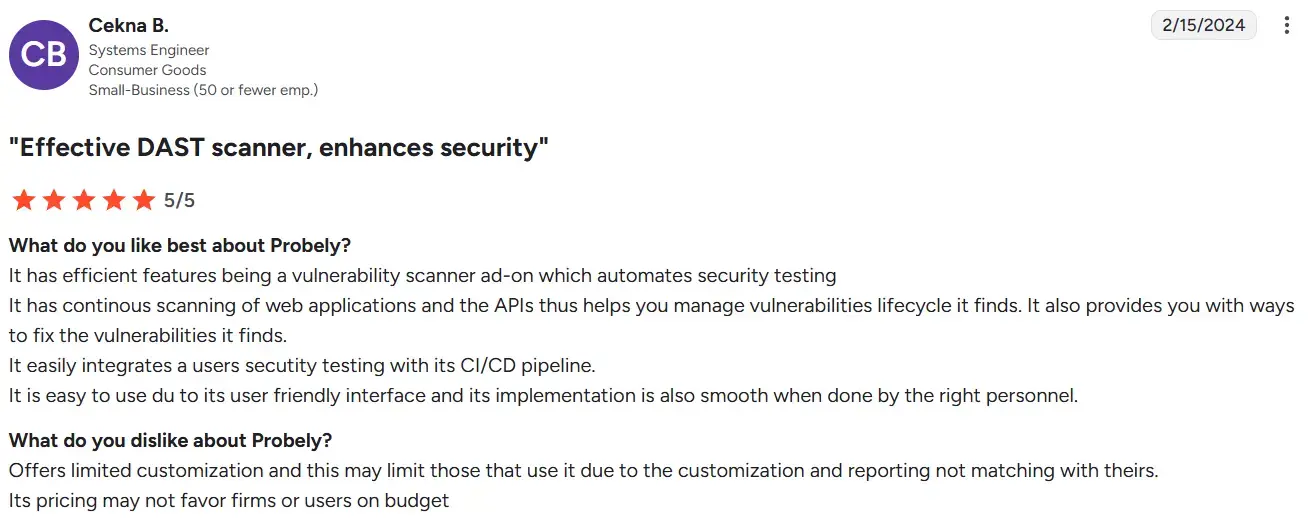
Probely holds a 4.7/5 on G2 from 19 reviews. Users rate it highly for ease of use, quality of support, and developer-friendly output. A common positive from reviewers is the combination of staging and production environment testing under one target. Some feedback points to limited functionality outside direct web vulnerability detection (such as infrastructure-level findings) and custom vulnerability scoring not always aligning with team workflows.
Veracode
Veracode is a mature enterprise application security platform that has been running code scans since 2006. It covers SAST (scanning compiled binaries rather than source code), DAST, SCA, manual penetration testing, and developer security training under a single cloud-based platform. It is consistently recognized in Gartner Magic Quadrant evaluations and is positioned for large enterprises with regulated compliance requirements.
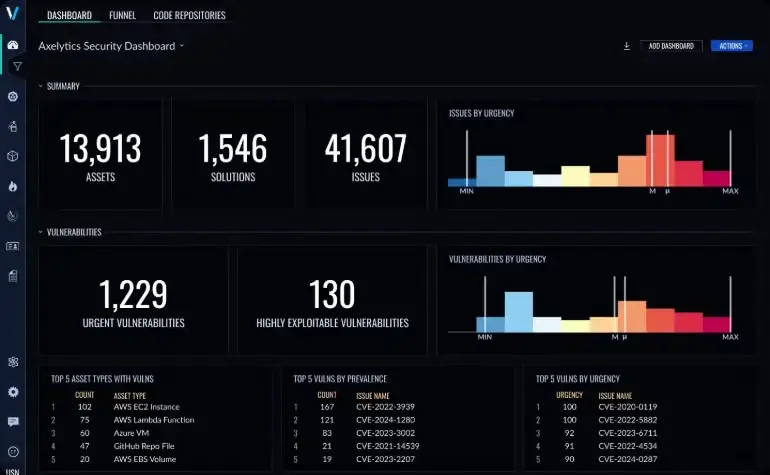
Teams moving from Jit who are operating at enterprise scale with compliance and audit obligations will likely include Veracode in their evaluation. That said, the pricing and setup overhead position it well above what most mid-market teams are looking for.
Key features
Binary-based SAST that does not require source code upload, relevant for organizations with strict IP protection requirements
DAST for web applications and APIs with compliance-ready reporting
SCA for open-source dependency risk management
Manual penetration testing as an on-demand service
Developer security training via secure code education modules
Integrations with major CI/CD systems and DevOps tooling
Policy-based compliance reporting for regulated industries
Pricing
Veracode uses custom, module-based pricing billed annually. Costs vary by number of applications, scan types, and features required. As per UnderDefence independent aggregator data places typical deployments starting around $15,000/year and reaching $100,000 to $250,000 or more for full enterprise suite deployments. Renewal cost increases are frequently cited in user reviews as a friction point.
Reviews
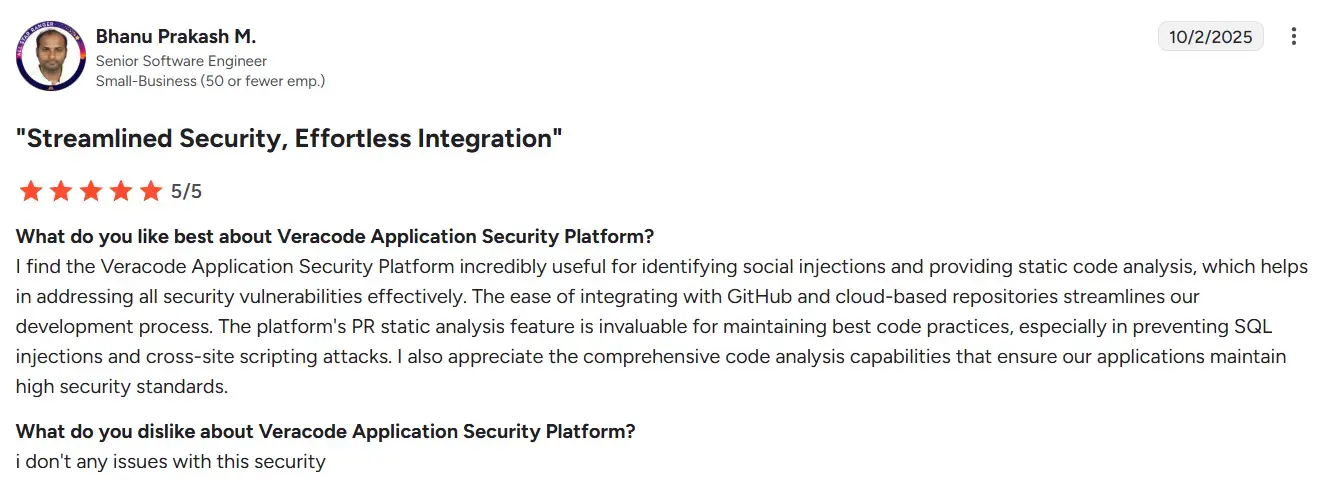
Veracode holds a 3.8/5 on G2 across platform reviews, with stronger ratings on specific product components. Gartner Peer Insights feedback is more positive, with users praising its compliance reporting capabilities and depth of static analysis. Common criticisms include pricing that increases faster than the value delivered, a complex setup process, and scan times that can slow CI pipelines under large codebases. One Gartner reviewer noted it as a “mature AppSec testing platform with good SCA capabilities” but flagged it as expensive and requiring familiarity before it becomes productive.
Checkmarx One
Checkmarx One is Checkmarx’s unified cloud-native application security platform, consolidating SAST, SCA, DAST, IaC security, API security, container scanning, and supply chain security under one interface. It targets enterprise AppSec teams managing large portfolios with complex compliance requirements across regulated industries.
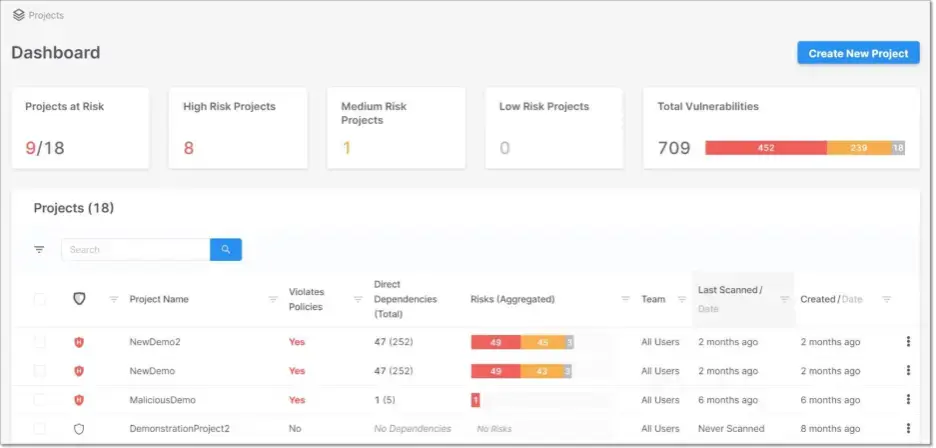
Checkmarx has held a Gartner Magic Quadrant Leader position for multiple consecutive years, and its SAST engine depth is consistently recognized in independent evaluations. The trade-offs are pricing opacity, setup complexity, and a minimum contract threshold that excludes smaller teams.
Key features
Deep SAST with taint analysis and custom query support via CxQL
SCA for open-source and supply chain risk
DAST and API security scanning
IaC security and container scanning
Correlated, cross-tool findings prioritization for AppSec teams
Developer tool integrations including IDE plugins, CI/CD, and SCM platforms
Codebashing secure code training platform
AI-assisted triage, remediation, and developer assist features
Pricing
Checkmarx does not publish pricing. Checkmarx provides a variety of plans tailored to different levels of application security maturity. For a personalized quote based on your specific requirements, you must contact their sales team directly. They offer plans named “Start with SAST,” “Start with SSCS,” “Essentials,” and “Professional.”
Reviews
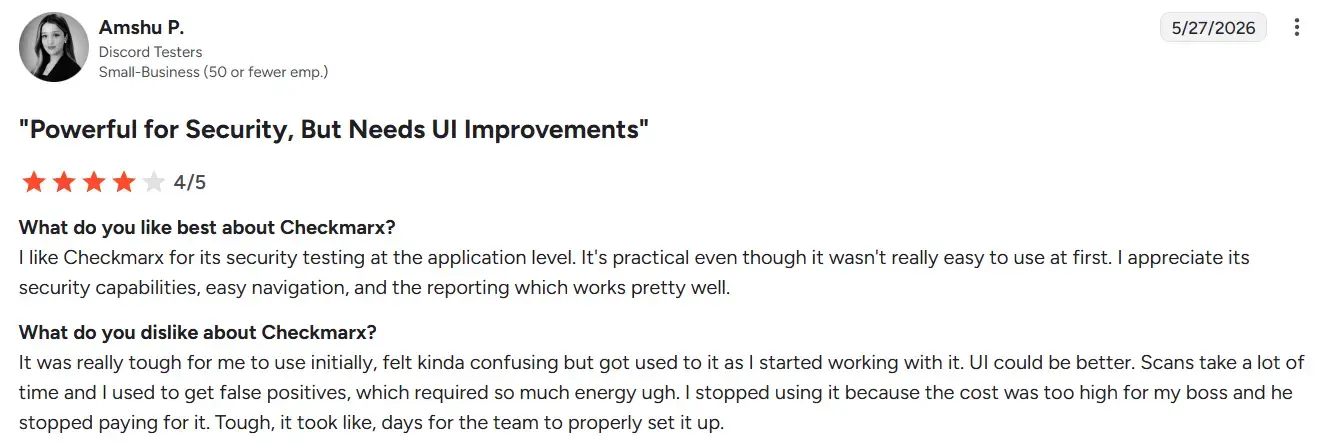
Checkmarx One holds a 4.2/5 on G2. Enterprise reviewers consistently rate its scanning depth and comprehensive coverage positively, and its GitHub and CI/CD integrations are frequently cited as working well at scale. False positives appear as a recurring theme in reviews, and setup times of several months before the tool becomes productively tuned are noted across multiple sources. Pricing transparency and renewal costs are the most common reasons reviewers cite for evaluating alternatives.
Summing up
Jit’s acquisition by Torq signals a direction shift toward enterprise SOC operations. For development and DevSecOps teams that adopted Jit for code-to-cloud coverage and CI/CD-native security testing, the practical question is which platform best fills that role going forward.
The right answer depends on where your biggest gap is. If your priority is runtime testing of web applications and APIs, including GraphQL and business logic coverage, Beagle Security and StackHawk are the most direct fits, with Beagle Security offering broader API coverage and more predictable pricing. If SAST and SCA are your core needs, Semgrep and Snyk are the most developer-accessible options at different price points. If you are in an enterprise environment with strong compliance obligations and a substantial security budget, Veracode and Checkmarx One are built for that context, though both come with significant setup and cost commitments.
The tools in this list are not interchangeable. Each has a different primary strength, and most teams end up layering two or three of them to cover the full SDLC. Start from your actual test coverage gaps, not from platform marketing.


![Top ZAP alternatives and competitors [October 2026]](/blog/images/top-zap-alternatives-cover.webp "Top ZAP alternatives and competitors [October 2026]")




![Top 10 penetration testing companies [2026]](/blog/images/top-penetration-testing-companies-cover.webp "Top 10 penetration testing companies [2026]")


![Top vendor application security tools [2026]](/blog/images/top-vendor-application-security-testing-tools-2026-cover.webp "Top vendor application security tools [2026]")



![Top Snyk alternatives & competitors [2026]](/blog/images/top-snyk-alternatives-cover.webp "Top Snyk alternatives & competitors [2026]")