Top MSP vulnerability scanners [2025]
![Top MSP vulnerability scanners [2025]](/blog/images/blog-banner-two.webp "Top MSP vulnerability scanners [2025]")
The cybersecurity responsibilities of Managed Service Providers (MSPs) have evolved dramatically in 2025.
A major part of that transformation is mastering vulnerability management for MSPs. Every new system, network, or web application that an MSP manages adds layers of risk. Clients rely on MSPs to identify, validate, and mitigate vulnerabilities before attackers can exploit them. This makes MSP vulnerability scanners essential to every MSP’s service portfolio.
However, as infrastructures expand across hybrid clouds, containerized environments, and SaaS integrations, traditional scanners often cannot keep pace. MSPs need tools that can handle diverse client environments efficiently, deliver accurate results, and provide white-label reporting that aligns with their brand.
The focus has shifted from simply detecting issues to validating exploitable vulnerabilities and supporting continuous security operations.
This guide explores the different types of vulnerability scanning tools MSPs need, the top MSP vulnerability scanners for 2025, and the key considerations for MSPs selecting their ideal platform.
Choosing the right solution can help MSPs differentiate their offerings, increase recurring revenue, and strengthen long-term client relationships.
Top MSP vulnerability scanners for 2025
1. Beagle Security
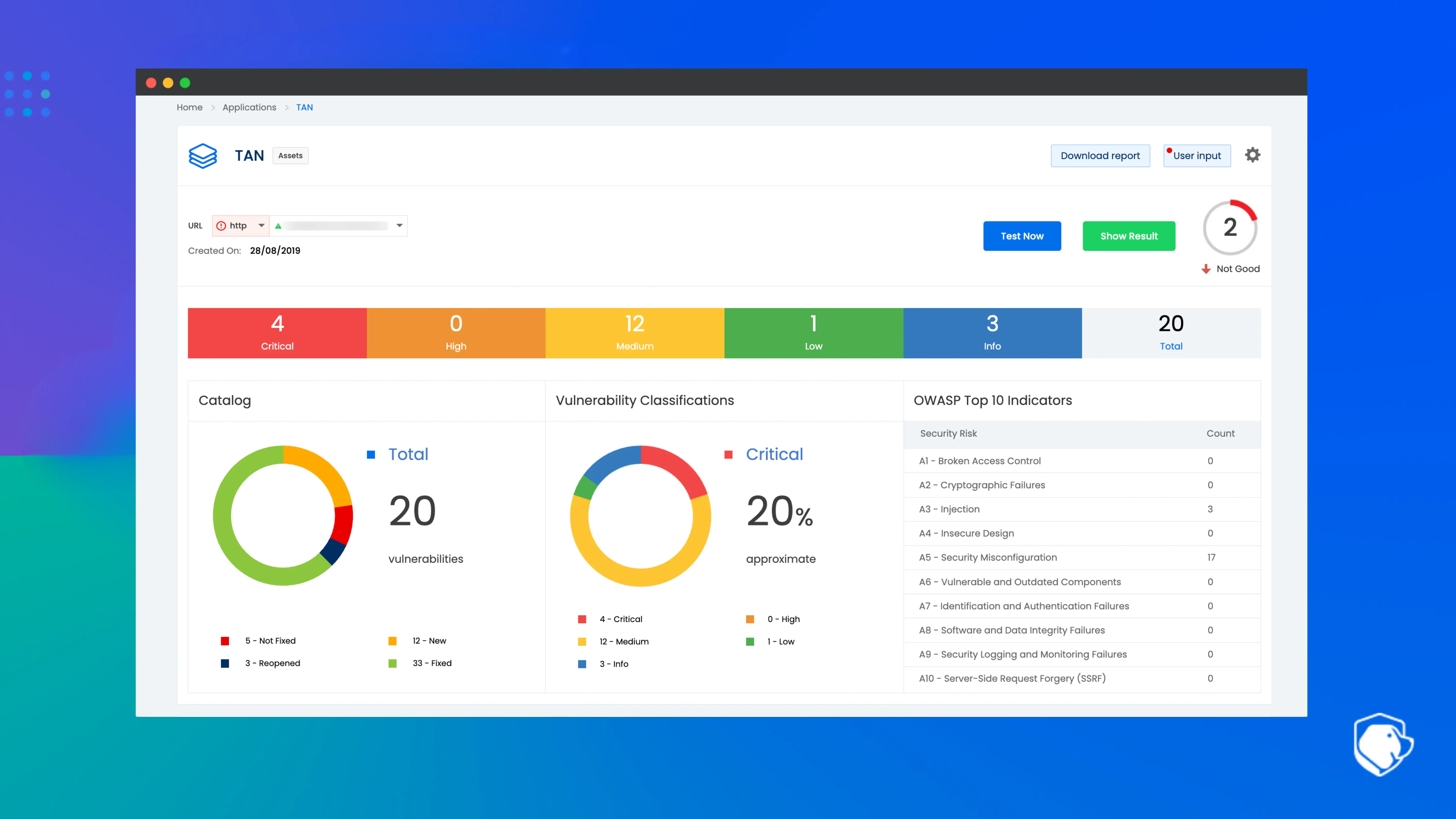
Beagle Security is an agentic AI penetration testing platform purpose-built for MSPs seeking to elevate their managed security offerings beyond traditional vulnerability scanning.
Rather than identifying weaknesses through static scanning, Beagle Security autonomously simulates real-world attacks to uncover true exploitable vulnerabilities across web applications and APIs.
The platform continuously validates and prioritizes findings, ensuring MSPs deliver verified, high-fidelity results without overwhelming their clients with false positives. Its AI-based testing engine adapts to each target, executing multi-step attack chains that replicate human tester behavior. For MSPs, this means less time triaging noise and more time focusing on remediation and client outcomes.
The white-label reporting capability allows them to deliver branded, professional reports that strengthen their position as trusted cybersecurity partners.
Beagle Security also integrates seamlessly with CI/CD pipelines, allowing MSPs to offer continuous security testing for clients running DevSecOps environments.
Its compliance-ready reporting supports PCI DSS, HIPAA, ISO 27001, and SOC 2 frameworks, enabling MSPs to service regulated industries without additional effort.
Key capabilities:
Autonomous AI-powered penetration testing
Advanced web application and API security testing
Business logic validation
White-labeled, client-ready reporting
Continuous and scheduled testing
Compliance and DevSecOps integrations
Best for: MSPs offering managed penetration testing and vulnerability management services to clients in SaaS, fintech, healthcare, or enterprise verticals.
Why MSPs choose Beagle Security: It blends automation, depth, and brandability, giving MSPs the ability to deliver high-value pentesting at scale under their own banner.
2. ConnectSecure
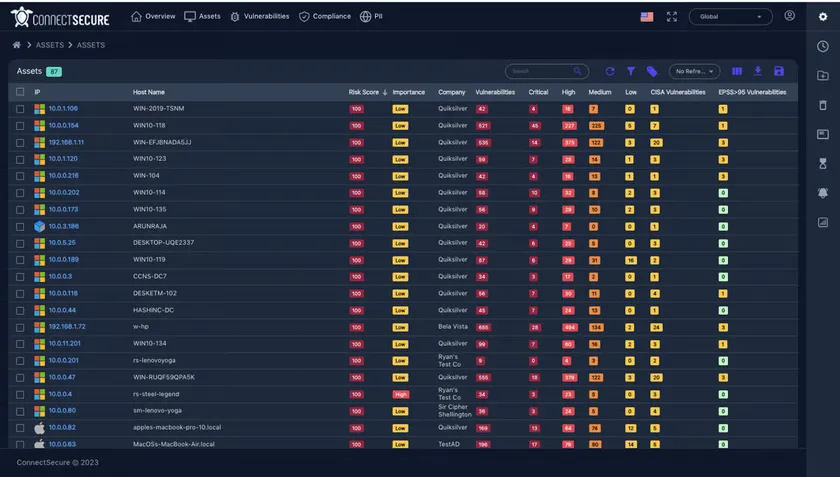
ConnectSecure (formerly CyberCNS) provides MSPs with a comprehensive vulnerability and risk management platform focused on endpoints and networks. The tool is designed to give MSPs real-time visibility into client systems and actionable insights for proactive security management.
ConnectSecure operates through lightweight agents deployed across client environments, collecting vulnerability data, patch compliance information, and endpoint risk metrics. For MSPs managing multiple customer networks, this continuous monitoring capability ensures that potential vulnerabilities are identified and addressed before they lead to compromises.
The platform integrates with major RMM and PSA tools such as ConnectWise and Datto, making it easy for MSPs to fit ConnectSecure into existing operational workflows. Automated alerts, patch tracking, and scheduled scans help MSPs maintain consistency across multiple client infrastructures. Additionally, the platform’s risk scoring and asset inventory modules simplify reporting to non-technical stakeholders, ensuring clear communication of security posture.
Key capabilities:
Endpoint and network vulnerability management
Real-time patch tracking and asset inventory
Continuous monitoring and automated remediation workflows
Integration with leading MSP platforms
MSP-specific features:
Multi-tenant architecture with client segregation
Automated, recurring scans
MSP-aligned pricing with scalability options
Custom client dashboards and white-label reports
Best for: MSPs prioritizing endpoint and network visibility for SMB and enterprise clients.
Why MSPs choose ConnectSecure: It enables scalable, automated vulnerability management that fits neatly into existing MSP ecosystems, reducing manual oversight while improving client security reporting.
3. HostedScan
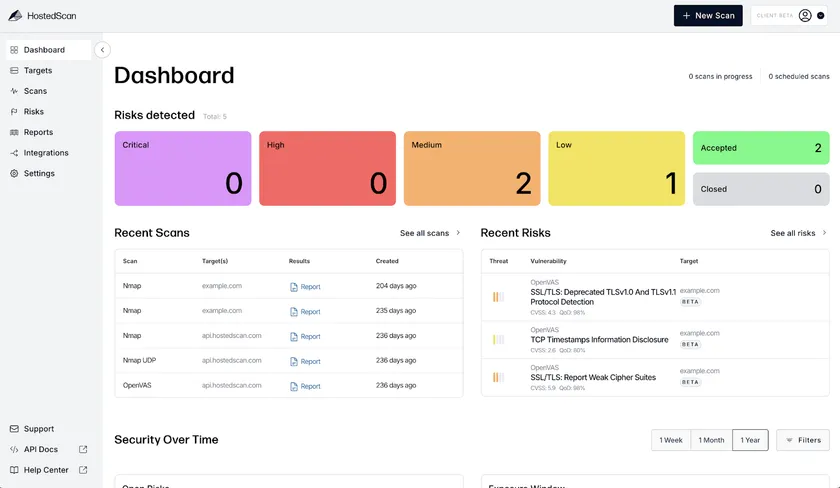
HostedScan offers MSPs a simple yet powerful cloud-based vulnerability management solution for external infrastructure and web application scanning. Its focus on ease of use, scalability, and automation makes it a practical choice for MSPs handling clients with smaller budgets or distributed networks.
The platform enables MSPs to run external perimeter scans for websites, servers, APIs, and DNS configurations without on-premise setup. HostedScan’s built-in scheduling ensures regular vulnerability checks, while automated PDF and CSV reports simplify the delivery of findings to clients. Its straightforward UI allows technicians to onboard new clients quickly and begin scanning within minutes.
Beyond external vulnerability detection, HostedScan also assists with PCI DSS compliance validation, providing MSPs an additional service offering. The ability to white-label reports and manage multiple clients through a unified portal enhances professionalism and scalability.
Key capabilities:
Web, API, and infrastructure vulnerability scanning
SSL, DNS, and server configuration analysis
PCI DSS compliance validation
Automated reporting and notifications
MSP-specific features:
Multi-client management dashboard
White-labeled deliverables
Recurring scheduled scans
Affordable pay-as-you-grow pricing
Best for: MSPs offering external vulnerability management for SMBs or SaaS clients that need consistent, lightweight security coverage.
Why MSPs choose HostedScan: It provides dependable, scalable external scanning without the overhead of complex configuration, ideal for MSPs expanding their vulnerability management services quickly.
4. Qualys
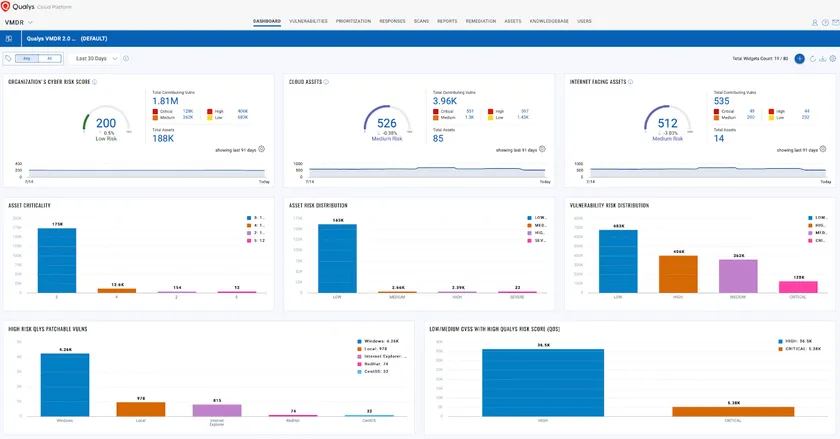
Qualys VMDR (Vulnerability Management, Detection, and Response) remains one of the most comprehensive enterprise-grade solutions for MSPs managing large-scale client infrastructures. Built on a robust cloud platform, Qualys delivers continuous monitoring, asset discovery, and real-time vulnerability detection across on-premise, cloud, and hybrid networks.
Its agent-based scanning approach offers deep visibility into all client assets, including endpoints, servers, databases, and containers. For MSPs serving compliance-heavy industries, Qualys’ native support for frameworks such as PCI DSS, NIST, and HIPAA helps streamline auditing and reporting.
Qualys also integrates remediation workflows through patch management and threat prioritization features. MSPs can automate updates, track resolution status, and provide risk-based reports to their clients. The Qualys Partner Program offers additional support for MSPs, including tiered pricing, multi-account management, and dedicated technical assistance.
Key capabilities:
Continuous vulnerability detection and response
Patch and configuration management
Threat prioritization with predictive risk scoring
Multi-environment asset visibility
MSP-specific features:
Centralized multi-client management
White-label capabilities through the partner program
Extensive API support for RMM and PSA integrations
Best for: MSPs managing enterprise clients with complex, regulated infrastructures.
Why MSPs choose Qualys: It delivers unmatched scalability and depth, enabling MSPs to build enterprise-grade managed vulnerability services backed by industry credibility.
5. Tenable Nessus
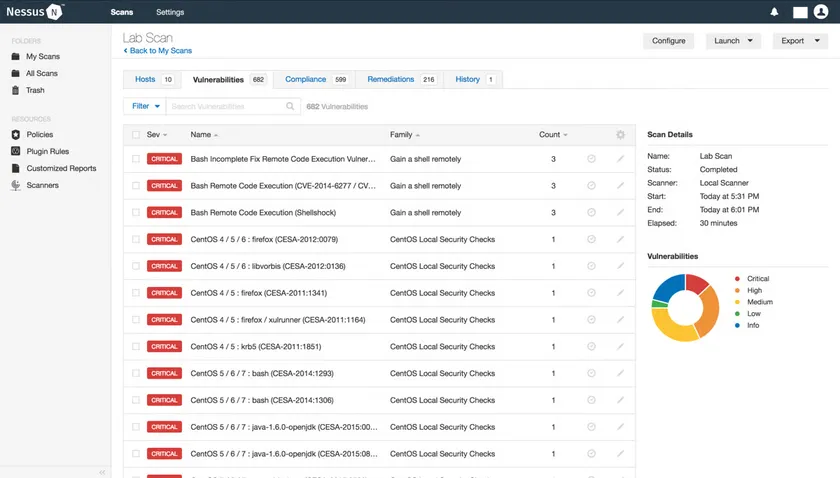
Tenable Nessus has earned its place as one of the most trusted vulnerability scanners for MSPs due to its balance of simplicity, depth, and reliability. With its large plugin library, Nessus detects a wide range of vulnerabilities across operating systems, networks, and web technologies.
The platform supports both Nessus Professional for standalone scanning and Nessus Expert for MSPs requiring distributed management. By integrating with Tenable.io, MSPs gain cloud-based visibility, risk-based prioritization, and collaboration features for multi-client operations. Nessus’ active scanning engine identifies vulnerabilities, missing patches, and configuration issues across client systems in near real-time.
Key capabilities:
Comprehensive vulnerability scanning coverage
Extensive plugin updates and detection signatures
Risk-based prioritization and remediation workflows
Integration with SIEM and RMM tools
MSP-specific features:
Multi-tenant control through Tenable.io
API access for automation
Customizable reports for different client tiers
Best for: MSPs managing diverse client portfolios that demand accuracy and continuous coverage.
Why MSPs choose Tenable Nessus: It combines proven accuracy with flexible licensing, making it a dependable foundation for vulnerability management at scale.
6. Nodeware
Nodeware is an always-on network vulnerability scanner that provides continuous asset discovery and security monitoring. It is purpose-built for MSPs who need real-time insight into their clients’ networks without burdening infrastructure or support teams.
The platform’s lightweight architecture deploys easily and begins detecting vulnerabilities almost immediately. Nodeware identifies unpatched systems, misconfigured devices, and outdated software across networks, giving MSPs clear visibility into their clients’ exposure. Integration with PSA platforms such as ConnectWise and Datto allows for seamless ticket generation and remediation tracking.
Key capabilities:
Continuous network and endpoint monitoring
Automated vulnerability detection and reporting
Asset inventory and patch verification
Integration with MSP management systems
MSP-specific features:
Multi-tenant management for multiple client networks
Custom alerts and notifications
MSP-friendly pricing and scalability
Best for: MSPs seeking continuous, low-maintenance network visibility across SMB and mid-sized clients.
Why MSPs choose Nodeware: It combines affordability with automation, allowing MSPs to provide ongoing vulnerability intelligence without adding operational strain.
7. Nikto
Nikto is an open-source web server scanner often used by MSPs to conduct basic web application testing or supplement commercial solutions. It examines web servers for misconfigurations, outdated software versions, and known vulnerabilities across HTTP and HTTPS services.
Though Nikto lacks advanced reporting and scalability features, its open-source flexibility makes it useful for smaller MSPs or those creating custom vulnerability pipelines. When used in conjunction with other tools, it enhances coverage for web servers that might otherwise go untested.
Key capabilities:
HTTP and HTTPS configuration analysis
Vulnerability checks for outdated components
SSL certificate testing and protocol validation
Best for: MSPs serving smaller clients or conducting preliminary web vulnerability assessments.
Why MSPs choose Nikto: It’s lightweight, free, and easily integrated into automated scanning scripts, making it a practical option for cost-conscious operations.
8. Acunetix
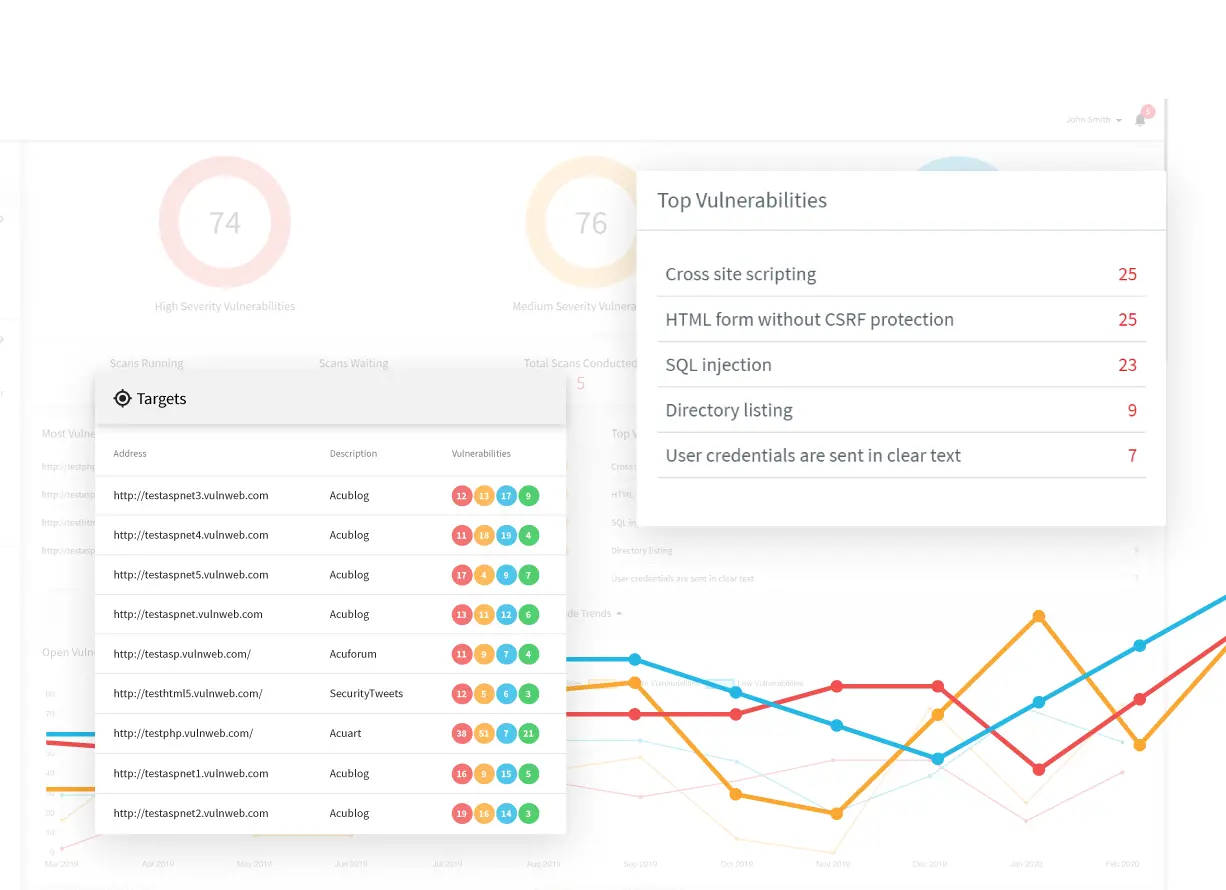
Acunetix specializes in advanced web application and API vulnerability scanning. It identifies thousands of known issues, including injection flaws, cross-site scripting, and misconfigured authentication. The tool is particularly valuable for MSPs managing clients with web-heavy operations such as SaaS or e-commerce.
Acunetix offers both on-premise and cloud-based versions, with automation and scheduling capabilities suited for MSP environments. Integration with CI/CD tools like Jenkins and Jira allows MSPs to streamline DevSecOps pipelines. Reports are detailed and customizable, aligning with compliance frameworks such as PCI DSS and ISO 27001.
Key capabilities:
Automated scanning for web apps and APIs
Authentication, session, and access control testing
Integration with issue trackers and developer workflows
MSP-specific features:
Multi-user management
Scheduled scan automation
Best for: MSPs focused on clients with complex web application portfolios.
Why MSPs choose Acunetix: It provides precision and scalability for application-level security testing, fitting seamlessly into managed DevSecOps offerings.
9. OpenVAS

OpenVAS is a community-driven, open-source vulnerability scanner offering enterprise-grade detection without licensing costs. It’s ideal for MSPs with in-house technical teams who can manage the configuration and maintenance required for optimal performance.
The scanner detects a wide range of network vulnerabilities and integrates with the Greenbone Security Assistant for GUI-based operations. While it lacks automation and white-label reporting out of the box, its flexibility allows MSPs to build customized scanning workflows.
Key capabilities:
Comprehensive network vulnerability scanning
Regular community-maintained updates
Custom configuration and scripting support
Best for: MSPs with technical expertise and clients that require transparent, customizable assessments.
Why MSPs choose OpenVAS: It offers reliable detection without licensing fees, ideal for cost-efficient security programs with internal customization capabilities.
10. Burp Suite
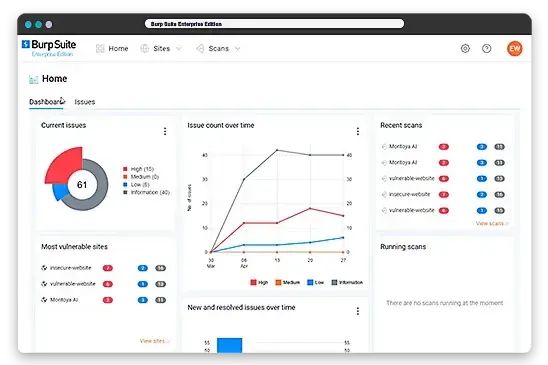
Burp Suite remains a leading toolkit for professional web application security testing. It offers both automated scanning and manual pentesting modules, making it ideal for MSPs that provide deep-dive assessments for critical clients.
The platform enables detailed inspection of HTTP traffic, authentication handling, and API interactions. Automated vulnerability discovery can be enhanced with manual testing to validate exploitability. Burp Suite also supports team collaboration, enabling multiple analysts to coordinate assessments efficiently.
Key capabilities:
Automated web and API scanning
Manual penetration testing toolkit
Advanced session and authentication handling
Integration with custom scripts and tools
MSP-specific features:
Team collaboration and shared dashboards
Customizable reporting templates
Best for: MSPs with dedicated penetration testers or high-value enterprise clients.
Why MSPs choose Burp Suite: It combines automation with manual precision, empowering MSPs to deliver high-value, expert-level testing under their brand.
Final Thoughts
In 2025, MSPs have become the cornerstone of modern cybersecurity operations. Clients expect their providers to deliver proactive, continuous, and validated protection against emerging threats. MSP vulnerability scanners are no longer optional tools; they are the foundation of every managed security offering.
However, to stand out in a crowded market, MSPs must look beyond traditional scanning solutions. Platforms like Beagle Security showcase the next evolution of agentic, autonomous pentesting that validates vulnerabilities in real-world conditions. By adopting platforms that integrate automation, scalability, and white-label branding, MSPs can deliver measurable outcomes, increase client retention, and expand recurring revenue.
The future belongs to MSPs that go beyond detection and provide assurance, accuracy, and insight. The right vulnerability management platform can transform a managed service provider from a reactive vendor into a trusted strategic cybersecurity partner.


![Top ZAP alternatives and competitors [October 2026]](/blog/images/top-zap-alternatives-cover.webp "Top ZAP alternatives and competitors [October 2026]")




![Top 10 penetration testing companies [2026]](/blog/images/top-penetration-testing-companies-cover.webp "Top 10 penetration testing companies [2026]")




![Top vendor application security tools [2026]](/blog/images/top-vendor-application-security-testing-tools-2026-cover.webp "Top vendor application security tools [2026]")



![Top Snyk alternatives & competitors [2026]](/blog/images/top-snyk-alternatives-cover.webp "Top Snyk alternatives & competitors [2026]")