Top 10 leading AppSec testing providers[2026]
![Top 10 leading AppSec testing providers[2026]](/blog/images/top-10-leading-appsec-testing-providers-2026.webp "Top 10 leading AppSec testing providers[2026]")
Application security testing in 2026 is no longer a checkbox at the end of a release cycle. With cloud-native architectures, AI-assisted development, and expanding software supply chains, security must be woven into every phase of the SDLC. Engineering and security leaders are under pressure to ship faster while simultaneously proving that their applications are resilient against real-world attacks.
The tools in this guide represent the leading AppSec testing providers organizations rely on today, spanning static analysis, dynamic testing, API security, software composition analysis, exposure management, and runtime protection. No single platform solves everything, which is why understanding what each one does best, how it is priced, and who it is built for is critical to making the right investment.
This comparison covers the top 10 providers, including what they do, their core strengths, pricing expectations, G2 ratings, and how to think about each one when building or maturing your AppSec program.
Comparison table
| Tool | Starting price | What it does | Target audience |
|---|---|---|---|
| Beagle Security | $119/month for basic plans, enterprise pricing is custom | Agentic AI penetration testing for web apps and APIs | Engineering teams needing automated attack simulation |
| Veracode | Enterprise pricing is custom | SAST, SCA, DAST governance | Large enterprises with compliance-heavy SDLC |
| Checkmarx | Enterprise pricing is custom | SAST-led Appsec platform | Enterprises prioritizing deep static analysis |
| Burp Suite | $499/year (Professional) | DAST + manual web application penetration testing | Penetration testers and AppSec engineers |
| Tenable | starts at $7,434 per year for 5 FQDNs | Exposure management + DAST + vulnerability management | Enterprises with broad infrastructure and web security needs |
| Rapid7 | $175/app/month | DAST + integrated vulnerability management | Mid to large enterprises with unified security platforms |
| GitLab | Free tie availabler; Custom enterprise pricing | Built-in DevSecOps with SAST, DAST, SCA, and secret scanning | Developers, DevOps engineers, and security professionals (AppSec engineers) |
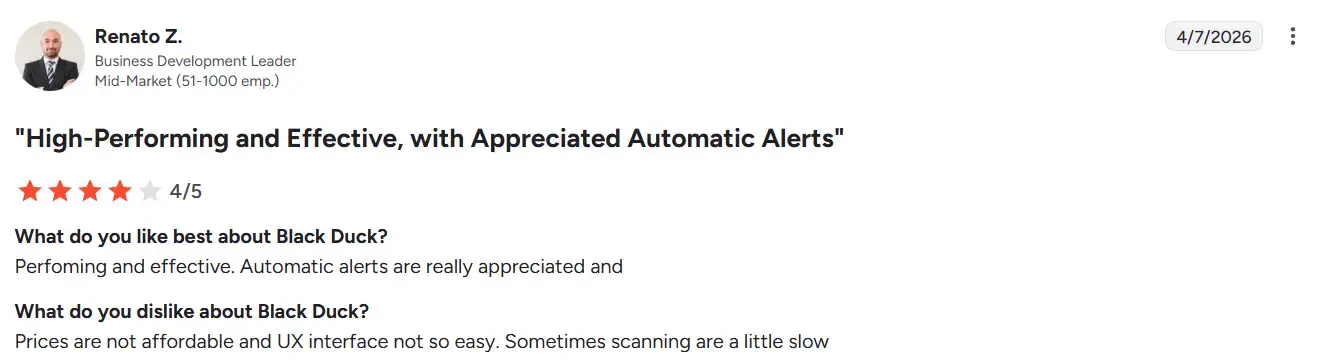
| Black Duck | Enterprise pricing is custom | SCA + license compliance and SBOM management | Large regulated enterprises |
| Strobes Security | Free tier available; ASPM from $30,520/yr | CTEM + ASPM + RBVM + exposure management | Security teams needing unified visibility across all exposure types |
| HCL AppScan | Custom enterprise pricing | SAST + DAST + IAST + SCA suite | Developers, DevOps teams, and security professionals (pentesters/CISOs) |
Beagle Security
Category: Agentic AI penetration testing
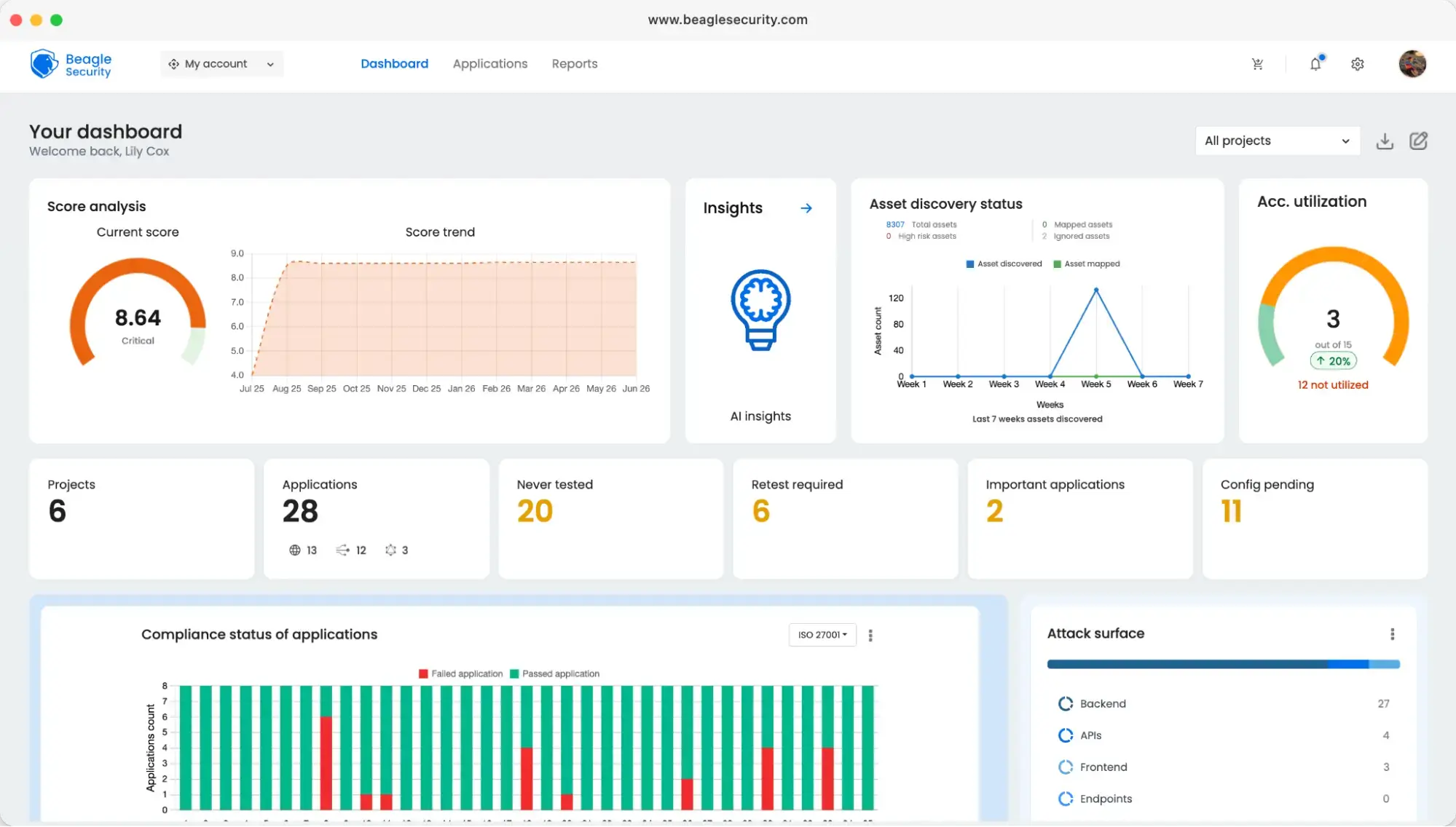
Beagle Security specializes in agentic AI vulnerability testing for web applications, APIs, and GraphQL endpoints using real-world attack simulation. Unlike traditional scanners that rely on predefined signatures, it analyzes how applications actually behave and generates contextual test cases accordingly. Its continuous testing model allows organizations to run assessments automatically during each release cycle or on new deployments. Teams rely on Beagle Security for fast feedback loops, realistic attack paths, and automated reporting that developers can act on without needing deep security expertise. It is particularly well suited for growing companies and DevSecOps teams modernizing their testing processes.
Strengths
Real world attack simulation.
Strong API and GraphQL coverage.
Clean, developer-ready reports.
CI/CD integration.
Pricing
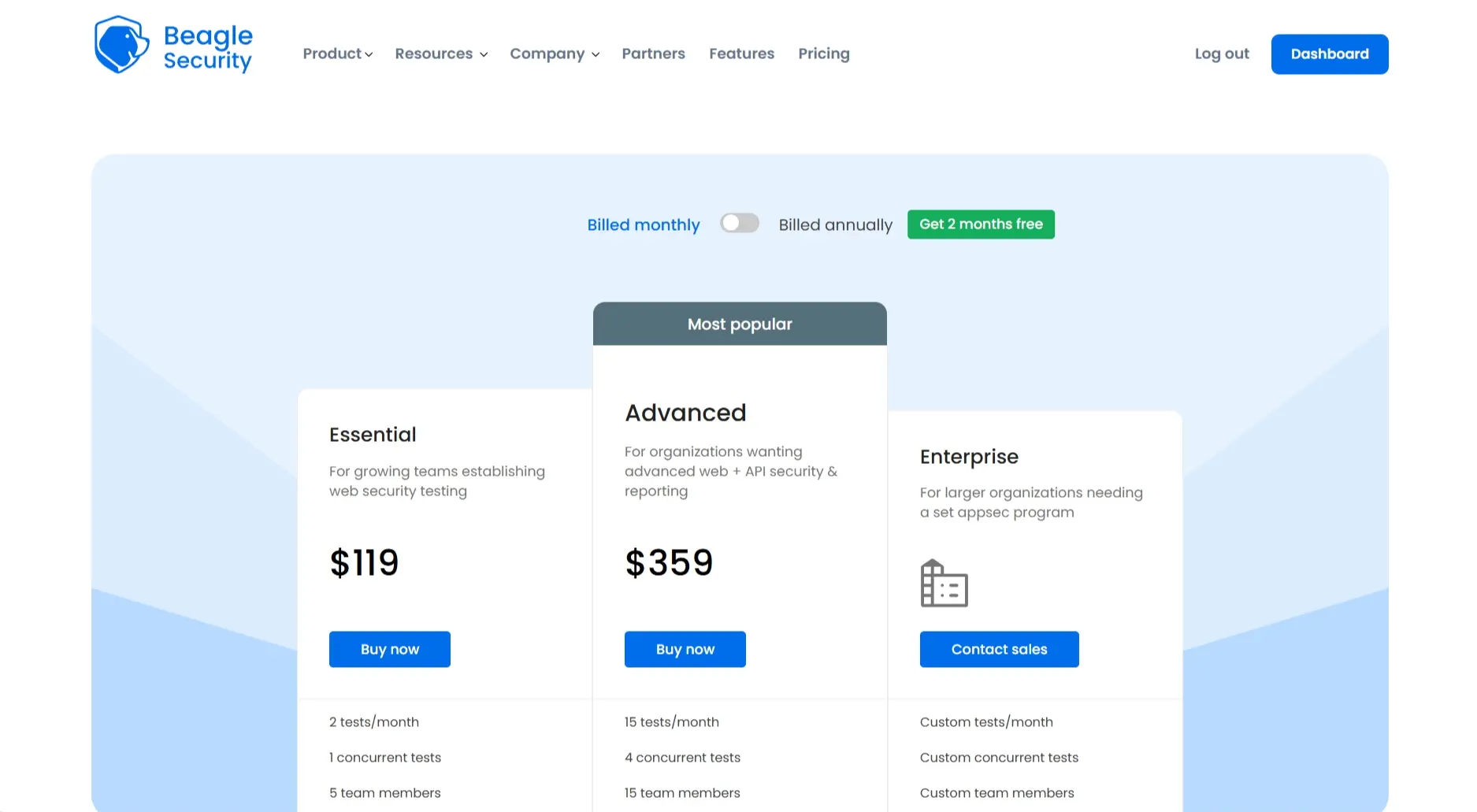
Essential tier: $119/month.
Advanced tier: $359.
Enterprises: Custom pricing.
Rating & review
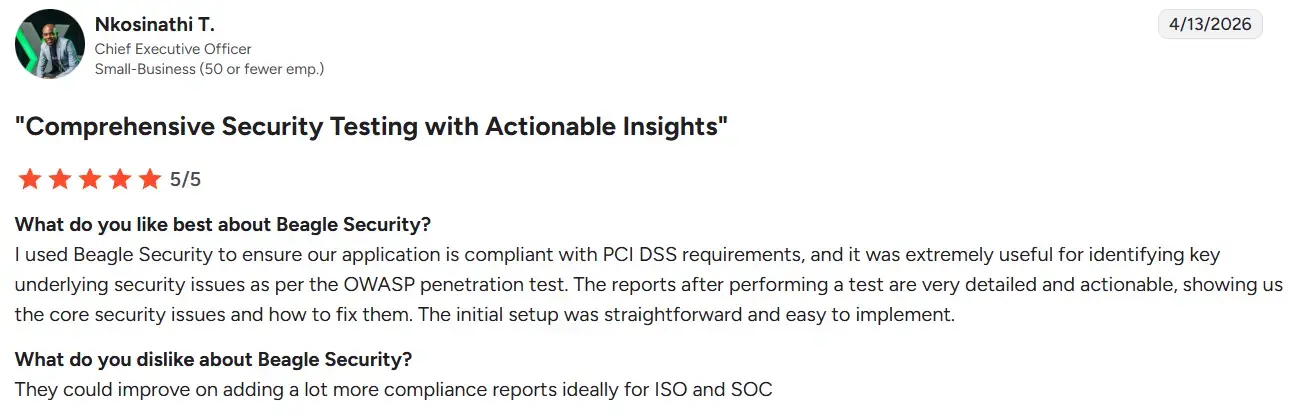
Beagle Security holds a 4.7/5 rating on G2, with users consistently praising its ease of use and automated vulnerability testing capabilities. Reviewers highlight how quickly teams can begin scanning web apps, APIs and GraphQL endpoints, often without needing any prior security expertise.
Veracode
Category: Enterprise SAST + SCA + policy governance
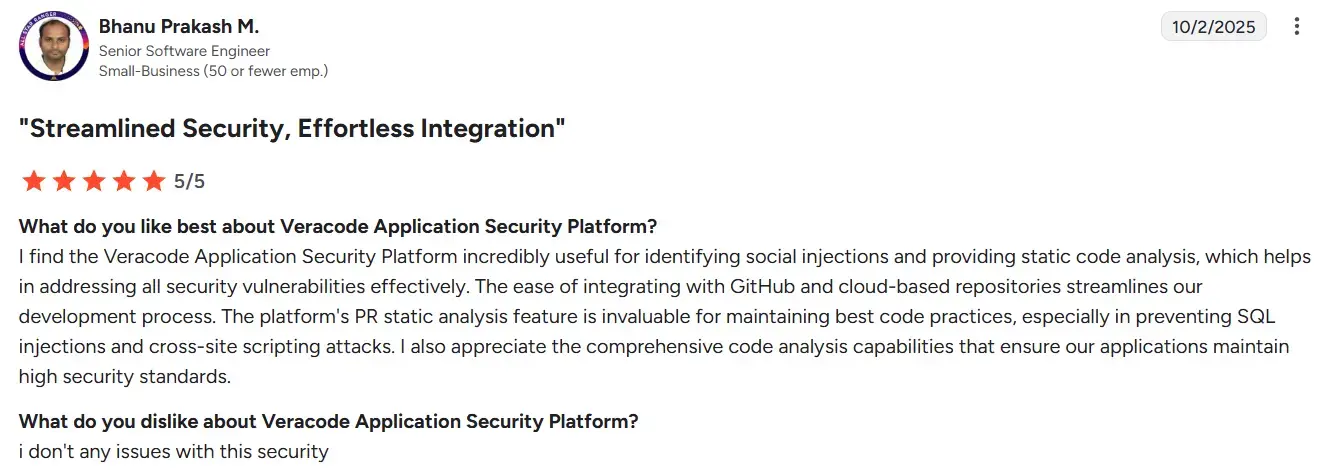
Veracode is one of the most established enterprise AppSec platforms, offering SAST, SCA, DAST, and mature governance frameworks under a single umbrella. Its centralized management console enables security leaders to enforce policies consistently across hundreds of teams, making it a strong choice for large enterprises with regulated SDLC requirements. Veracode’s architecture is built for scale, with robust pipelines for onboarding multiple applications and managing large vulnerability datasets. It also delivers compliance-focused reporting that fintech, healthcare, and government organizations lean on during audits. Training and developer enablement features round out a full enterprise program.
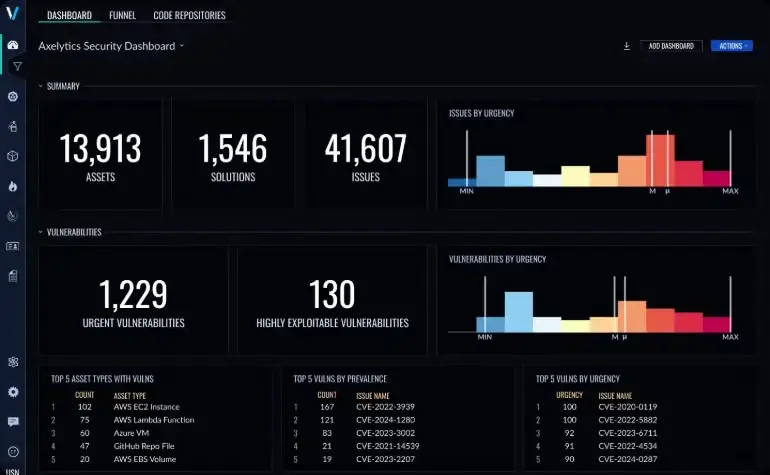
Source: Veracode AppSec Analytics & Insights
Strengths
Extremely mature governance and reporting.
Deep SAST coverage.
Large language / framework support.
Proven enterprise scalability.
Pricing
Fully custom enterprise pricing.
Rating & review
Veracode maintains a solid 3.8/5 G2 rating, reflecting its reputation as one of the most mature and enterprise-ready AppSec platforms. Users appreciate its reliable static and software composition analysis, although some mention a learning curve when configuring scans.
Checkmarx
Category: SAST-led AppSec platform
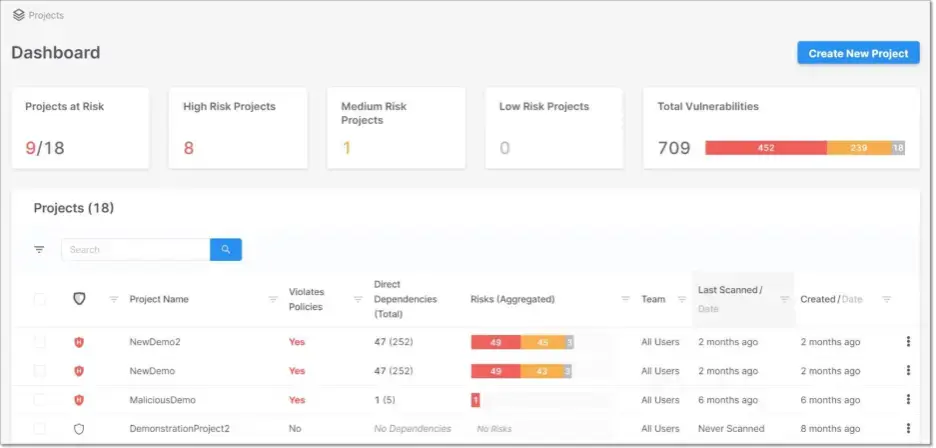
Checkmarx is known for its highly sophisticated static analysis engine, customizable rulesets, and deep scanning accuracy. The Checkmarx One platform unifies SAST, SCA, API security scanning, and IaC analysis under one roof. Its customization capabilities stand out, allowing advanced AppSec teams to fine-tune rules for internal coding conventions and proprietary frameworks. Enterprises choose Checkmarx when they need precise detection of code-level vulnerabilities across large repositories and monorepos. It integrates well with Git, CI/CD pipelines, and modern IDEs, making it developer-friendly while remaining enterprise-durable.
Strengths
Highly accurate and customizable SAST engine.
Wide language support across major and niche stacks.
Strong performance in monorepos and large, complex codebases.
Mature enterprise deployment model.
Pricing
- Custom enterprise pricing; contact the vendor for details.
Rating & review
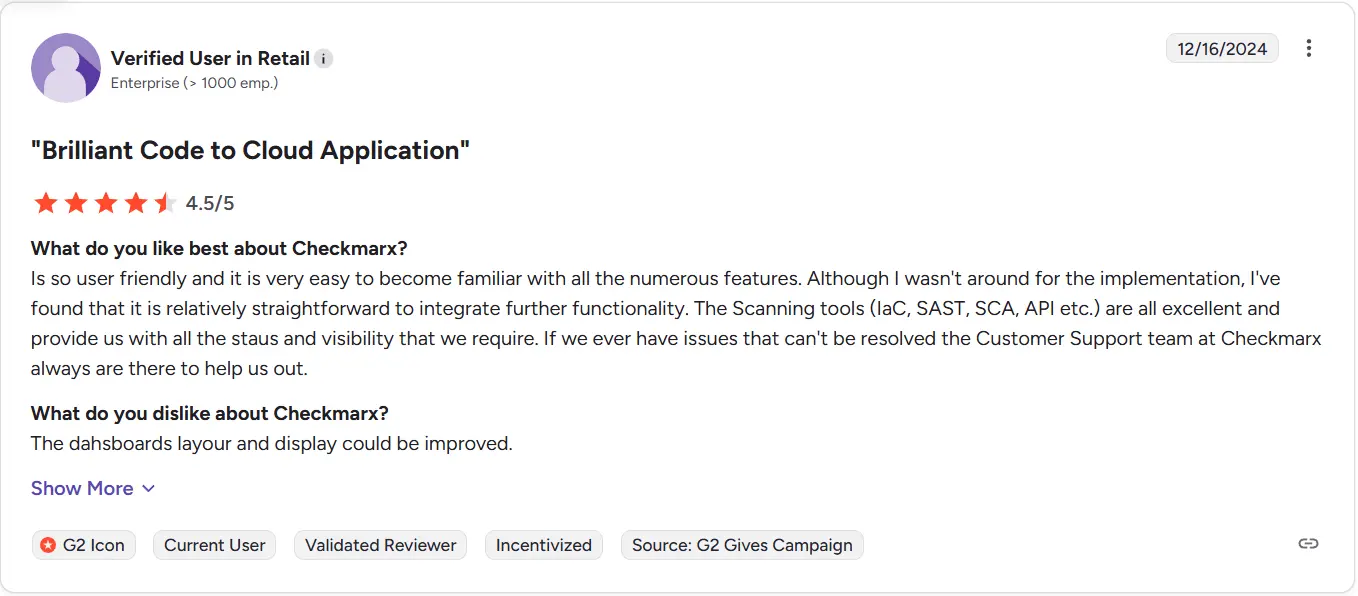
Checkmarx carries a 4.2/5 rating on G2. Reviewers frequently highlight how its customizable rules help reduce false positives while uncovering deeply rooted vulnerabilities. Many note that teams get the most out of Checkmarx when a dedicated AppSec engineer fine-tunes configurations.
Burp Suite
Category: DAST + manual web application penetration testing
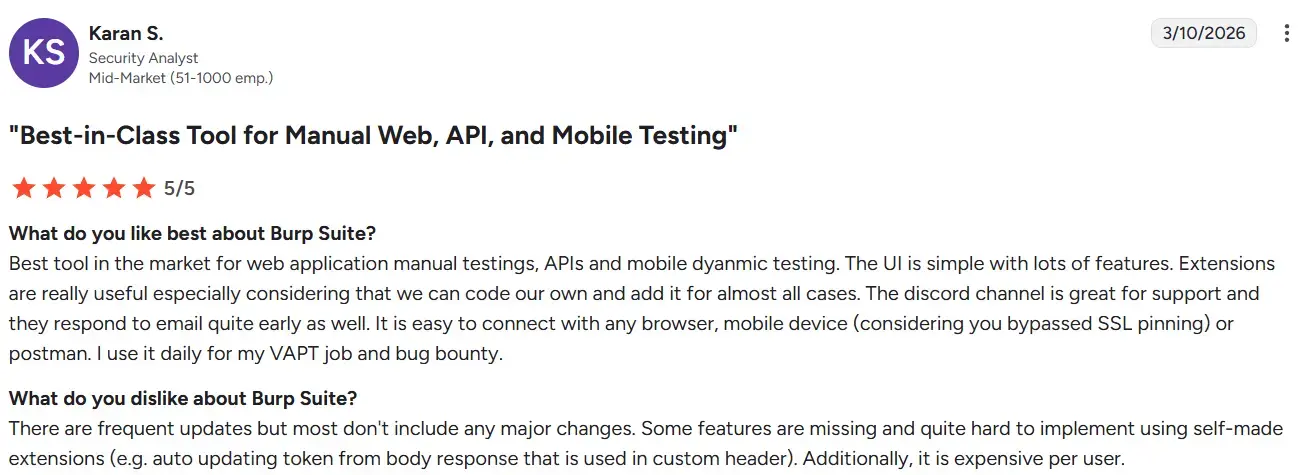
Burp Suite, developed by PortSwigger, is the industry-standard toolkit for manual and automated web application security testing. At its core is an intercepting proxy that lets security professionals inspect, modify, and replay HTTP/HTTPS traffic in real time. The Professional edition includes a full automated scanner, Intruder, Repeater, and access to the BApp extension marketplace. The enterprise-class Burp Suite DAST (formerly Enterprise Edition, renamed in April 2025) enables automated, CI/CD-integrated scanning across large application portfolios, with cloud-hosted and self-hosted deployment options. Together, the two editions create a unified ecosystem covering both automated breadth and manual depth.
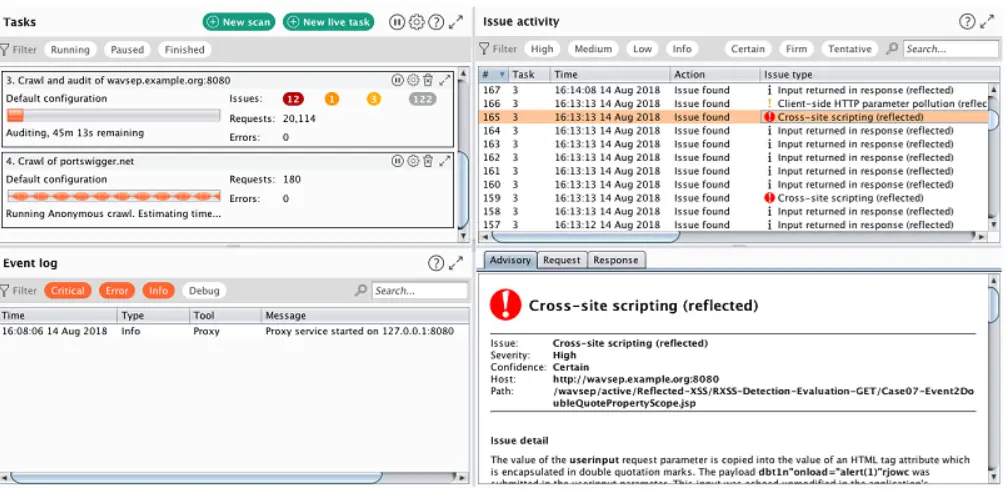
Source: postswigger
Strengths
Industry-leading manual penetration testing toolkit.
Deep, accurate automated scanning via the same engine used by security researchers.
Strong extensibility through BApps, BChecks, and custom extensions.
Flexible deployment across cloud, on-premise, and Kubernetes environments.
Pricing
Community Edition: Free (basic manual tools, no automated scanner).
Professional: $499/user/year (full toolkit for penetration testers).
Burp Suite Enterprise/DAST: Starting from $6,000+/year for automated scanning; custom pricing available based on usage, number of sites, and CI/CD scan volume.
Rating & review
Users consistently praise Burp Suite for its user-friendly interface and powerful features that facilitate both manual and automated web application security testing. The tool’s ability to intercept and modify requests in real-time enhances testing efficiency, making it a favorite among penetration testers. However, some users note a common limitation with the high cost of the professional version and occasional false positives in automated scans.
Tenable
Category: DAST + vulnerability management
Tenable is one of the most recognized names in the vulnerability management space, powered by the Nessus scanning engine. Its Web Application Scanning (WAS) product is a scalable, enterprise-ready DAST solution that integrates into the broader Tenable One exposure management platform. This gives organizations a unified view across network infrastructure, cloud environments, and web applications, with risk-based prioritization that factors in exploitability and asset criticality. Tenable is a strong fit for enterprises already invested in the Tenable ecosystem who want to add web application scanning to a broader vulnerability management program.
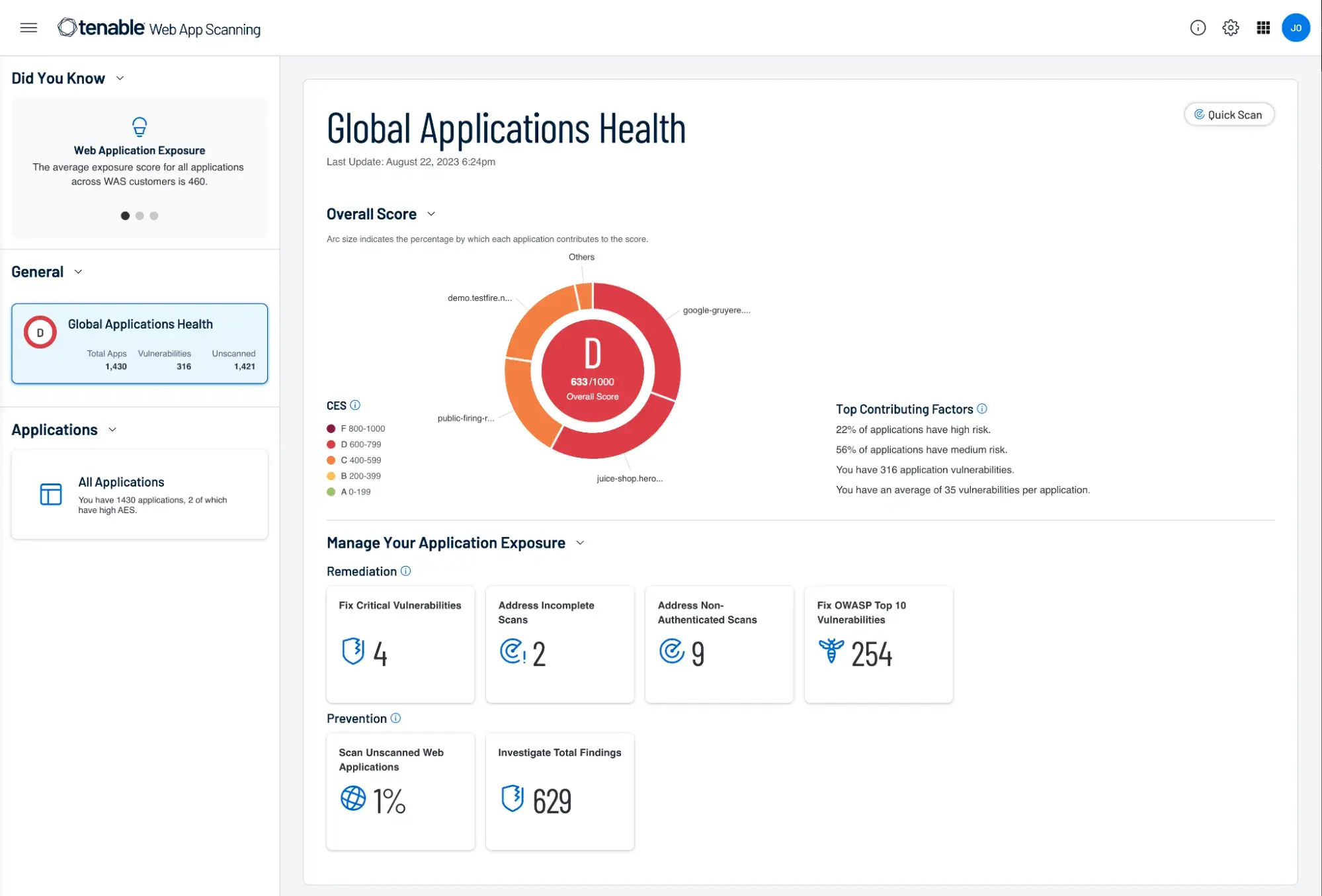
Source:Tenable
Strengths
Risk-based prioritization powered by threat intelligence and asset criticality.
Unified visibility across network, cloud, and application attack surfaces.
Accurate scanning powered by the industry-trusted Nessus engine.
Strong compliance reporting and audit support.
Pricing
Tenable Nessus Essentials: Free .
Tenable Nessus Professional: $4,790/year (vulnerability scanning).
Tenable Nessus Expert: $6,790/year (adds web app and external attack surface scanning).
Tenable Vulnerability Management: $3,000–$20,000+/year depending on asset count.
Tenable.sc (On-Premises): Typically $25,000–$35,000/year.
Tenable One (Unified Exposure Management Platform): Starts at $50,000–$75,000+/year.
Rating & review
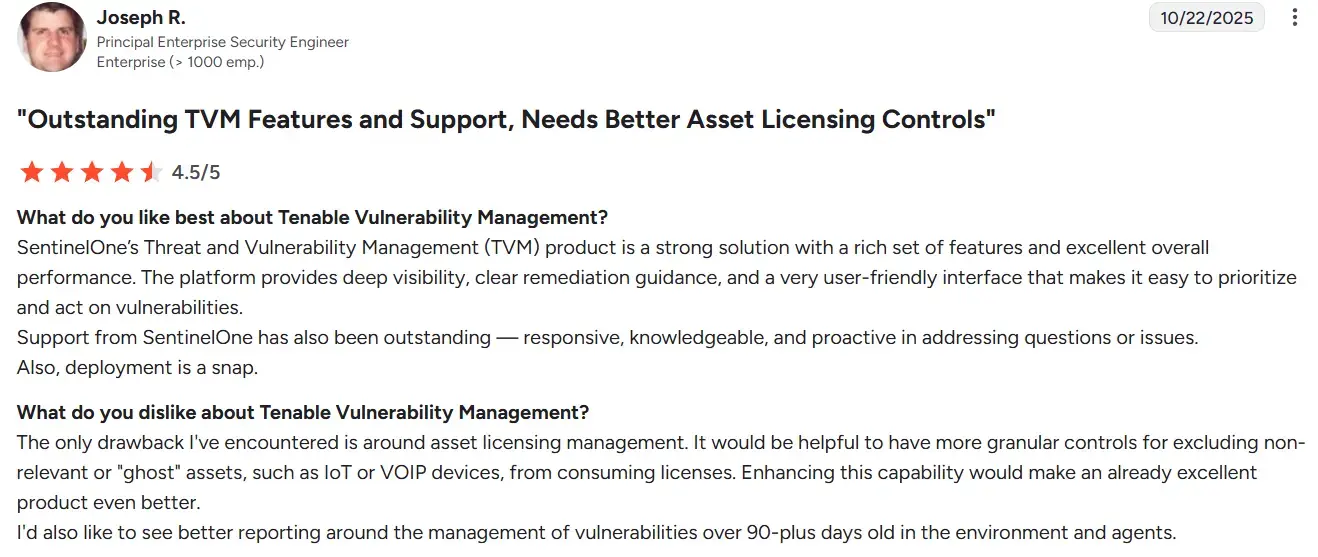
Tenable holds a 4.5/5 rating on g2. Users consistently praise the ease of use and intuitive interface of Tenable Vulnerability Management, highlighting its ability to simplify vulnerability assessments and reporting. The platform’s comprehensive asset discovery and effective prioritization of vulnerabilities help teams focus on critical issues efficiently. However, some users note that the reporting capabilities could be improved, particularly for larger organizations.
Rapid7
Category: DAST + integrated vulnerability management
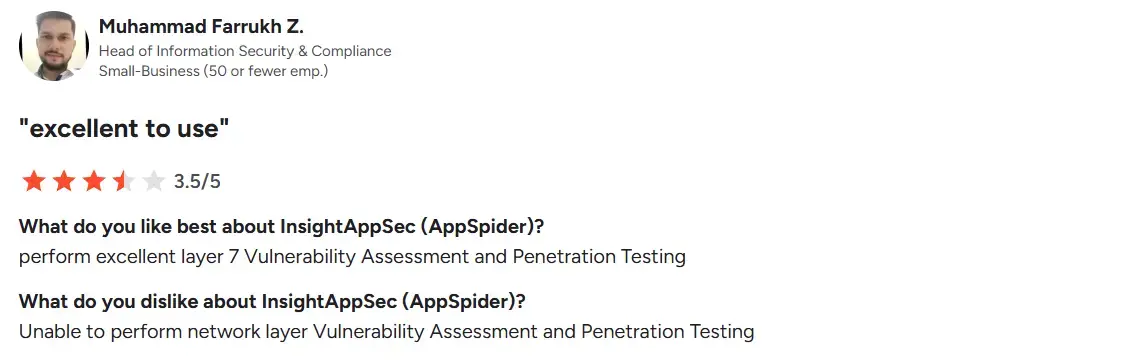
Rapid7 InsightAppSec brings dynamic application security testing into the broader Rapid7 Insight Platform, which also includes InsightVM for vulnerability management and InsightIDR for detection and response. This integrated approach lets security teams correlate application risks with network and endpoint findings under one platform. InsightAppSec supports scheduled and on-demand scanning, configurable blackout periods to avoid testing during peak production hours, and a universal translator that helps the tool adapt to modern application stacks. In Q2 2025, Rapid7 added AI Attack Coverage targeting the OWASP Top 10 for LLMs, making it one of the first mainstream DAST platforms to address generative AI risks.
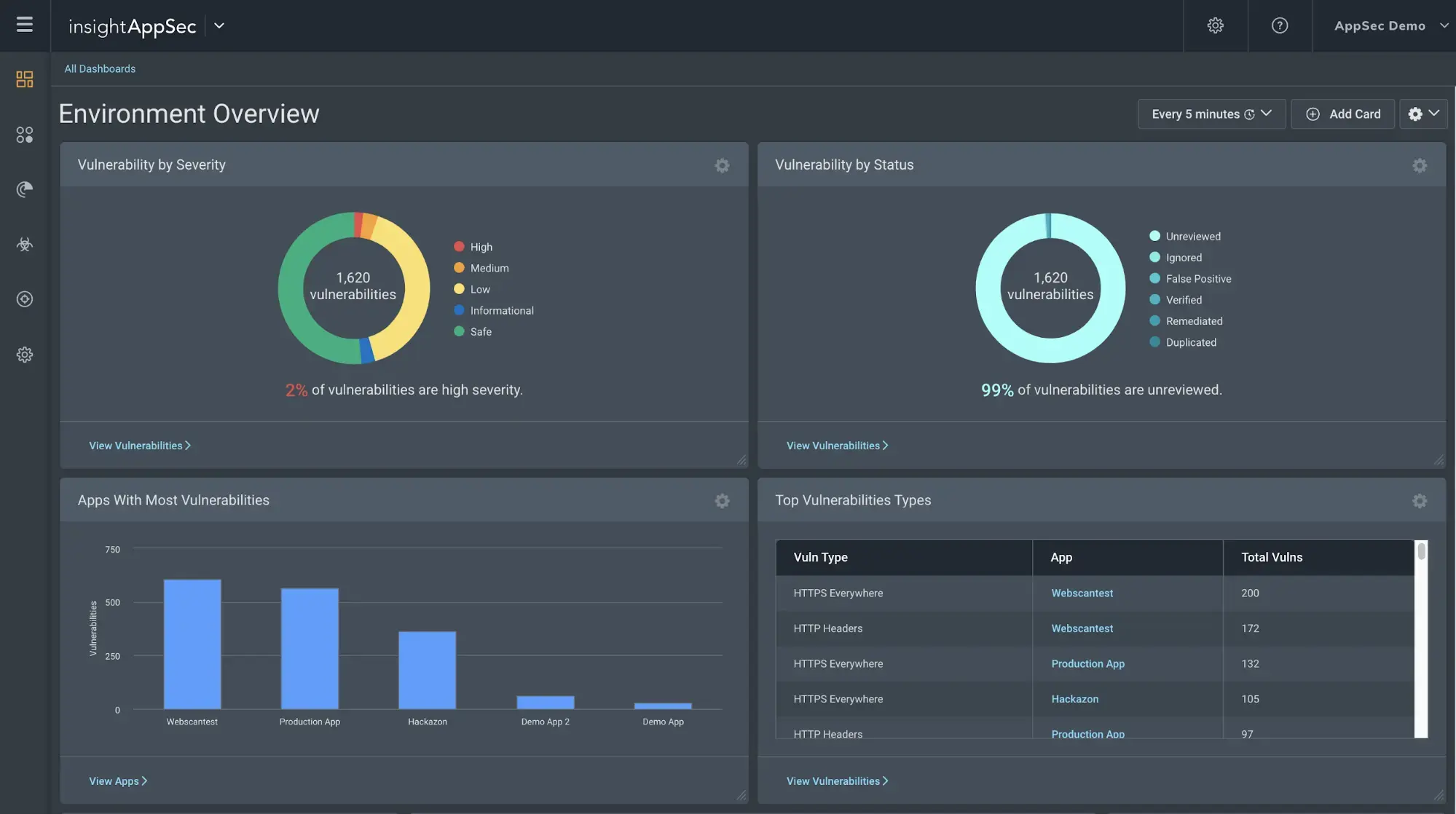
Source: rapid7
Strengths
Deep integration with the Rapid7 Insight Platform ecosystem.
Combines DAST with lightweight IAST capabilities.
AI attack coverage for LLM-based applications.
Strong dashboard visibility and centralized vulnerability management.
Pricing
Rapid7 InsightAppSec: $175/month/app.
Rapid7 InsightTVM: $1.62/month.
Rapid7 InsightCloudSec: $5,775/month.
Rating & review
Rapid7 InsightAppSec is rated 3.9/5 on G2. Users value the platform’s strong visualization features and its seamless integration with other Rapid7 tools. Some reviewers point to a steep learning curve and challenges with CI/CD integration that require dedicated AppSec support to configure effectively.
GitLab
Category: AI-powered DevOps with SAST, DAST and SCA
GitLab is a comprehensive AI-powered DevSecOps platform that embeds security directly into the software development lifecycle. Its Ultimate tier includes SAST, DAST, SCA, secret detection, dependency scanning, container scanning, and IaC security, all integrated natively into CI/CD pipelines. Security findings surface inline in merge requests, enabling developers to identify and address vulnerabilities before code is merged. GitLab’s unified platform approach means teams that are already using it for source control and CI/CD can activate security features without adding separate tools, reducing toolchain sprawl and context switching. With over 50 million registered users and adoption across more than half of the Fortune 100, it is one of the most widely deployed DevSecOps platforms in the world.
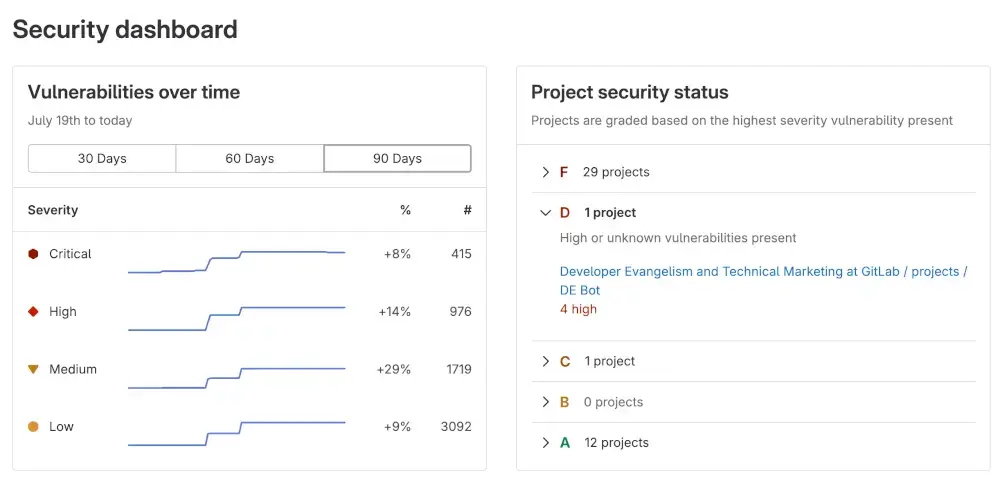
Source: GitLab Docs
Strengths
Security scanning built natively into CI/CD with no extra tooling required.
Inline vulnerability findings surfaced directly in merge requests.
Unified platform covering SCM, CI/CD, security, and compliance.
Flexible self-managed and SaaS deployment options.
Pricing
Free: $0/user/month.
Premium: Contact sales for pricing.
Ultimate: Custom enterprise pricing.
Rating & review
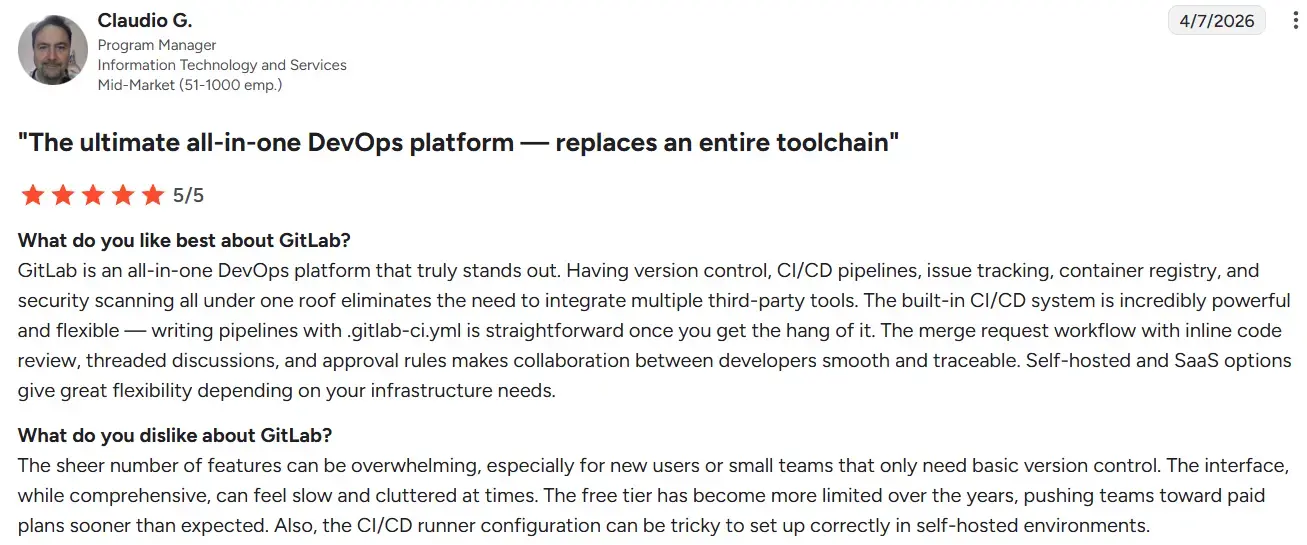
GitLab holds a strong 4.5/5 rating on G2. Users consistently praise GitLab for its all-in-one platform that integrates version control, CI/CD, and issue tracking, which simplifies workflows and reduces the need for multiple tools. The powerful CI/CD features and seamless collaboration capabilities enhance team productivity, making it a preferred choice for many organizations.
Black Duck
Category: Enterprise SCA + license compliance + SBOM management
Black Duck is a leading enterprise SCA tool favored in highly regulated sectors. It provides rigorous compliance checks, open-source risk identification and deep policy enforcement. Its license management engine is one of the most comprehensive on the market, making it suitable for companies managing strict legal frameworks. Black Duck integrates across repos, build systems and artifact repositories to produce detailed SBOMs and vulnerability inventories. For large organizations managing thousands of components, it offers unmatched governance capabilities.
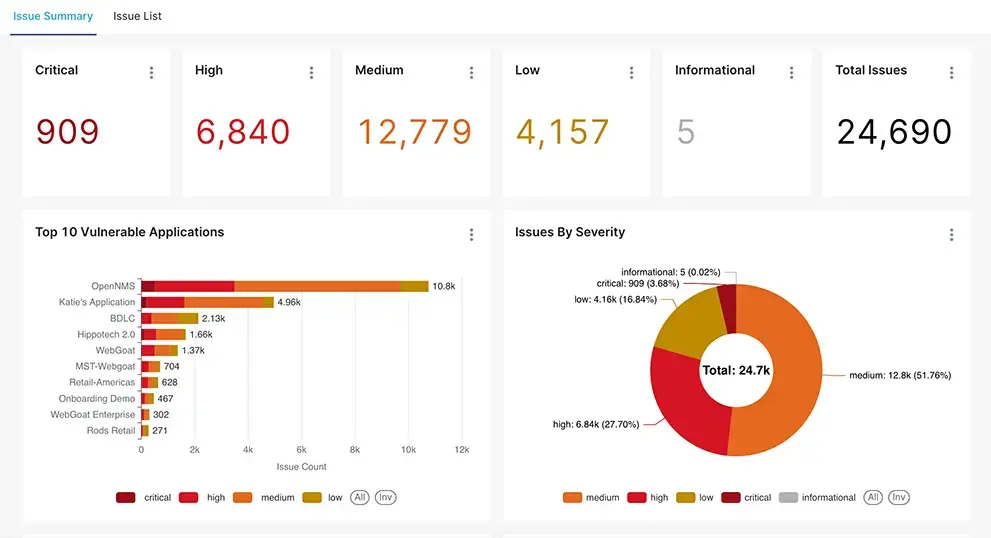
Source: BlackDuck
Strengths
Strong license compliance engine.
Large enterprise adoption.
Deep SBOM and inventory reporting.
Works well in regulated industries.
Pricing
Custom enterprise pricing.
Rating & review
Black Duck carries a 4/5 G2 rating. Users consistently praise the product for its comprehensive analysis and ability to identify open source vulnerabilities effectively. Many appreciate its extensive knowledge base and integration capabilities, which enhance security management.
Strobes Security
Category: Continuous threat exposure management + ASPM
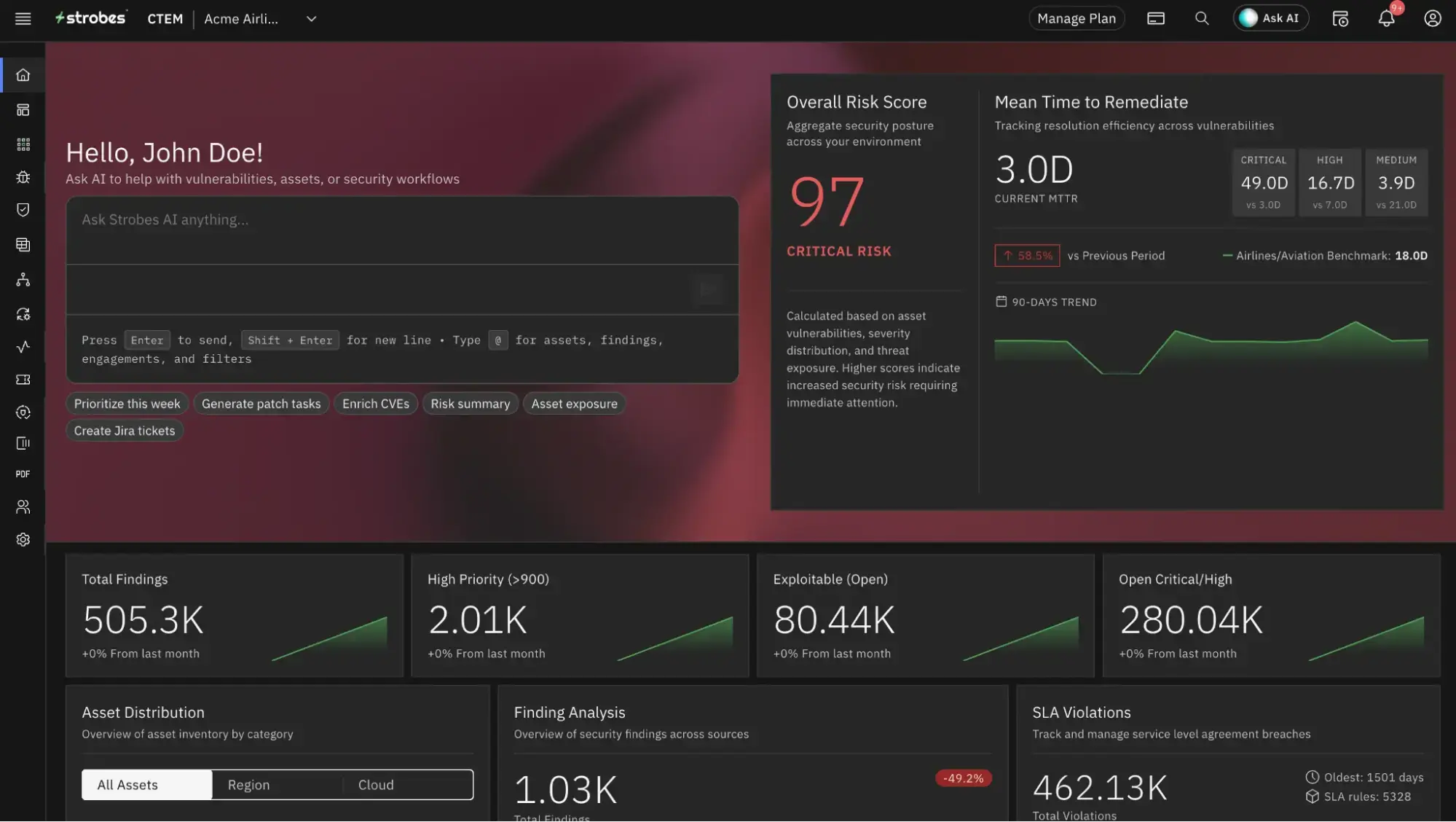
Strobes is an AI-driven exposure management platform that unifies attack surface management (ASM), application security posture management (ASPM), risk-based vulnerability management (RBVM), and penetration testing as a service (PTaaS) into a single platform. In 2025, Strobes made the architectural shift to become one unified platform rather than a collection of modules, introducing a single risk score that combines asset criticality, exploitability, and business impact. With 120+ integrations, it aggregates findings from SAST, DAST, SCA, cloud scanners, and manual penetration tests into one view, enriches them with threat intelligence, and automates triage and prioritization. Its MTTR tracking and SLA monitoring make it particularly valuable for teams that need to demonstrate continuous risk reduction to leadership.
Source: Strobes.co
Strength
Risk-based prioritization using threat intelligence, not just CVSS scores.
Reduced noise & alert fatigue.
Discovers new exposures within hours; high-risk issues closed in days.
Covers RBVM, PTaaS, ASM, and ASPM in one unified platform.
Actionable intelligence.
Pricing
Basic: Free forever (up to 100 assets, 1,000 findings/year).
RBVM : $35,560/year (up to 1,000 assets).
ASM : $18,760/year (up to 1,000 assets).
ASPM: $30,520/year (up to 1,000 assets).
CTEM (Full Exposure Management): $53,760/year (up to 1,000 assets).
Custom: Contact the vendor.
Rating & review
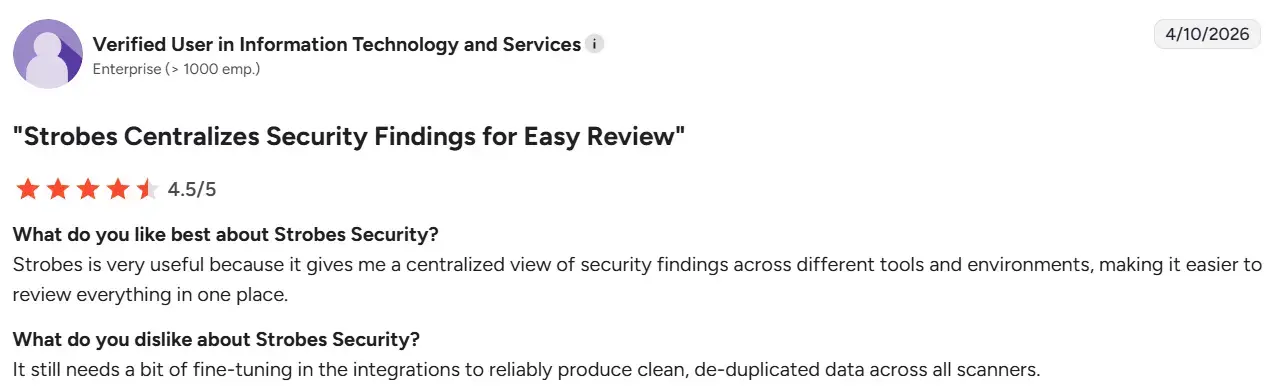
Strobes Security holds a 4.6/5 rating on G2. Users consistently praise the platform for its ease of use and streamlined vulnerability management, which simplifies the process of identifying and addressing security issues. The intuitive interface and responsive support team enhance the overall experience, making it a reliable choice for security assessments.
HCL AppScan
Category: Enterprise SAST + DAST + IAST + SCA suite
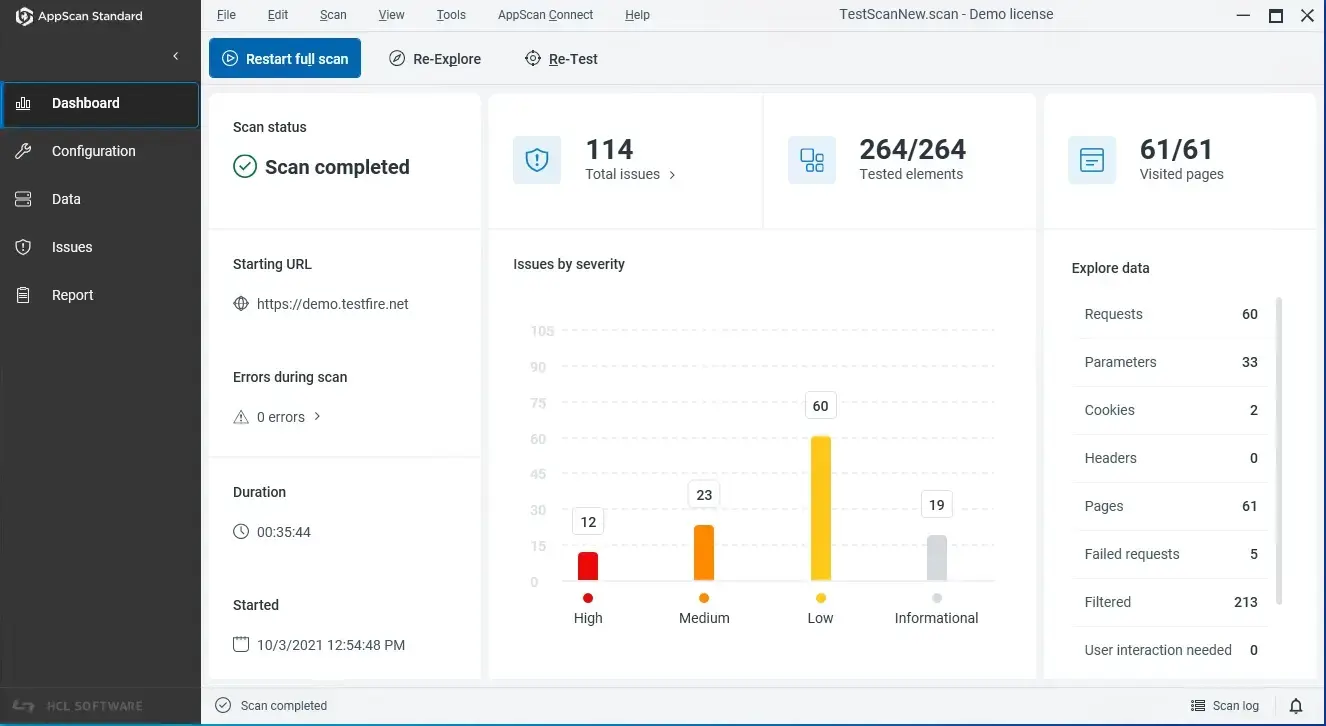
HCL AppScan is a comprehensive application security testing suite offering SAST, DAST, IAST, SCA, and API security scanning, available both on-premises and in the cloud. Its scanning engines are maintained by dedicated security researchers and continuously updated to stay current with emerging vulnerabilities and attack vectors. Centralized dashboards provide visibility across multiple applications, support compliance policies, and enable aggregate reporting across teams. AppScan’s auto-issue correlation feature links DAST, SAST, and IAST findings to the same root cause, helping developers understand and fix vulnerabilities faster. It is one of the few platforms that covers every major testing methodology in a single vendor offering, making it attractive for enterprises that prefer consolidation over best-of-breed.
Source: HCL software
Strengths
Auto-issue correlation across testing methodologies.
Broad language support with low false positive rates.
Strong on-premise and cloud deployment flexibility.
Superior DAST Crawler.
Developer-Friendly Integration.
Pricing
HCL CodeSweep : Free for developers.
AppScan on Cloud (pay-per-scan): Available via the HCL AppScan Marketplace; single scans and multi-scan packs (e.g. 50-scan pack) purchasable directly.
14-day free trial available for AppScan on Cloud.
AppScan Standard: Custom pricing.
Enterprise suite: Custom pricing, typically starting around $50,000/year for smaller deployments and scaling to $500,000–$1,000,000+ for large enterprises.
Rating & review
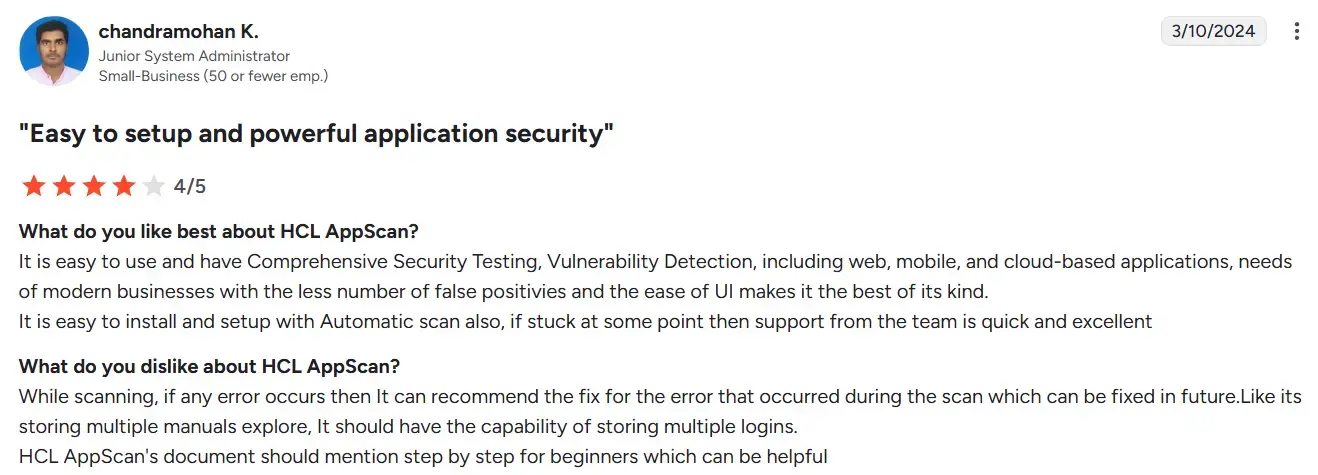
HCL AppScan holds a 4.1/5 rating on G2.Users consistently praise the ease of use and comprehensive security testing capabilities of HCL AppScan, highlighting its effectiveness in identifying vulnerabilities with minimal false positives. The intuitive interface and quick setup contribute to a positive user experience.
Final thoughts
AppSec in 2026 demands more than point-in-time assessments and siloed tools. As attack surfaces expand across APIs, AI-generated code, open-source dependencies, and cloud-native deployments, security teams need a cohesive strategy that covers every layer of the stack without creating bottlenecks for engineering teams.The ten platforms covered in this guide each address a distinct piece of that puzzle. Veracode and Checkmarx bring depth to static analysis at enterprise scale. Burp Suite remains the gold standard for manual penetration testing and DAST precision. Black Duck and GitLab anchor supply chain security and DevSecOps integration respectively. Tenable and Rapid7 extend visibility beyond application boundaries into infrastructure and cloud risk. Strobes and HCL AppScan offer consolidation plays for teams seeking unified posture management across testing methodologies.
The right combination depends on where your program stands today. Early-stage teams benefit most from tools that reduce friction and surface actionable findings fast. Mature programs need governance, aggregation, and risk correlation across an increasingly complex toolchain.
Platforms like Beagle Security strengthen this layered approach by focusing on continuous, agentic AI driven pentesting across web applications, APIs, and GraphQL endpoints. By simulating real-world exploits rather than relying solely on static findings, Beagle Security helps teams validate whether vulnerabilities are actually exploitable in production-like environments. Its CI/CD-friendly automation, developer-ready reports, and strong API coverage make it easier to turn security signals into fixes without slowing delivery. Check out our 14-day advanced trial or the interactive demo to see if we fit all your AppSec needs.
FAQs
What is AppSec testing?
Application security testing is the process of identifying and addressing security vulnerabilities in software before they can be exploited. It covers a range of methodologies including static analysis, dynamic testing, software composition analysis, and penetration testing, applied across different stages of the development lifecycle.
What are AppSec tools?
AppSec tools are platforms and solutions that help security and engineering teams detect, prioritize, and remediate vulnerabilities in their applications. They span a wide range of categories including SAST, DAST, IAST, SCA, API security testing, and exposure management, and are typically integrated into CI/CD pipelines to enable continuous security throughout development.
What is the process of AppSec?
AppSec typically follows a lifecycle that begins with threat modeling during design, moves into static and dynamic testing during development and QA, and extends into continuous monitoring and validation in production. The goal is to shift security left, catching issues as early as possible, while maintaining ongoing visibility into risk as applications evolve.
How do I choose the right AppSec provider?
Consider your team size, existing toolchain, compliance requirements, preferred deployment model, and whether you need a point solution or a unified platform. Starting with a free trial where available is always a good idea before committing to enterprise contracts.


![Top ZAP alternatives and competitors [October 2026]](/blog/images/top-zap-alternatives-cover.webp "Top ZAP alternatives and competitors [October 2026]")




![Top 10 penetration testing companies [2026]](/blog/images/top-penetration-testing-companies-cover.webp "Top 10 penetration testing companies [2026]")



![Top vendor application security tools [2026]](/blog/images/top-vendor-application-security-testing-tools-2026-cover.webp "Top vendor application security tools [2026]")



![Top Snyk alternatives & competitors [2026]](/blog/images/top-snyk-alternatives-cover.webp "Top Snyk alternatives & competitors [2026]")